Some rising from an Israeli airstrike that hit Qlaileh village, is seen from Tyre city, south Lebanon, on Friday, March 27, 2026.
US-Israel war on Iran, day 28: US eyes swift military success, opposes Hormuz toll plan
Washington vows swift action while rallying international backing
Last updated:
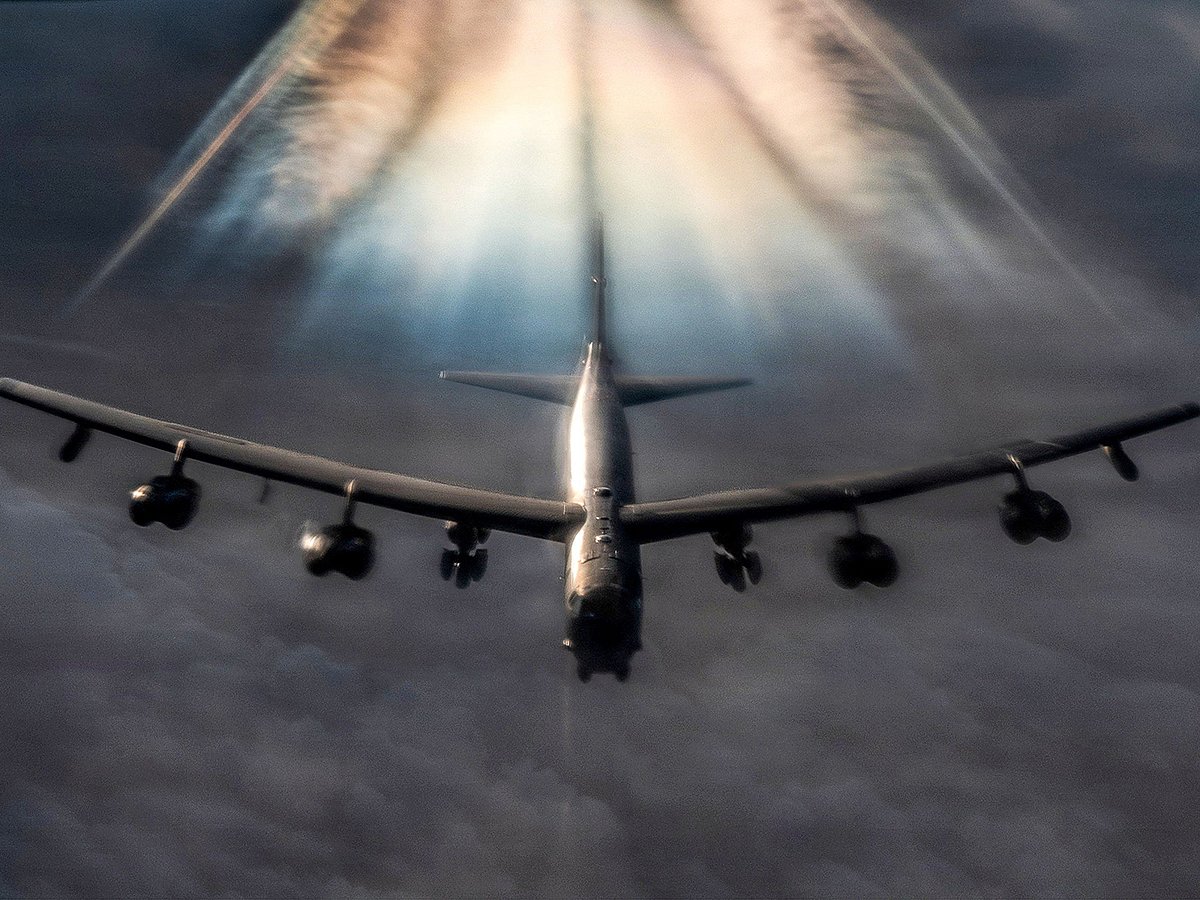
A US Air Force B-52H Stratofortress bomber aircraft prepares to refuel from a KC-135 Stratotanker aircraft during Operation Epic Fury over the US Central Command area of responsibility.
US Airforce/AFP
The US-Israel war on Iran entered its 28th day on Friday, with tensions escalating across the region. Israeli airstrikes targeted Tehran and industrial sites, while Washington paused attacks on energy facilities to allow room for diplomacy. Regional and global leaders are urging restraint as the conflict threatens maritime trade, energy supplies, and international security. Follow this live blog for the latest updates:
US‑Israel war on Iran as it happened: What we know so far
Trump suspends operations targeting Iran's energy facilities for 10 days
US President Donald J. Trump announced a suspension of operations linked to targeting Iran's energy facilities for 10 days, effective until 6 April 2026. This move represents a 10-day extension of the current pause and comes as part of ongoing talks.
In a statement published on Truth Social, President Trump explained that the decision followed a request from the Iranian government. He noted that current discussions "are going very well," despite what he described as "erroneous statements to the contrary."
Hormuz reality check: Tankers are 'coming back', says US
Shipping lanes through the Strait of Hormuz are showing early signs of life again, with the US Department of the Treasury signaling a cautious rebound in maritime traffic — even as war tensions with Iran continue to dominate headlines.
US Treasury Secretary Scott Bessent said vessel movement in and out of the Arabian Gulf is now "increasing day by day", describing the shift as “the beginning” of a broader recovery.
"You're starting to see more and more movement in and out of the Gulf today, and this is more than yesterday, and this is the beginning."
Jordan condemns Iran attack on the UAE
Jordan has strongly condemned Iranian attack on United Arab Emirates, which resulted in the deaths of two individuals of Pakistani and Indian nationality. Several others were injured, including a Jordanian citizen, an Emirati national, and an Indian national, following fall of debris in Abu Dhabi.
Explosions heard from south Beirut
Lebanese media reported an Israeli strike hit Beirut's southern suburbs early Friday, as AFP correspondents heard several explosions from the Hezbollah stronghold, which Israel has repeatedly struck since war erupted this month.
AFPTV footage showed smoke billowing from the area after the raid.
Israel has previously issued sweeping evacuation warnings for the area, but provided no specific warning in advance of Friday's strike, which came in the early hours of the morning.
Stay updated: Get the latest faster by downloading the Gulf News app now - it's completely free. Click here for Apple or here for Android. You can also find it on the Huawei AppGallery.
IRGC Navy Admiral Tangsiri killed, CentCom confirms
The US Central Command has confirmed the death of Admiral Alireza Tangsiri even as the US military called on Iranians serving in the IRGC Navy to "immediately abandon their post and return home".
“US military strikes on the IRGC-N will continue. Therefore, we call on every Iranian serving in the IRGC-N to immediately abandon their post and return home to avoid further risk of unnecessary injury or death,” said US Admiral Brad Cooper, CentCom Commander.
Israel military says carried out 'wide-scale' strike on Tehran
Israel's military said its forces carried out strikes on "infrastructure" targets in Tehran early Friday, nearly a month into the Middle East war.
A brief military statement said Israeli forces "completed a wide-scale wave of strikes targeting infrastructure of the Iranian terror regime in the heart of Tehran".
Iran Guards say carried out attacks on Israel and US forces in Gulf
Iran's Revolutionary Guards said on Friday they had carried out missile and drone strikes the previous day targeting sites in Israel and military facilities in the Gulf used by US forces.
The strikes involved long- and medium-range missiles and "destructive and roaming drones", and targeted sites in Israel, the United Arab Emirates, Qatar, Kuwait and Bahrain, the Guards said in a statement carried by the IRNA and Fars news agencies.
The statement said a maintenance facility for US air defence system Patriot was targeted in Bahrain.
Oil drops as Trump pauses Iran strikes, but stock traders nervous
Oil prices fell Friday after Donald Trump again pushed back a deadline for Iran to reopen the Strait of Hormuz, though most equities also dropped as traders shrugged at the news following a series of conflicting messaging from the White House.
Oil prices fell more than one percent Friday, though that only partially pared the previous day's surge amid growing anxiety that the conflict will last far longer than first thought.
Brent is up almost 50 percent since the war began on February 28, while West Texas Intermediate has risen around 40 percent.
Equities struggled following hefty losses in Wall Street.
Tokyo and Seoul, which had been the standout performers in the first two months of the year, were among the biggest losers, while Hong Kong, Sydney, Wellington, Taipei Jakarta and Manila were also sharply lower.
Shanghai and Singapore fluctuated.
Investors are also increasingly sceptical about the messaging from the White House, with Trump often flipping between threats and talk of peace.
Rubio to join G7 meeting
Secretary of State Marco Rubio is in France to meet his Group of Seven counterparts Friday after President Donald Trump attacked NATO countries over a reluctance or refusal to take part in the Iran war, a conflict that some of America's closest allies have met with deep skepticism.
Rubio will have a hard time trying to sell the other top diplomats from G7 countries on the U.S. strategy for the Iran conflict, to which almost all nations have raised objections. Trump's vitriolic comments about NATO during a Cabinet meeting Thursday will make it an even tougher task. Of the G7 nations - besides the U.S. - Britain, Canada, France, Germany and Italy are members of the transatlantic military alliance. Japan is the only one that is not.
Rubio left Washington for the G7 meeting outside Paris just hours after Trump complained bitterly about NATO countries not stepping up to help the U.S. and Israel in the Iran war.
"We are very disappointed with NATO because NATO has done absolutely nothing," Trump said.
Australia defends efforts
Australia's leader said Friday it was not consulted over the war with Iran, responding to President Donald Trump's swipe the US ally was not doing enough.
Prime Minister Anthony Albanese said Australia was in close contact with Gulf states under attack from Iran, providing a surveillance aircraft to help defend the United Arab Emirates, where many Australians live.
"There is no request been made to Australia that has not been agreed to," Albanese told reporters in Canberra.
Israel army demands more soldiers
The Israeli military said it needs more troops for deployment in southern Lebanon, where forces are engaged in fighting Hezbollah as part of efforts to establish a so-called "buffer zone".
"On the Lebanese front, the forward defensive zone that we are creating requires additional (Israeli army) forces," military spokesman Brigadier General Effie Defrin said, noting that the military is operating across multiple fronts, including the West Bank, Gaza and Syria.
Thai cargo ship reportedly runs aground after Iran attack
A Thai-flagged cargo ship that came under attack from Iran in the Strait of Hormuz and was abandoned by its crew has run aground, Iranian media reported Friday.
The Mayuree Naree came under attack March 11, with three of its mariners going missing and still not found.
The semiofficial Tasnim and Fars news agencies, believed to be close to Iran’s paramilitary Revolutionary Guard, reported that the cargo ship ran aground near the village of Ramchah on Qeshm Island.
India slashes fuel taxes due to Mideast war shortages
India has reduced taxes on diesel and petrol, the government announced Friday, as the Middle East war continues to disrupt global energy supplies.
"In view of the West Asia crisis, the central excise duty on petrol and diesel for domestic consumption has been reduced", Finance Minister Nirmala Sitharaman said in a statement, referring to the Middle East war that began late last month.
Stay updated: Get the latest faster by downloading the Gulf News app now - it's completely free. Click here for Apple or here for Android. You can also find it on the Huawei AppGallery.
India shuts down lockdown rumours amid Iran war fears
New Delhi: The Indian government has dismissed rumours suggesting a possible nationwide lockdown due to the ongoing Iran conflict, calling the claims “completely false”.
Union Minister Hardeep Singh Puri said there is no proposal under consideration for any such restrictions, urging the public not to believe or circulate unverified information.
Sri Lanka jails man for hoarding four litres of fuel
Sri Lanka has jailed a man for three weeks after he admitted to hoarding four litres of petrol during a nationwide fuel shortage triggered by the Middle East war, local media reported Friday.
The 48-year-old man initially said the fuel was for his lawnmower.
A magistrate in Nikaweratiya, 125 kilometres (78 miles) northeast of the capital Colombo, also imposed a fine of 1,500 rupees ($5), according to the Lankadeepa daily newspaper.
It added that the man had been charged with hoarding petrol and trying to sell it on the black market at a time when authorities had imposed fuel rationing.
Motorists on the South Asian island are currently receiving fuel every other day.
Authorities say existing diesel stocks are sufficient until mid-May, while petrol supplies could last about a week longer.
Fuel prices across Sri Lanka have risen by a third since the United States and Israel began bombing Iran, triggering retaliatory attacks that disrupted global supplies.
Kuwait says main port damaged in drone attack
Kuwait's main commercial port was damaged in a drone attack on Friday, authorities said, as Iran pressed on with its campaign in the Gulf in retaliation for US-Israeli strikes.
The Shuwaikh port was targeted at dawn "by enemy drones, preliminary reports revealed material damage but no human casualties", the Kuwait port authority said in a statement on X.
Cryptocurrencies aiding Iran
Iran has witnessed massive cryptocurrency flows since the start of the Middle East conflict,
Experts say they are being used to circumvent sanctions placed on Iran's Revolutionary Guards as well as a financial safe haven by civilians hit by soaring inflation.
In an unusually large movement, more than $10 million worth of cryptocurrencies left Iranian exchange platforms between February 28 - the first day of Israeli-US airstrikes - and March 2, according to data analytics firm Chainalysis.
UN Security Council meeting
The UN Security Council will hold closed-door consultations on Friday to discuss strikes on Iran at Moscow's request, Russian state media reported.
"The Russian Federation has requested closed-door consultations with the UN Security Council due to the ongoing strikes on civilian infrastructure in Iran, including educational and healthcare facilities," said Evgeny Uspensky, spokesman for Russia's envoy to the United Nations, according to state news agency TASS.
UN demands 'justice' after Iran school strike
The deadly bombing of an Iranian school on February 28 spurred "visceral horror", the UN rights chief said Friday, urging Washington to conclude its probe and demanding justice "for the terrible harm done".
"The bombing of the Shajareh Tayyebeh Elementary School in Minab evoked a visceral horror," Volker Turk told the United Nations Human Rights Council, stressing that "the onus is on those who carried out the attack to investigate it promptly, impartially, transparently and thoroughly".
"Senior US officials have said the strike is under investigation. I call for that process to be concluded as soon as possible, and for its findings to be made public. There must be justice for the terrible harm done," he insisted.
Stay updated: Get the latest faster by downloading the Gulf News app now - it's completely free. Click here for Apple or here for Android. You can also find it on the Huawei AppGallery.
Second Kuwait port facility attacked
Kuwait’s Mubarak Al Kabeer Port infrastructure came under a drone and missile attack early Friday, the Ministry of Public Works said.
In a statement, the ministry confirmed that initial reports indicated no casualties, with only material damage recorded.
It added that emergency measures were swiftly implemented in coordination with relevant authorities.
School strike 'calculated' assault by US: Iran foreign minister
The deadly bombing of an Iranian school on the first day of the Middle East war was a "calculated" assault by the United States, Iran's foreign minister said Friday.
In a video address to the United Nations Human Rights Council, Abbas Araghchi slammed the "calculated, phased assault" on an elementary school "in the city of Minab, south of Iran, where more than 175 students and teachers were slaughtered in cold blood".
"The United States' contradictory remarks aimed at justifying their crime could not, in any manner, elude their responsibility," he said, describing the February 28 attack as "a war crime and a crime against humanity".
Iran says US, Israeli strikes damage 120 museums, historic buildings
US and Israeli strikes on Iran have damaged at least 120 museums and cultural and historic sites across the country since the start of the war, the head of Tehran city council's cultural heritage committee said.
"At least 120 museums, historical buildings and cultural sites across various provinces were directly targeted and sustained serious structural damage," said Ahmad Alavi.
He was quoted by state TV as naming UNESCO-listed Golestan Palace along with other sites damaged in the war, including Saadabad Palace, the Marble Palace and Teymourtash house, also known as the War Museum.
Rubio tries to sell Iran war to skeptical G7 diplomats
U.S. Secretary of State Marco Rubio is in France meeting his Group of Seven foreign minister counterparts Friday, after President Donald Trump criticized NATO countries over a reluctance or refusal to take part in the Iran war.
Rubio will have a hard time trying to sell the other top diplomats from G7 countries on the U.S. strategy for the Iran conflict, to which almost all nations have raised objections. On his arrival at the meeting venue at a historic 12-century abbey in Vaux-de-Cerney outside of Paris, Rubio posed for a group photo with his fellow foreign ministers but none of them spoke.
Iran Guards say 'turned back' three ships in Strait of Hormuz
Iran's Revolutionary Guards said Friday that they had turned back three ships trying to transit the Strait of Hormuz, adding the route was closed to vessels travelling to and from ports linked to its "enemies".
"This morning, following the lies of the corrupt US president claiming that the Strait of Hormuz was open, three container ships of different nationalities... were turned back after a warning from the IRGC Navy," the Guards said on their Sepah News website.
"The movement of any vessel 'to and from' ports of origin belonging to allies and supporters of the Zionist-American enemies, to any destination and through any corridor, is prohibited," it added.
The energy market intelligence firm Kpler said Friday it had identified two container ships belonging to Chinese firm COSCO that had attempted to cross the narrow waterway off the coast of Iran, but had turned around.
It said the two vessels had been stuck in the Gulf since the start of the war, sparked by US and Israeli attacks on February 28.
"This marks the first such crossing attempt by a major carrier since the beginning of the conflict," data analyst Rebecca Gerdes at Kpler said in a statement.
US President Donald Trump said Thursday that Iran had allowed 10 oil tankers to pass through the Strait of Hormuz as a "present" to show it was serious about negotiations to end the war.
UK says Iran can't be allowed to hold global economy hostage
Foreign Secretary Yvette Cooper has called for a "swift resolution" to the war in the Middle East and the reopening of the Strait of Hormuz.
Speaking at a meeting of G7 foreign ministers on the outskirts of Paris, Cooper said Iran is undermining the global economy by blocking international shipping through the Strait of Hormuz, the world's most important waterway for oil shipments. "Frankly, Iran cannot be allowed to hold the global economy hostage as a result of a strait that is vital to international shipping routes and the freedom of navigation," she said.
Israel's defence minister warns that Israeli attacks on Iran 'will escalate and expand'
Israel's defence minister said on Friday that Israeli attacks on Iran "will escalate and expand."
Israel Katz made the comment in a statement noting that he and Prime Minister Benjamin Netanyahu "warned the Iranian terrorist regime to stop firing missiles at the civilian population in Israel."
"Despite the warnings, the firing continues - and therefore (Israeli military) attacks in Iran will escalate and expand to additional targets and areas that assist the regime in building and operating weapons against Israeli citizens," Katz said.
"They will pay heavy, increasing prices for this war crime."
Iran accuses US and Israel of 'clear intent to commit genocide'
Iranian Foreign Minister Abbas Araghchi also said more than 600 schools have been damaged or demolished and more than 1,000 students and teachers "martyred or wounded" in Iran during the war.
"The aggressors' targeting pattern accompanied by their rhetoric leave little doubt as to their clear intent to commit genocide," Araghchi said by video during an urgent debate at the Human Rights Council in Geneva on Friday.
The debate focused on a Feb. 28 strike at an elementary school in the southern city of Minab. More than 165 people were killed, most of them of children, according to Iranian state media. Experts says evidence suggests the blast was likely caused by U.S. airstrikes. U.S. officials have said an investigation is underway. The State Department did not immediately respond to a request for comment from The Associated Press.
UAE intercepts 6 missiles and 9 drones from Iran today
The UAE’s air defence systems intercepted six ballistic missiles and nine unmanned aerial vehicles (UAVs) launched from Iran on March 27, 2026, authorities said.
Since the start of the blatant Iranian attacks, the UAE has intercepted 378 ballistic missiles, 15 cruise missiles and 1,835 UAVs.
Saudi Arabia urges citizens to leave Lebanon
Saudi Arabia on Friday called on Saudi nationals currently present in Lebanon to leave the country immediately because of the security situation there.
In a statement on its social media platform X, the Saudi Embassy in Beirut urged its citizens to comply with the travel ban to Lebanon and called on all nationals currently present in the country to leave immediately citing the security developments.
The embassy emphasized the need to contact it in case of any emergency, wishing safety and security for all.
Dubai sends 21.5 tonnes of medical aid to Lebanon
Under the directives of His Highness Sheikh Mohammed bin Rashid Al Maktoum, Vice President, Prime Minister of the UAE and Ruler of Dubai, Dubai has dispatched a relief convoy carrying 21.5 metric tonnes of vital medical aid from the World Health Organization to Lebanon. The convoy is expected to reach its destination within the next few days.
Get updated faster and for FREE: Download the Gulf News app now - simply click here.
Iran formalises its chokehold over the Strait of Hormuz
Iran appears to be setting itself up as the gatekeeper for the Strait of Hormuz. The move could cement Tehran’s de facto chokehold over the crucial waterway and formalise its ability to keep its own oil flowing to China.
Iranian communications to the UN maritime authority and the experience of ships transiting the strait suggest the creation of something akin to a “toll booth.” Ships must enter Iranian waters and be vetted by Iran’s Islamic Revolutionary Guards Corps. At least two vessels paid for passage using Chinese currency.
Iranian news agencies quoted a lawmaker as saying “parliament is pursuing a plan to formally codify Iran’s sovereignty, control and oversight over the Strait of Hormuz, while also creating a source of revenue through the collection of fees.”
Airstrike on southern Lebanese village kills 4
The Health Ministry said the airstrike that destroyed a house in the coastal village of Saksakiyeh also wounded eight people.
Lebanon’s state media reported airstrikes in other parts of south Lebanon including the southern city of Nabatiyeh and villages close to it as well as other towns and villages in the coastal Tyre region.
The strikes came as other parts of south Lebanon witnessed intense clashes between Israeli troops and Hezbollah fighters.
Hezbollah said its fighters fought fierce battles in the villages of Chamaa and Bayada near the Mediterranean coast.
Egypt imposes business curfew to counter soaring fuel costs
Egypt has ordered shops, restaurants and shopping malls to close from 9:00 pm from Saturday, hoping to curb energy bills that have more than doubled because of the Iran war.
Prime Minister Mostafa Madbouly announced the curfew and said it would last for a month initially.
"Shops, shopping centres, restaurants and cafes will all close at 9:00 pm on weekdays," he said, adding that on Thursdays and Fridays at the weekend they will be allowed to stay open until 10:00 pm.
The premier said that before the war, Egypt's monthly energy bill was $560 million. Today, for the same quantity, he said Egypt is paying $1.650 billion.
Madbouly said Cairo must work on the "worst-case scenario" in the face of a war whose outcome is unpredictable.
US-Israeli airstrikes target two steel plants in Iran
US-Israeli airstrikes on Friday damaged two major steel plants in Iran, Iranian media reports said.
"Minutes ago, the enemy targeted the Khuzestan Steel (in southwest Iran) and Mobarakeh Steel factories in Isfahan (central Iran) in two separate attacks," the Fars news agency said, with state broadcaster IRIB also reporting the strikes.
"Rescue forces have immediately arrived at the scene of the incident," Fars wrote.
The news agency added that initial information suggested an "electrical substation and an alloy steel production line" were targeted at Mobarakeh Steel complex, while a warehouse was hit at the Khuzestan Steel Factory.
Russia sends medicines to Iran
Russia’s Emergencies Ministry said Friday that it has delivered a batch of medicines to Iran.
The ministry said that 313 metric tons of medicines were carried by rail to Azerbaijan’s border with Iran, where they were handed over to Iranian representatives. It said the supplies have been sent on President Vladimir Putin’s orders.
Earlier this month, an Emergencies Ministry plane delivered 13 metric tons of humanitarian supplies to Iran.
Get updated faster and for FREE: Download the Gulf News app now - simply click here.
This video grab taken from images released by the Iranian state broadcaster (IRIB) on March 26, 2026, shows what it says is the second phase of the 82nd wave of missiles launched against Israel and US bases in the Gulf.
303 US troops wounded in the Iran war
Of the total wounded to date, 273 service members have returned to duty, said Capt. Tim Hawkins, spokesman for US Central Command.
That leaves 30 troops wounded and out of action, with 10 still considered seriously wounded, Hawkins said.
The total of 303 is an increase of 13 troops since the last update provided March 24. Earlier in the week, 35 service members were too injured to return to their posts.
Since the war in Iran began, 13 US service members have been killed in combat.
Israeli strike on south Beirut without warning
A strike hit Beirut's southern suburbs on Friday afternoon without warning from the Israeli military, Lebanese state media said, as AFPTV footage showed smoke rising from the area.
The state-run National News Agency said Israeli warplanes "carried out a very heavy strike... on the Tahouitet al-Ghadir area", the same district where Lebanese authorities said another raid earlier Friday killed two people.
Smoke is released after an Israeli army self-propelled Howitzer artillery gun fires rounds from the upper Galilee in northern Israel near the border with southern Lebanon on March 27, 2026.
Get updated faster and for FREE: Download the Gulf News app now - simply click here.
Germany urges Iran to enter into talks with US
Iran would be "well advised" to negotiate with the United States after almost a month of the US-Israeli war against the Islamic republic, Germany's foreign minister said Friday.
"The Iranian regime would be well advised to enter into serious negotiations with the United States now," Johann Wadephul said, after meeting G7 counterparts in France, including US Secretary of State Marco Rubio.
"There are initial indications that such talks should be taking place," he added, without giving further details.
G7 ministers call for immediate end to attacks on civilians
French foreign affairs minister Jean-Noël Barrot says G7 countries have adopted a declaration on Iran calling for an immediate halt to attacks against civilian populations and infrastructure.
“Nothing justifies deliberately targeting civilians during armed conflicts, nor carrying out attacks against diplomatic facilities,” Barrot told a press conference after a meeting with his G7 counterparts outside Paris.
“It also reaffirms the absolute necessity of permanently restoring free and safe navigation in the Strait of Hormuz,” Barrot said.
Barrot said that Rubio, like other participants in these discussions, “wants that once the United States’ military objectives have been achieved, maritime security and freedom of navigation can be ensured in the Strait of Hormuz, as in all international waters around the world.”
Iranians say nuclear facilities have been hit
Iran state media says its nuclear facilities were attacked Friday, just hours after Israel threatened to “escalate and expand” its campaign against Tehran.
IRNA reports that a heavy-water plant and a yellowcake production plant were struck. Yellowcake is a concentrated form of uranium after impurities are removed from the raw ore.
Iran’s Atomic Energy Organisation said that the strikes posed no risk of contamination, according to state media.
UN chief backs Pakistan’s push for peace
Pakistan’s foreign minister said Friday that UN Secretary-General Antonio Guterres in a phone call has praised and expressed full support for Islamabad’s diplomatic efforts aimed at ending war in the region.
Foreign Minister Ishaq Dar said on X that they discussed the evolving situation in West Asia and its implications for international peace and security.
Dar said he underscored the United Nations’ indispensable role in conflict prevention and resolution and reaffirmed Pakistan’s commitment to diplomacy and dialogue as the only viable path to sustainable peace.
US expects victory in weeks after G7 talks: Rubio
US Secretary of State Marco Rubio left a meeting with his G7 counterparts to declare that Washington expects its military operation to prove victorious within a couple of weeks.
"When we are done with them here in the next couple weeks, they will be weaker than they've been in recent history," Rubio told reporters in Paris after G7 talks.
Rubio also said that he had won support from his G7 colleagues to oppose Iran's attempts to impose a toll on ships crossing the Strait of Hormuz, a key sea lane for oil and gas shipments from the Gulf.
"Not only is this illegal, it's unacceptable, it's dangerous to the world, and it's important that the world have a plan to confront it," Rubio said.
Iran orders US- and Israel-linked workers to evacuate industrial sites
The Islamic Revolutionary Guard Corps said workers at industrial companies in the region either with US shareholders or allied with Israel should leave their workplaces immediately, citing retaliatory operations underway, according to Iranian state media, IRNA.
Meanwhile, Seyed Majid Moosavi, IRGC’s Aerospace Force commander, issued a stark warning on X, threatening retaliatory responses meant to harm interest of United States and Israel in the region.
“You tested us once before; the world has once again seen that you yourselves started playing with fire and attacking infrastructure. This time, the equation will no longer be ‘an eye for an eye’, just wait,” he wrote on X.
The warnings came after the US and Israel launched multiple attacks on industrial and nuclear sites in Iran on Friday, targeting a heavy-water plant and a yellowcake production plant were struck, IRNA reported earlier.
Firefighters look for victims and inspect damages at a residential building following Israeli air strikes in southern Tehran on March 27, 2026.
Get updated faster and for FREE: Download the Gulf News app now - simply click here.
G7 urges end to attacks on civilians in Mideast war
G7 allies on Friday urged a stop to attacks against civilians in the Middle East war, after a foreign ministers' meeting in France attended by US Secretary of State Marco Rubio almost one month into the US-Israeli assault against Iran.
A final communique on the war in the Middle East called for "an immediate cessation of attacks against civilians and civilian infrastructure.
"There can be no justification for the deliberate targeting of civilians in situations of armed conflict as well as attacks on diplomatic facilities," it added.
Get updated faster and for FREE: Download the Gulf News app now - simply click here.
Rocket trails are seen in the sky amid a fresh barrage of Iranian missile attacks above the Israeli coastal city of Netanya on March 27, 2026.
Iran clears route for essential aid after UN intervention
Ali Bahreini, the Iranian ambassador to the United Nations in Geneva, said Friday that Tehran has accepted a request from the world body to allow the safe passage of critical humanitarian aid and agriculture shipments through the critical waterway.
“This measure reflects Iran’s continued commitment to supporting humanitarian efforts and ensuring that essential aid reaches those in need without delay,” Bahreini said in a post on X.
The statement comes hours after the UN announced a task force to address the ripple effects the Iran war has had on crucial aid getting through.
Iran vows ‘HEAVY price’ for strikes on industrial sites
Iranian Foreign Minister Abbas Araghchi said Friday that Israel struck two of his country’s largest steel factories, a power plant and nuclear sites, among other infrastructure that were hit earlier in the day.
“Israel claims it acted in coordination with the US Attack contradicts POTUS extended deadline for diplomacy. Iran will exact HEAVY price for Israeli crimes,” he wrote on X.
The US and Israel launched multiple attacks on industrial and nuclear sites in Iran just hours after Israel threatened to “escalate and expand” its campaign against Tehran.
IAEA investigates damages caused by strike on Iran facility
The IAEA is looking into the damage caused by a strike on Iran’s Shahid Rezayee Nejad Yellow Cake Production Facility in Yazd province. The agency said on X that no increase in off-site radiation levels has been reported.
Earlier on Friday, the US and Israel launched multiple attacks on industrial and nuclear sites in Iran just hours after Israel threatened to “escalate and expand” its campaign against Tehran.
Turkey to hold regional talks on Iran conflict this weekend
Turkish Foreign Minister Hakan Fidan announced Friday night that he will be meeting with his Egyptian, Saudi and Pakistani counterparts in Pakistan over the weekend regarding the war in Iran.
Fidan was asked about Turkey’s role in the war during an interview with private news channel A Haber, where he said telephone diplomacy was ongoing and that they were currently in the middle of a “difficult and painful” process.
He also added that Turkey was working to prevent the escalation of mistrust between Iran and its Gulf neighbors, who are under attack by Tehran.
“That’s exactly the scenario Israel wants, for the Muslim countries engaging in a long-term regional war,” Fidan said.
IDF launches fresh wave of strikes vs Hezbollah targets in southern Beirut
Israeli army says it has launched a "wave of strikes targeting Hezbollah terror infrastructure in Beirut" and issued an evacuation warning for several neighbourhoods in the southern suburbs.
Lebanon’s state-run National News Agency (NNA) also reported Israel strikes on south Beirut’s Tahouitet Al-Ghadir area, and the east.
10 US service members, several refuelling aircraft damaged in Saudi air base
An Iranian missile attack wounded at least 10 US service members and damaged several planes at a military base in Saudi Arabia, according to two US officials familiar with the situation.
Two of the troops were seriously wounded, one of the officials said. The attack on Prince Sultan Air Base damaged several US refueling aircraft, said the officials, who spoke on condition of anonymity to discuss sensitive military matters.
The attack, which involved an Iranian missile as well as drones, comes a day after President Donald Trump said Iran has been “obliterated” and Defense Secretary Pete Hegseth said that “never in recorded history has a nation’s military been so quickly and so effectively neutralized.”
Satellite imagery that appeared to show the damage to the aircraft in the latest attack had been posted online. The attack was reported earlier by The Wall Street Journal.
UAE air defences intercepting missiles, drone threats from Iran
UAE air defences are engaging to incoming missiles and UAV's threat from Iran. The UAE Ministry of Defence (MOD) asserts that the sounds heard are the result of Air Defence Systems engaging missiles and the fighters are intercepting cruise missiles and UAV's.
UAE residents get emergency alert over missile threat
The Ministry of Defence has warned of a potential missile threat. Residents are urged to move to the nearest secure building, stay away from windows, doors, and open areas, and await official instructions.
Authorities have stressed the importance of staying in safe locations, following official channels for real-time updates, and remaining vigilant as the situation develops.
Get updated faster and for FREE: Download the Gulf News app now - simply click here.
We are closing coverage for now. Follow our live updates for the latest developments here.
Sign up for the Daily Briefing
Get the latest news and updates straight to your inbox
Network Links
GN StoreAbout Gulf NewsTerms & ConditionsReach by GNSitemapContact usPrivacy PolicyGN FocusHave your sayWork with usAdvertise with usGulf News epaperPrinting Services
Download our app
© Al Nisr Publishing LLC 2026. All rights reserved.