Trump-Netanyahu clash as Iran defines Hormuz supervision zone
Tehran studies new US proposal as Trump warns strikes could resume quickly
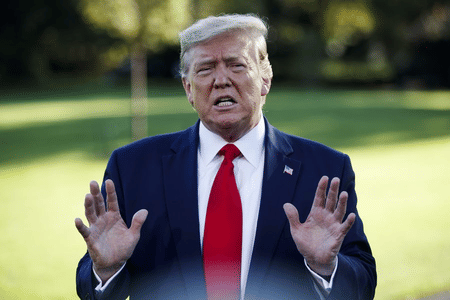
Iran said it is reviewing a new US proposal aimed at ending the Middle East conflict, as US President Donald Trump warned talks were on the “borderline” between diplomacy and renewed military action. While negotiations continue through Pakistani mediation, tensions remain high over the Strait of Hormuz, sanctions, and threats of further escalation, with global markets closely watching the outcome. Follow our live coverage for the latest updates:
British no-frills airline EasyJet said Thursday that its losses deepened in the first half of its financial year to end-March after the Middle East war sent jet fuel prices soaring and disrupted travel plans.
Its headline loss after tax came in at GBP377 million ($506 million) for the period, a rise of 27 percent a year earlier.
As negotiations with the United States hang in the balance, a hard-line Iranian general linked to notorious attacks at home and abroad over the past decades is believed to have seized a place near the center of power.
Brig. Gen. Ahmad Vahidi, who heads Iran's paramilitary Revolutionary Guard, has become a major player in formulating Iran's tough stance in negotiating a possible end to the war with the United States, experts say. He is believed to be part of a small clique in direct contact with Iran's Supreme Leader Ayatollah Mojtaba Khameini, who remains in hiding after being reportedly wounded in the Feb. 28 Israeli strikes that killed his father, Ayatollah Ali Khamenei.
Like everything in Iran since the war began, who ultimately controls decision-making remains uncertain. As people within the upper ranks of Iran's theocracy vie for power, they can gain or lose favor quickly. Vahidi himself hasn't been seen publicly since Feb. 8, weeks before the war began.
Iran's newly launched PGSA authority has defined the boundaries of the Strait of Hormuz management supervision area in a post on X.
This comes as the deadlock over US-Iran peace talks continues with no side budging from their demands.
Washington has demanded complete prohibition of Iran's nuclear programme, while Tehran continue to hold onto its energy security while demanding control of the Strait of Hormuz.
Iran on Monday announced the launch of a new regulatory body aimed at managing and monitoring operations related to the strategically important waterway, the Strait of Hormuz.
Get updated faster and for FREE: Download the Gulf News app now - simply click here.
US President Donald Trump and Israeli Prime Minister Benjamin Netanyahu held a "difficult" phone call, during which they discussed renewed diplomatic efforts to reach an agreement with Iran, Axios reported, citing multiple sources.
As per Axios, the call comes amid intensified mediation efforts involving Qatar, Pakistan, Saudi Arabia, Turkey and Egypt to bridge differences between Washington and Tehran over Iran's nuclear programme and broader regional issues. One source was quoted as saying Netanyahu was extremely upset after the conversation, stating that his "hair was on fire" following the call.
The developments come as a revised draft proposal, reportedly prepared with inputs from regional mediators, is being considered to narrow gaps between the United States and Iran. The proposal is said to aim at securing clearer commitments from Tehran on its nuclear programme while also outlining conditions for the possible release of frozen Iranian assets.
The Food and Agriculture Organisation (FAO) of the United Nations warned that a prolonged closure of the Strait of Hormuz risks triggering a structural agrifood shock, which could culminate in a severe global food price crisis within six to 12 months. The situation could be further exacerbated by the onset of the El Niño weather phenomenon, which is expected to cause droughts and disrupt rainfall and temperature patterns across multiple regions.
Renewed infrastructure investment, a razor-sharp focus on AI and an absolute commitment to freedom of navigation through the Strait of Hormuz are needed to enhance global energy resilience, a senior UAE official said.
Dr. Sultan bin Ahmed Al Jaber, UAE Minister of Industry and Advanced Technology, said: “Once you accept that a single country can hold the world’s most important waterway hostage, freedom of navigation as we know it is just finished.”
Al Jaber, who is also Managing Director and Group CEO of the Abu Dhabi National Oil Co (ADNOC), Chairman of Masdar and Executive Chairman of XRG, was speaking at the Atlantic Council, where is called for investment across the value chain to strengthen the global energy economy.
Germany has renewed its solidarity with the UAE, and condemned terrorist drone attacks launched from Iraq targeting the Barakah nuclear power plant facility in Abu Dhabi. This was conveyed by Friedrich Merz, Chancellor of the Federal Republic of Germany on Wednesday, during a meeting with Sheikh Abdullah bin Zayed Al Nahyan, Deputy Prime Minister and Minister of Foreign Affairs. The meeting reviewed the strategic relations between the two countries and ways to strengthen joint cooperation across various sectors, including economic, trade and investment fields. During the meeting, Sheikh Abdullah conveyed to the Chancellor the greetings of President His Highness Sheikh Mohamed bin Zayed Al Nahyan and his wishes for further progress and prosperity for the Federal Republic of Germany and its friendly people.
Brent crude oil prices tumbled more than 5% on Thursday as diplomatic progress toward ending the Iran conflict eased market fears over blocked energy supplies.
The drop followed reports that a number of Asian-bound supertankers managed to safely exit the Strait of Hormuz, unlocking millions of barrels of crude.
US President Donald Trump said Wednesday that talks with Tehran were "on the borderline" between a deal to end the Middle East war and a resumption of strikes on Iran.
Trump has given conflicting signals since announcing on Monday that he had called off renewed attacks to give time for negotiations, veering between optimism about an agreement and threats of more action.
"It's right on the borderline, believe me," Trump told reporters at Joint Base Andrews near Washington when asked where the talks with Iran stood.
"If we don't get the right answers, it goes very quickly. We're all ready to go. We have to get the right answers - it would have to be a complete 100 percent good answers."
Trump said it would save "a lot of time, energy and lives" if Iran made a deal, saying it could happen "very quickly, or (in) a few days."
The US leader said this week he had been an hour away from ordering the resumption of strikes on Iran but postponed the attack planned for Tuesday at the request of Gulf states.
Get updated faster and for FREE: Download the Gulf News app now - simply click here.
Iran’s President Masoud Pezeshkian has said Tehran remains open to all diplomatic avenues to prevent escalation, stressing that coercion will not force the Islamic Republic into surrender.
In a post on X, Pezeshkian said Iran “has consistently honored its commitments and explored every avenue to avert war,” adding that “all paths remain open” from Tehran’s side.
He warned against attempts to pressure Iran into submission, saying: “Forcing Iran to surrender through coercion is nothing but an illusion.”
The Iranian president added that mutual respect remains the only viable path forward, stating that diplomacy based on respect is “far wiser, safer, and more sustainable than war.”
Iranian foreign ministry spokesman Esmaeil Baqaei said on Wednesday that the Islamic republic had received a new US proposal and was currently examining it, as a minister from mediator Pakistan visited Tehran.
"We received the points of view of the American side and we are currently examining them. The presence of Pakistan's interior minister is aimed at facilitating the exchange of messages," Baqaei told state television.
He reiterated Iran's demands in talks to end the war including the release of Iranian assets frozen abroad and an end to the US blockade on Iranian ports.
US President Donald Trump said on Wednesday that Iran’s naval and air capabilities had been effectively wiped out, while suggesting Washington could still launch further action unless Tehran agrees to a deal.
Speaking during a commencement address at the US Coast Guard Academy, Trump said: “Everything’s gone. Their navy’s gone. Their air force is gone. Just about everything.”
“The only question is, do we go and finish it up? Are they going to be signing a document? Let’s see what happens,” he added.
Israel's army chief Lieutenant Colonel Eyal Zamir on Wednesday said the military was at its highest alert level, as Tehran and Washington traded threats of war.
"At this moment, the IDF (military) is on the highest level of alert and prepared for any development," Zamir said at a meeting of all division commanders, according to a statement issued by the military.
Iran's Revolutionary Guards had earlier warned that the war would expand beyond the region if the US and Israel resumed attacks, after President Donald Trump said he would strike again unless Tehran agreed a peace deal.
Sign up for the Daily Briefing
Get the latest news and updates straight to your inbox
Network Links
GN StoreDownload our app
© Al Nisr Publishing LLC 2026. All rights reserved.