Trump lands in China as Iran war cost nears $29b amid rising tensions
The US president says he expects ‘long talks’ with Xi on Iran as tensions grow
Highlights
We are closing this coverage now. For latest updates, click here.
US, Chinese officials agree: No country can exact shipping tolls in Hormuz
Senior US and Chinese officials agree that no country can be allowed to exact shipping tolls in the Strait of Hormuz, the State Department said, in a sign that the two countries are trying to find common ground on efforts to pressure Iran to give up control of the vital waterway. The statement by the State Department comes ahead of a high-stakes summit between President Donald Trump and Chinese President Xi Jinping, where Iran's chokehold on the strait will be on the agenda.
Trump set to meet Xi in Beijing amid mounting rivalry
President Donald Trump is set to meet Chinese President Xi Jinping in Beijing in a high-stakes summit where tariffs, competition over technology, the war in Iran and the future of Taiwan are expected to dominate the agenda, US and international media reported.
The two leaders’ talks come as Washington and Beijing try to manage deep economic ties amid mounting strategic rivalry, with tariffs and US export restrictions on advanced chips and other technology likely to be front and center, as per CNBC and AP.
Trade and tariffs are expected to top the schedule as negotiators look for steps to stabilise economic relations and possibly narrow punitive duties that have weighed on bilateral commerce.
The Iran war and related regional tensions are also on the agenda, with both sides reported to seek clarity on each other’s positions and potential cooperation or de‑confliction.
Taiwan remains a key flashpoint, with Beijing stressing its core interest and Washington signaling continued support for the island’s defence, according to briefings and coverage ahead of the summit.
Tehran demands Kuwait's release of 4 Iranians detained in the Gulf
Iran’s foreign minister, Abbas Aragchi, said Tehran is demanding the immediate release of four Iranian citizens detained by Kuwaiti authorities after an incident in the northern Arabian Gulf. Kuwaiti officials earlier said the four — who allegedly confessed to links with Iran’s Islamic Revolutionary Guard Corps (IRGC) — were arrested this month as they attempted to land on a Kuwaiti island.
Aragchi accused Kuwait of boarding and attacking an Iranian vessel and said Iran “has the right to respond,” calling the detentions an unlawful attempt to “sow discord.”
In a post on X he wrote that the incident occurred “near [an] island used by the US to attack Iran” and reiterated demands for the detainees’ immediate release. Kuwait’s Interior Ministry said the four included two navy colonels, a captain and a lieutenant commander, and that they admitted they had been tasked with “infiltrating” Bubiyan Island.
Study points to limits of Hormuz as central strategic 'lever' for Iran
Iran's strategy prior to October 7, 2023, and the subsequent regional escalations — including the intense Spring 2026 conflict with the United States and Israel — relied heavily on ballistic missiles, drones, and a network of "proxy" forces, including those in Lebanon, Iraq, Yemen and Palestine. Those pillars have been significantly "degraded", elevating the strategic importance of the Strait of Hormuz, reports the Institute for the Study of War (ISW) and its partner, Critical Threats Project (CTP).
This strategy, too, has its own limits, another think-tank pointed out. "Iran’s ongoing strategy of leveraging the Strait of Hormuz as a geopolitical pressure point is widely perceived as a source of strategic advantage," according to the Begin-Sadat Centre for Strategic Studies (BESA). "However, this assessment overlooks a fundamental reality: Iran is structurally more vulnerable to sustained disruption of the strait than are its regional adversaries," the centre pointed out.
UAE denies reports regarding visit by Israeli Prime Minister or receiving any Israeli military delegation
The United Arab Emirates denies reports circulating regarding an alleged visit by Israeli Prime Minister Benjamin Netanyahu to the UAE, or receiving any Israeli military delegation in the country. The UAE reaffirms that its relations with Israel are public and conducted within the framework of the well-known and officially declared Abraham Accords, and are not based on non-transparent or unofficial arrangements.
US races to secure rare earths to rebuild depleted arsenal
The United States is working hard to create a supply chain for rare earths - metals needed to replenish its military arsenal amid the conflict in Iran - that does not depend on China, the sector's global leader.
Just a few grams of these materials are needed to make a television or laptop computer, but hundreds of grams are required for each Tomahawk or Patriot missile.
The Payne Institute for Public Policy at the Colorado School of Mines estimates US forces have fired thousands of missiles at Iranian targets since late February.
"The Middle East conflict is exposing in real time which minerals are truly mission-critical and exactly where supply chains could break under pressure," said Mahnaz Khan, a vice president of the Silverado Policy Accelerator think tank.
"This could add another layer of stress to the nation's ability to reconstitute the weapons," Khan said, noting that rare earths are used in "everything from drones and interceptors to F-35s and precision-guided missiles."
Administration cares 'about the American people’s financial situations': JD Vance
Vice President JD Vance said the administration cares “about the American people’s financial situations”, reported CNN, hours after US President Donald Trump suggested that’s not top of mind as he pushes for a peace deal with Iran.
“Well, I don’t think the president said that. I think that’s a misrepresentation of what the president said,” Vance told reporters on Wednesday at a news conference on fraud.
UAE has consistently advocated diplomacy: Gargash
Dr Anwar Mohammed Gargash, Diplomatic Adviser to the UAE President, said the UAE continues to prioritise political dialogue and negotiate solutions as the world closely follows US President Donald Trump’s visit to China and its potential impact on regional developments.
In remarks on his X account, Gargash said the UAE had consistently advocated diplomacy through its regional and international engagements, stressing that stability in the Gulf could not be achieved through confrontation and conflict.
Iran says has 'right to respond' after Kuwait arrests four citizens
Iran's foreign minister said Wednesday that Tehran had the right to respond after he accused Kuwait of attacking an Iranian boat and arresting four of its citizens in the Gulf, calling for their release.
"In clear attempt to sow discord, Kuwait has unlawfully attacked an Iranian boat and detained 4 of our citizens in the [Arabian] Gulf. This illegal act took place near island used by the US to attack Iran. We demand immediate release of our nationals and reserve right to respond," Abbas Araghchi wrote on X.
Kuwait's interior ministry said in a statement published by state news agency KUNA on Tuesday that four people arrested earlier this month as they attempted to enter the country by sea confessed to belonging to Iran's Revolutionary Guards. Iran has denied the allegations.
Lebanon says over 10,000 homes destroyed or damaged since Israel truce
More than 10,000 homes have been damaged or destroyed in Lebanon since a ceasefire in the war between Israel and Hezbollah, the head of the country's National Council for Scientific Research said on Wednesday.
"Since the current ceasefire... we have witnessed 5,386 housing units that were completely destroyed, and 5,246 housing units damaged," CRNS chief Chadi Abdallah told a news conference broadcast by local media.
Israel has kept up heavy airstrikes despite the April 17 ceasefire, and Israeli soldiers are operating inside an Israeli-declared "yellow line", which runs around 10 kilometres (six miles) north of the Israel-Lebanon border where troops have been carrying out broad demolition operations.
GCC Interior Ministers hold emergency meeting in Riyadh
Interior ministers of the Gulf Cooperation Council (GCC) member states held an emergency ministerial meeting today in Riyadh, chaired by the Kingdom of Bahrain, Saudi Press Agency reported.
The meeting reviewed several security topics, including rapid developments and changes in the region, as well as ways to enhance joint security coordination and cooperation among member states in support of the security and stability of GCC countries.
The meeting was attended by GCC Secretary-General Jasem Albudaiwi and several senior officials from the interior ministries of GCC member states.
US Senate backs Trump on Iran war despite deadline lapse
US senators on Wednesday rejected a resolution curbing President Donald Trump's power to wage war on Iran - their first vote on the conflict since a 60-day deadline expired for the White House to seek formal authorisation.
The measure, introduced by Oregon Senator Jeff Merkley, was the seventh failed attempt by Democrats to rein in Trump's war powers since the conflict began more than 10 weeks ago.
Democrats say that, under the War Powers Act, the administration had until May 1 to secure congressional approval for military action after Trump notified lawmakers in early March of strikes against Iran.
The administration disputes that interpretation, arguing that the clock was paused by a ceasefire announced more than a month ago.
Tunisian tourism slows in fallout of Mideast war
In Tunisia, May usually heralds the start of the summer tourism boom, but as the Middle East war wreaks havoc on the region, the season is opening on uneasy footing.
Industry officials blame the fallout from the conflict, which has sent oil prices and travel costs skyrocketing, even thousands of miles away in Tunisia's idyllic island of Djerba.
Anane Kamoun, director of the Royal Garden Palace hotel on the island, said reservations have fallen by about half this year at his establishment.
"When oil prices rise, airfares rise, and that's when tourists start reconsidering the cost," said Kamoun.
"When airfares increase by 70 or 80 euros, it's a significant amount, and tourists begin looking for alternatives."
Chinese oil tanker makes successful Hormuz crossing: CNN
A Chinese-flagged supertanker has successfully crossed the choked Strait of Hormuz and is now in the Gulf of Oman, reported CNN, saying it's ultimately heading toward the Chinese island city of Zhoushan, tracking data appears to show.
The crossing comes as US President Donald Trump visits China, the main importer of Iranian oil.
US forces have redirected 67 commercial vessels since establishing the Hormuz blockade
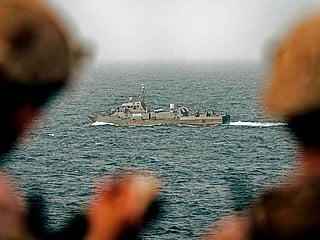
US forces have redirected 67 commercial vessels, allowed 15 humanitarian aid ships to pass and disabled four others since Washington imposed a naval blockade on Iranian ports on Wednesday, according to the latest updates from US Central Command. The blockade, enforced around Iranian coastal waters and ports, is part of mounting pressure on Iran amid ongoing regional tensions and fragile ceasefire efforts. Recent US operations also targeted vessels accused of attempting to breach the blockade, officials said.
Lebanon revises Israeli strikes toll to 12
Israel intensified strikes on Lebanon on Wednesday with the health ministry reporting 12 people killed in attacks targeting cars, mostly south of Beirut, despite a ceasefire between Israel and Hezbollah.
The fresh raids, which also targeted various areas of the country's south, came on the eve of a new round of direct negotiations between Lebanon and Israel in Washington brokered by the United States, as Hezbollah remains strongly opposed to the move.
Lebanon's health ministry said three strikes on cars along or near the coastal highway around 20 to 30 kilometres (12-19 miles) from capital Beirut "resulted in eight martyrs, including two children".
Strong US economy's resilience to shocks tested by Iran war
If you look at the numbers, the United States economy seems to be doing surprisingly well despite massive successive shocks from the pandemic, Ukraine war, tariffs, and now the Iran war energy crunch - but economists warn that resilience is precarious.
GDP growth came in at a robust 2.0 per cent last quarter, unemployment is steady, the stock market is booming, and inflation - while high - is nowhere near its pandemic peak.
US President Donald Trump has pointed to these figures as proof his economic policies, including upending the international trade order with tariffs, are working.
"The economy is resilient, but it's also kind of precariously perched," said Mark Zandi, chief economist at Moody's Analytics.
He pointed to concerns about job growth, often used as a proxy for economic activity.
While unemployment has remained steady, job growth has see-sawed wildly between expansion and contraction in the last year, with new jobs heavily reliant on a single sector: health care.
Trump says he doesn't think about Americans' finances during Iran talks
US President Donald Trump says he doesn't think about Americans' finances during Iran talks.
"I think about one thing -- we cannot let Iran have a nuclear weapon. That's all," Trump was quoted as saying by AFP
Iran military says control over Hormuz to bring significant economic revenues
Iran's military spokesman said on Wednesday that Tehran's control over the Strait of Hormuz could generate "significant" economic revenue and strengthen the country's international position.
Iran has largely blocked shipping through the strait since the outbreak of war with the United States and Israel on February 28.
In peacetime, the route accounts for roughly a fifth of global oil and liquefied natural gas shipments, along with other key commodities.
Iran's grip over the waterway has rattled global markets and given Tehran significant leverage, while the United States has imposed its own naval blockade on Iranian ports despite a fragile ceasefire in place since April 8.
"Our oversight of the Strait of Hormuz will generate significant economic revenues for our country - potentially even doubling our oil income - and will strengthen our influence on the international stage," military spokesman Mohammad Akraminia said, according to ISNA news agency.
He added that the western part of the strait was controlled by the naval forces of the Revolutionary Guards, while the eastern section was overseen by the Iranian navy.
Get updated faster and for FREE: Download the Gulf News app now - simply click here.
Israel or Iran, pick a side, says US Ambassador
US Ambassador to Israel Mike Huckabee called on Gulf Arab states to “pick a side” between Israel and Iran, saying the war has shown the benefits of normalising ties with the former, reported CNN.
“Pick a side. Which side are you going to pick?” he said on Tuesday at a conference in Tel Aviv.
Nine killed in Israeli strikes on cars south of Beirut
Israel intensified strikes on Lebanon on Wednesday with the health ministry reporting nine people killed in attacks targeting cars between Beirut and the coastal city of Sidon despite a ceasefire between Israel and Hezbollah.
The strikes along with others on various areas of the country's south came on the eve of a new round of direct negotiations between Lebanon and Israel in Washington, brokered by the United States.
Hezbollah, which on Wednesday claimed several attacks on Israeli troops who have invaded southern Lebanon, is strongly opposed to the direct talks.
Lebanon's health ministry said three strikes on cars along or near the coastal highway around 20 to 30 kilometres (12-19 miles) from Beirut "resulted in eight martyrs, including two children".
Trump arrives in Beijing for summit with Xi
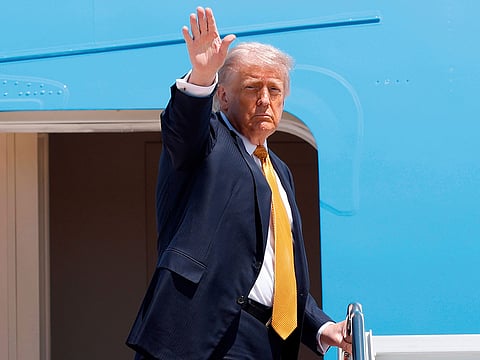
US President Donald Trump landed in Beijing on Wednesday for a high-stakes summit with Chinese leader Xi Jinping aimed at easing deep tensions between the rival superpowers.
Beginning the first visit to China by a US president in nearly a decade, Trump touched down on Air Force One at Beijing Capital International Airport at 7:50 pm (1150 GMT) after the long flight from Washington.
Ructions over Iran, trade and Taiwan loom over the highly anticipated meeting between the leaders of the world's largest economies, which Trump had already delayed from March because of the war in the Middle East.
But Trump appeared firmly focused on business deals, with Nvidia chief Jensen Huang boarding the plane at the last minute in Alaska and Tesla's Elon Musk also travelling on the presidential jet.
As the global AI race hots up, China is currently banned from purchasing the cutting-edge chips that Huang's company produces under US export rules that Washington says are to protect national security.
Trump said in a social media post en route that he would be "be asking President Xi, a Leader of extraordinary distinction, to 'open up' China so that these brilliant people can work their magic".
Philippine Airlines extends Mideast flight suspension
Flag carrier Philippine Airlines (PAL) has extended the suspension of several Middle East flights, including services to Dubai and Doha, citing ongoing security risks and unpredictable airspace conditions in the region.
The airline has noted that flights between Manila and Dubai will remain cancelled until August 2, while Doha operations are suspended until June 30, with one additional Doha to Manila cancellation announced for July 1.
"Safety remains our top priority with unpredictable conditions, including restricted airspace, sudden closures, and limited routing options," said PAL in an advisory.
Nations drawing down oil stocks at record pace: IEA
Countries are tapping into oil inventories and strategic reserves at a "record pace" due to supply disruption during the Middle East war, the International Energy Agency said Wednesday.
Global stocks were drawn down by a further 117 million barrels in April, the agency said in its monthly report, after a 129 million barrel drawdown in March.
"Rapidly shrinking buffers amid continued disruptions may herald future price spikes ahead," it said.
Get updated faster and for FREE: Download the Gulf News app now - simply click here.
Israeli strikes kill 8 people south of Beirut
Israeli strikes targeting cars on a highway south of Beirut on Wednesday killed eight people, including two children, Lebanon's health ministry said, in the latest attacks despite a ceasefire in the Israel-Hezbollah war.
In a statement, the ministry said "the three raids carried out by the Israeli enemy on the Saida-South coastal highway - specifically in Barja, Jiyeh and Saadiyat - resulted in 8 martyrs, including two children".
Israel military says striking Hezbollah targets in south Lebanon
The Israeli military said it launched a new wave of strikes across southern Lebanon Wednesday, targeting Hezbollah infrastructure, despite a truce with the Lebanese government to halt fighting with the armed group.
"The IDF has begun striking Hezbollah terror infrastructure in several areas in southern Lebanon," the military said, hours after issuing fresh evacuation warnings for a number of villages in the area.
Did Air India cut international flights for 3 months?
Dubai: Did Air India suspend all international flights for three months because of soaring fuel prices? The airline says no — but it has reduced several overseas services as rising jet fuel costs and longer flight routes increase pressure on operations.
The clarification came after reports and social media posts claimed the carrier had halted all international operations until July because of fuel shortages.
“Malicious and fabricated claims circulating on certain platforms alleging that Air India has cancelled all international flights are completely false and baseless,” Air India Newsroom said in a post on X.
Read more here.
Italy says sending minesweepers closer to Gulf region
Italy said Wednesday it was sending two warships closer to the Gulf but would only deploy them as part of an international mission in case of a lasting truce in the region.
Speaking to parliament, Defence Minister Guido Crosetto also said that a possible mission to the Strait of Hormuz could only happen with prior approval from lawmakers.
Iran has effectively blockaded the Strait, through which around a fifth of global oil supplies used to transit, since it came under attack from the US and Israel in February.
The confrontation has wrought economic havoc around the world, pushing up oil and fertilizer prices and disrupting global supply chains.
The US has also accused Iran of laying mines in the Strait.
Crosetto said that the pre-condition for any deployment would be not the ceasefire currently in place "but a real, credible and stable truce or, even better, a definitive peace".
He said it would take weeks for the minesweepers to reach the region and Italy was therefore "pre-positioning" them, initially to the eastern Mediterranean and then the Red Sea.
"Solely as a precaution... we are arranging for two minehunter units to be positioned relatively closer to the Strait," Crosetto said.
China says 'welcomes' Trump's imminent visit to Beijing
China said on Wednesday it welcomes a visit by US President Donald Trump, hours before his arrival in Beijing, where he is due to hold high-stakes talks with leader Xi Jinping.
"China welcomes President Trump on his state visit to China," foreign ministry spokesman Guo Jiakun told a news briefing, adding that "China stands ready to work with the United States... to expand cooperation and manage differences".
Israeli strike targets car on highway south of Beirut
An Israeli strike targeted a car Wednesday on a major highway linking Beirut to southern Lebanon, state media reported, despite a truce in the war between Israel and Hezbollah.
The attack took place in the Jiyeh area, about 20 kilometres (12 miles) south of the capital, Lebanon's National News Agency said. On Saturday, two similar strikes targeted two cars on the same highway.
Iran hangs man accused of spying for Israel
Iran on Wednesday hanged a man found guilty of selling information to Israeli intelligence, the judiciary said, the latest in a wave of executions during the war with the country.
Since the start of the conflict with Israel and the United States in February, Iran has ramped up executions, particularly in cases involving alleged espionage or security-related charges.
"Ehsan Afreshteh, a spy trained by Mossad in Nepal who sold sensitive information to Israel, has been executed," said the Iranian judiciary's Mizan Online website.
"Arrested and tried for espionage and collaboration with the Zionist regime, he was hanged this morning after... the verdict was upheld by the Supreme Court," it added.
India hikes gold, silver duties to protect sliding rupee
India has boosted its import tariffs on gold and silver in an effort to shore up the sagging value of the rupee and bolster foreign currency reserves hit by war in the Middle East.
Gold imports are financed through dollars, which means buyers have to spend down foreign reserves or convert rupees to make purchases.
Oil prices slide: Brent and WTI slip after 3-day gains
Oil prices pulled back in Asian trade Wednesday, reversing a three-session climb as markets took stock of shifting demand cues and persistent worries about global economic growth.
As of 11 am Tokyo time, both major benchmarks were softer, with traders digesting mixed signals from economic data and ongoing geopolitical developments.
The retreat follows a run of gains earlier this week that had been supported by supply concerns and optimism about sustained fuel demand.
Read more here.
Trump heads to China for superpower summit
Donald Trump was due in Beijing Wednesday on the first visit to China by a US president in nearly a decade, as he seeks to ramp up trade despite potential friction over Taiwan and Iran.
Leaving Washington on Tuesday on a trip that was delayed by his war, Trump said he expected a "long talk" with counterpart Xi Jinping about Iran, which relies on China as the top customer for its US-sanctioned oil.
But he also played down disagreements on Iran, saying that Xi has been "relatively good, to be honest with you".
"I don't think we need any help with Iran. We'll win it one way or the other. We'll win it peacefully or otherwise," Trump told reporters as he left the White House.
China urges Pakistan step up mediation in Middle East
China's top diplomat urged Pakistan to step up mediation efforts between Iran and the United States, and to help "properly" address the reopening of the Hormuz strait, Chinese state media said on Wednesday.
Foreign Minister Wang Yi spoke to his Pakistani counterpart Ishaq Dar in a call on Tuesday, state news agency Xinhua reported.
US President Donald Trump is expected to arrive in Beijing on Wednesday evening for talks with leader Xi Jinping, whose country is a key strategic and economic partner of Iran.
Wang called on Pakistan to "step up mediation efforts, and contribute to properly addressing issues related to opening the Strait of Hormuz", state news agency Xinhua said.
"China will continue to support Pakistan's mediation efforts and make its own contribution toward this end," Wang said, according to Xinhua.
Pakistan has emerged as the key mediator between the United States and Iran, who are in the process of negotiating a peace agreement after the conflict.
The Iranian government rejected on Tuesday the idea of amending its proposals, which Trump has deemed "garbage".
Shipping through Hormuz ramps up under 'dark' or 'Emcon' conditions: tracker
Commercial shipping through Hormuz increasingly appears to be operating under dark or "Emcon" conditions, according vessel tracker Windward. "IRGC fast craft activity expanded across both Hormuz corridors, including swarm-style formations and escort-like behavior near commercial traffic," the marine tracking site reported. Windward identified nine commercial tanker transits through Hormuz on May 11, including "dark fleet-linked" LPG and product tankers. Qatar LNG cargoes also resumed transiting Hormuz for the first time since the February closure. "Emcon" in shipping stands for "emissions control", during which vessels minimise radio, radar, and electronic emissions to avoid detection by military radars or intelligence gathering systems in the region. It is a high-stakes "hide-and-seek" game, with ships trying to move through a critical, high-risk corridor without being detected.
US blockade allows Iran 'no money': Trump
US President Donald Trump told US media before he boarded the Air Force at Joint Base Andrews, Maryland, en route to China: "We don't have to rush anything. We have a blockade which allows them no money. It's a very simple thing: we cannot let them have a nuclear weapon — because they'd use it."
Hegseth defends US-Iran war successes amid sense Senate clash
At a US Senate hearing on the Pentagon’s proposed $1.5 trillion budget, Defence Secretary Pete Hegseth pointed to what he called "battlefield gains" and said the US Navy blockade had severely strained Iran’s economy. He pushed back on appeals to reopen the Strait of Hormuz despite mounting pressure from lawmakers over rising US fuel prices.
The conflict began on February 28 with Operation Epic Fury, a wave of US airstrikes targeting Iranian nuclear facilities. Tehran responded with retaliatory attacks, before a Pakistan-brokered ceasefire took shape around April 8. That truce is now on "life support", as per Trump.
Pentagon officials told senators the fighting has cost nearly $29 billion so far and claimed the lives of 13 US service members. Democrats pressed for a clearer "and exit strategy, while many Republicans defended the sustained pressure campaign as necessary to halt Iran’s nuclear ambitions.
Lebanon says 13 killed in Israeli strikes in the south
Israeli strikes killed 13 people in southern Lebanon on Tuesday, including a soldier, a child and two rescue workers, the health ministry said.
"A strike on the city of Nabatieh left five dead, including two Civil Defence rescuers," the ministry said, while another strike in around Jebchit left four dead "including a soldier and a Syrian national" and a third strike in Bint Jbeil killed "four civilians, including a child and a woman".
US‑Israel war on Iran: Recent developments
Day 74: Iran signals potential 90% Uranium enrichment
Day 73: Trump calls Iranian response 'totally unacceptable'
Day 72: 'As of today, Tehran’s restraint is over': Iran official
Day 71: Iran keeps US waiting on response to peace plan
Day 70: US fires on Iran tankers as talks hang in balance
Day 69: Iran creates agency to control shipping at the Strait of Hormuz
Day 68: Trump threatens 'higher level' bombing of Iran if deal not agreed
Day 67: 'Project Freedom' paused 'for a short period': Trump
Day 66: UAE intercepts 12 ballistic missiles, 3 cruise missiles, 4 drones