Ships go 'dark’ in Hormuz as IRGC spurs high-stakes hide-and-seek at sea
Ghost fleets, spoofed signals and covert escorts reshape a vital global energy artery
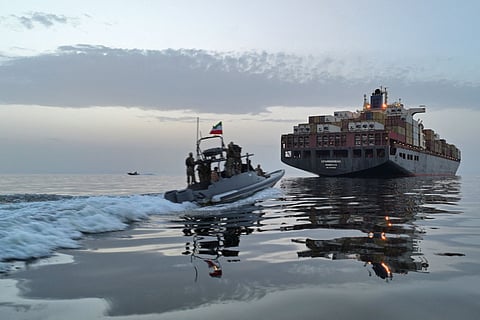
Commercial shipping through the Hormuz Strait increasingly appears to be operating under "dark" or "Emcon" conditions, according marine tracker Windward.
This means that commercial vessels passing through the narrow waterway are increasingly hiding their location and identity to avoid being targeted, likely due to heightened military tensions.
By operating "dark" or under Emissions Control (Emcon), ships turn off their tracking transponders (AIS) to evade surveillance, a behaviour often associated with circumventing sanctions or avoiding conflict.
Swarm
"IRGC fast craft activity expanded across both Hormuz corridors, including swarm-style formations and escort-like behavior near commercial traffic," the marine tracking site reported.
Windward identified nine commercial tanker transits through Hormuz on Monday (May 11), including "dark fleet-linked" LPG and product tankers.
Qatar LNG cargoes also resumed transiting Hormuz for the first time since the February closure.
Emcon in shipping stands for "emissions control", during which vessels minimise radio, radar, and electronic emissions to avoid detection by military radars or intelligence gathering systems in the region.


'Dark' conditions
When vessels go "dark", it means they turned off their Automatic Identification System (AIS) tracking, making them invisible to public, satellite-based tracking systems.
This behaviour has intensified due to increased conflicts, including kinetic attacks and potential drone strikes, leading to a "contested low-visibility operating environment".
Emcon (Emissions Control)
When vessels operate under "Emcon" conditions, it means they minimise radio, radar, and electronic emissions to avoid detection by military radars or intelligence gathering systems in the region.
This makes maritime monitoring more difficult, with reports indicating a rise in "dark" ship-to-ship transfers, particularly in the northern part of the Strait.
It is a high-stakes "hide-and-seek" game, with ships trying to move through a critical, high-risk corridor without being detected.


