Iran-US talks hit snag, as Tehran rejects second round of talks in Islamabad over naval blockade
Iran rejects second talks with US in Pakistan, cites 'naval blockade' as key obstacle
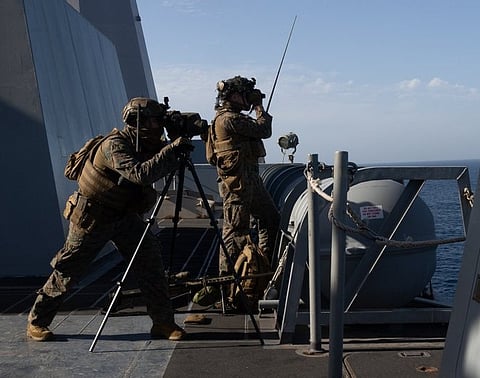
The Iran-US talks hosted in Pakistan hit a snag as Tehran refused to attend a second round in Islamabad, protesting Washington's ongoing naval blockade of its ports and the Strait of Hormuz.
Iran has recently declared the waterway "completely open".
Late on Sunday (April 19), however, Iran rejected the second round of talks with the US in Pakistan, state media reported, citing a US naval blockade as the main "obstacle".
After repeated warnings from the guided-missile destroyer USS Spruance to stop, the US Navy fired on and seized an Iranian-flagged cargo ship Touska that attempted to breach a US naval blockade in the Gulf of Oman on Sunday.
This marks a sharp escalation in already high tensions over control of strategic Middle East waterways.
US forces reportedly "disabled" the ship’s engine room before taking the vessel into custody, Trump said. Marines are reportedly inspecting the ship’s cargo.
No prospect for negotiations
The official IRNA news agency said Tehran saw “no clear prospect for productive negotiations under the current circumstances.”
Iran’s stance hardened amid the ongoing blockade of its ports and the Strait of Hormuz, even as US President Donald Trump expressed optimism about reaching a deal.
Tasnim News Agency earlier reported that Tehran had not finalised whether to send a delegation to Islamabad.
The boycott follows a fragile ceasefire after weeks of US-Iran hostilities.
Pakistan mediated the first round and has offered to host the second.
Iranian state media, including Tasnim, and Foreign Ministry spokesperson Ismaeil Baqaei, reported the boycott, calling the US blockade a "breach of the Pakistan-mediated ceasefire" and "piracy" that violates UN resolutions.
Baqaei warned of "reciprocal measures" if violations persist. Iranian Navy chief Shahram Irani dismissed Trump's actions as "empty words" targeting allies, not Iran.
No-show threat
The standoff follows a fragile 10-day ceasefire after six weeks of hostilities.
President Trump announced a US delegation would proceed to Pakistan on Tuesday (April 21) despite Iran's threat of a no-show, hinting at threats to Iran's power grid if no deal emerges.
Tehran demands the blockade lift first, citing "lack of trust" and "excessive US demands" on nuclear issues and Hormuz access, per reports from Mizan Online and IRNA.
Iranian officials insist the strait remains under their "supervision" and "open" to commercial traffic, but US enforcement has seized vessels.
Diplomatic sources indicate Pakistan's army chief visited Tehran on April 15 to salvage talks, but deep divisions linger.
With the ceasefire deadline ending April 22, analysts warn of escalation risks, including proxy attacks or renewed blockades, as oil prices fluctuate post-Hormuz reopening.
Blockade remains
No breakthrough was reported as of April 20.
The US maintains the blockade as leverage for a broader deal on Iran's nuclear programme and regional proxies.
US Central Command said 21 vessels have turned back to Iran since the US began a blockade of Iranian ports in the Gulf and Gulf of Oman on 13 April.
Fragile ceasefire
A fragile ceasefire has technically held in the Iran conflict, but the war's toll exceeds 5,300 dead — at least 3,000 in Iran, over 2,290 in Lebanon, 23 in Israel, more than a dozen in Gulf Arab states and 13 U.S. service members — with the Strait of Hormuz re-emerging as a critical flashpoint for the world's oil flows.
Hopes for reopening the strait, through which roughly one-fifth of global oil passes, faded rapidly.
Iran announced commercial shipping could resume after a 10-day truce tied to the Israel-Hezbollah front in Lebanon, but President Donald Trump insisted the US blockade of Iranian ports would remain “in full force” until a broader deal is reached.
Tehran responded swiftly.
“It is impossible for others to pass… while we cannot,” parliamentary speaker Mohammed Bagher Ghalibaf was quoted as saying by local media, marking Iran's hardline strategy to mirror constraints on its exports with global shipping disruptions.


