Iran says Trump’s Hormuz reopening claim ‘far from reality’
Tehran says ship permits, routes and passage will remain under Tehran’s control
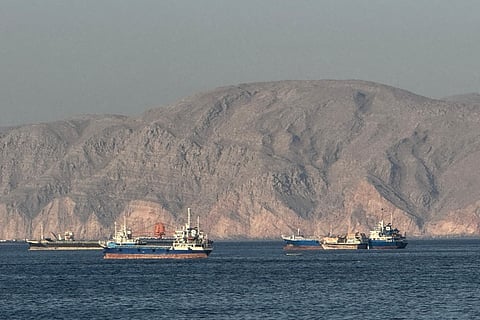
Dubai: US President Donald Trump’s claim that the Strait of Hormuz will fully reopen under a peace agreement with Iran is “far from reality”, Iran’s semi-official Fars news agency reported on Sunday, saying Tehran would retain control over shipping through the strategic waterway.
“Based on the latest exchanged text, if a possible agreement is reached, the Strait of Hormuz will still be under Iran’s management,” Fars, which is close to Iran’s Revolutionary Guards, said.
It added that while Iran had agreed to restore ship traffic to pre-war levels, this “does not at all mean free passage” under pre-war conditions.
“The management of the strait, determining the route, time, manner of passage, and issuing permits will remain exclusively under the control and discretion of the Islamic Republic of Iran,” the report said, adding that Trump’s comments “do not correspond to reality”.
Trump earlier said a deal with Iran, including the reopening of the Strait of Hormuz, had been “largely negotiated” following calls with Israel and regional allies.
HOW THE HORMUZ CRISIS ESCALATED
February 28: US and Israel launch strikes on Iran
Iran retaliates, effectively shutting Hormuz
April 11-12: Historic US-Iran talks held in Islamabad
April 13: US begins blockade of Iranian ports
Iran repeatedly threatens renewed Hormuz restrictions
Trump sets multiple deadlines, later delays strikes
Saturday: Pakistan-led mediation pushes new framework deal
Saturday: Trump says Hormuz reopening “largely negotiated”
Sunday: Iran’s Fars says Strait will remain under Tehran’s control
“Final aspects and details of the Deal are currently being discussed, and will be announced shortly,” Trump said on social media, adding that he had spoken with leaders from the UAE, Saudi Arabia, Qatar, Pakistan, Turkey, Egypt, Jordan and Bahrain, as well as Israel.
He described the emerging arrangement as a “Memorandum of Understanding pertaining to PEACE” that still needed to be finalised by the United States, Iran and countries involved in Saturday’s talks.
No mention of nuclear programme
There was no mention of Iran’s nuclear programme or its stockpile of highly enriched uranium, issues Tehran has indicated should be discussed later.
A regional official familiar with the Pakistan-led mediation effort told AP on Saturday that the US and Iran were moving closer to an agreement to end the war, though “last-minute disputes” could still derail the process.
The official said the proposed deal would include a formal declaration ending the war, followed by two months of negotiations on Iran’s nuclear programme. The Strait of Hormuz would reopen and the US would end its blockade of Iranian ports.
Iran has meanwhile described the emerging proposal as a “framework agreement” aimed at opening broader negotiations.
Foreign Ministry spokesperson Esmail Baghaei said the draft was intended to end the war first, with details to be negotiated over the next 30 to 60 days.
Removing sanctions is a primary demand
“Our focus at this stage is on ending the war on all fronts, including Lebanon,” Baghaei told IRNA, adding that lifting sanctions remained a key Iranian demand. He also said nuclear issues were not part of the current negotiations.
US Secretary of State Marco Rubio said “some progress” had been made but reiterated Washington’s position that Iran must never obtain a nuclear weapon, must hand over its highly enriched uranium, and that the Strait of Hormuz must remain open.
Iranian parliament speaker Mohammad Bagher Ghalibaf meanwhile warned that if Trump resumed attacks, the outcome would be “more crushing and more bitter” than at the start of the war.
WHY THE DEAL REMAINS STUCK
Iran wants sanctions relief first
US demands uranium surrender
Tehran says Hormuz reopening won’t mean “free passage”
Iran insists Strait management stays under its control
Nuclear programme pushed to later negotiations
Risk of renewed strikes still hanging over talks
The US and Israel launched strikes on Iran on February 28, halting nuclear talks. Tehran retaliated by effectively shutting down the Strait of Hormuz, disrupting one of the world’s most important energy shipping routes and triggering global economic pressure.
The US later imposed a blockade on Iranian ports. US Central Command said Saturday that American forces had turned away more than 100 commercial vessels and disabled four since the blockade began on April 13.
-- With AP inputs


