US awaits Iran response as tensions escalate; Bahrain detains dozens in Iran-linked case
Foreign minister says recent developments expose consequences of ‘whimsical adventurism’
Highlights
We are closing this coverage now. For latest updates, click here.
Saudi Arabia, Qatar discuss Iran–US ceasefire
Qatar’s Prime Minister and Foreign Minister Sheikh Mohammed bin Abdulrahman Al Thani held a phone call with Saudi Foreign Minister Prince Faisal bin Farhan Al Saud to discuss regional developments and efforts to maintain stability.
According to Qatar’s Ministry of Foreign Affairs, both sides discussed the latest situation in the region, particularly the ceasefire between the United States and Iran, along with ongoing efforts aimed at de-escalation and strengthening regional security.
In a post on X, the ministry said Qatar stressed the importance of all parties engaging with mediation efforts, warning that a lasting solution depends on dialogue and addressing the “root causes of the crisis.”
Israel says projectile fired from Lebanon breaches ceasefire
The Israeli military has said a projectile fired from Lebanon landed inside Israeli territory without causing any casualties, describing the incident as a breach of ceasefire understandings.
In a post on X, the Israel Defense Forces (IDF) said air raid alerts were activated in the Ramat area shortly before the impact.
The army claimed the launch was carried out by Hezbollah, calling it “another violation of the ceasefire understandings” by the group.
No injuries or damage were reported following the incident, according to the military statement.
Get updated faster and for FREE: Download the Gulf News app now - simply click here.
Bahrain confirms network collected funds for Iran support
Bahrain’s Ministry of Interior has said investigations have confirmed that members of a recently dismantled group were in direct contact with Iran’s Islamic Revolutionary Guard Corps (IRGC). Authorities allege the network maintained external links as part of its operations.
Officials said the arrested individuals collected funds with the intention of transferring them to Iran, allegedly to support IRGC-related activities and finance what they described as hostile operations.
Qatar urges action over Israeli violations at UN
Qatar has called on the international community to act against repeated Israeli violations in the occupied Palestinian territories and implement relevant UN Security Council resolutions. Speaking at a UN Security Council Arria-formula meeting in New York, Qatar’s Permanent Representative to the UN, Sheikha Alya Ahmed bin Saif Al Thani, reaffirmed Doha’s support for a two-state solution based on 1967 borders with East Jerusalem as the capital of a future Palestinian state.
Qatar also condemned Israeli settlement expansion in the West Bank, the designation of occupied land as “state land”, and incursions into the Al Aqsa Mosque compound by Israeli officials and settlers. The country warned that such actions undermine peace efforts and the viability of a Palestinian state, while also condemning escalating settler violence against Palestinians, including attacks on schools and children.
US forces redirect 58 vessels since April 13
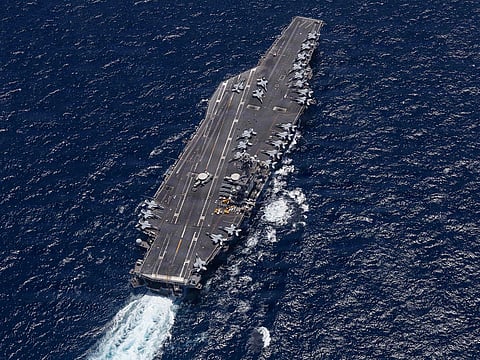
The United States Central Command (CENTCOM) has said its naval blockade against Iran remains fully enforced, with continued operations targeting commercial shipping near Iranian ports.
Since April 13, US forces have redirected 58 commercial vessels and disabled four others to prevent them from entering or leaving Iranian waters.
The enforcement forms part of broader maritime restrictions aimed at controlling key sea routes near the Strait of Hormuz, a vital global energy corridor, amid ongoing regional tensions and heightened naval activity in the Gulf.
US awaits Iran reply on peace deal plan
Iran questioned the seriousness of US diplomacy after naval clashes in the Gulf, and kept Washington waiting on its response to the latest American proposal for a deal to extend the truce and launch peace talks.
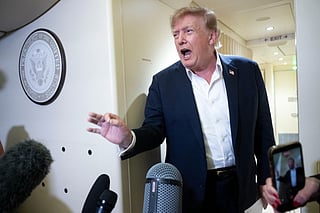
On Saturday there was no public sign of Iran's reply to the proposal, despite US President Donald Trump saying late Friday he expected to receive it during Friday night.
Syria president discusses security with visiting Lebanon PM
Syrian President Ahmed al-Sharaa met Lebanon's Prime Minister Nawaf Salam in Damascus on Saturday on a visit tackling issues including security, transport and energy.
A statement from the Syrian presidency said the officials discussed "developing economic and trade cooperation... and bolstering security coordination in order to support stability and confront challenges", as well as regional and international developments.
Syrian state news agency SANA said the visit aimed to "develop joint cooperation... particularly the economy, transportation and energy" sectors.
Salam was accompanied by Deputy Prime Minister Tarek Mitri as well as Lebanese ministers for energy, economy and transport.
Salam hailed "significant progress" on joint issues at the end of the visit, telling reporters that "we discussed continuing efforts to address the issue of detained Syrians (in Lebanon) and to uncover the fate of the missing and forcibly detained in both countries".
Lebanon says at least one killed in Israel strikes on south
Lebanese official media reported three Israeli strikes south of Beirut on Saturday despite a three-week-old ceasefire between Israel and the Iran-backed Hezbollah militant group.
"The Israeli enemy launched two strikes on the Saadiyat highway," the state-run National News Agency reported, referring to a location around 20 kilometres (12 miles) south of Beirut and outside Hezbollah's traditional strongholds.
It later reported a third strike nearby.
The Lebanese health ministry said an Israeli strike on a motorbike in the city of Nabatieh outside the evacuation areas hit "a Syrian national and his 12-year-old daughter".
"After they managed to move away from the site of the first strike, the drone attacked a second time," killing the father, the ministry said, while the drone then targeted the girl "directly for a third time".
The girl was undergoing life-saving surgery, the ministry said.
Get updated faster and for FREE: Download the Gulf News app now - simply click here.
UK sending warship to Middle East ahead of Hormuz mission
The UK will send a destroyer to the Middle East ahead of any international mission to help protect shipping in the key Strait of Hormuz, its defence ministry said Saturday.
"The pre-positioning of HMS Dragon is part of prudent planning that will ensure that the UK is ready, as part of a multinational coalition jointly led by the UK and France, to secure the strait, when conditions allow," a ministry spokesperson told AFP.
Britain and France said last month that military plans to secure the Strait of Hormuz were coming together and would succeed in restoring trade flows through the vital passage.
The MoD said deploying HMS Dragon would strengthen the confidence of commercial shipping and support mine clearance efforts once hostilities end.
HMS Dragon is currently being moved from the eastern Mediterranean, where it had been supporting the defence of British bases in Cyprus, to the Middle East region.
At a two-day meeting in London in April involving more than 44 countries, military planners discussed the practicalities of a multinational mission led by the UK and France to protect navigation in the key waterway.
Some 40 countries are understood to have agreed to participate in plans for the mission to free up navigation in Hormuz.
Lebanese state media reports two strikes near Beirut
Lebanese official media reported two strikes south of Beirut on Saturday despite a three-week-old ceasefire between Israel and the Iran-backed Hezbollah militant group.
"The Israeli enemy launched two strikes on the Saadiyat highway," the state-run National News Agency said, referring to a location around 20 kilometres (12 miles) south of Beirut and outside Hezbollah's traditional strongholds.
UAE backs Bahrain over Iran-linked network
Sheikh Abdullah bin Zayed Al Nahyan, Deputy Prime Minister and Minister of Foreign Affairs,expressed the UAE’s full solidarity with Bahrain and its support for the measures taken by Bahraini security authorities following the discovery of an organisation linked to Iran’s Revolutionary Guard and the ideology of “Wilayat Al Faqih”.
In a statement, Sheikh Abdullah said the UAE backs all steps taken by Bahrain to protect its security, sovereignty and stability, while safeguarding the safety of its society.
Six missing after reported US strikes near Strait of Hormuz
Six people are missing after Iranian officials alleged a US attack on fishing and cargo vessels in the Arabian Gulf near the Strait of Hormuz, CNN reported. Several injured individuals were taken to hospital in Khasab, near Oman’s port of the same name.
US Central Command, meanwhile, said it targeted two Iranian-flagged oil tankers in the Gulf of Oman as they attempted to bypass a blockade, disabling them with precision strikes from a US Navy F/A-18 aircraft.
The tankers were identified as M/T Sea Star III and M/T Sevda.
The latest incidents come amid escalating tensions in the region, with maritime traffic through the Strait of Hormuz reportedly slowing sharply due to ongoing military activity.
Get updated faster and for FREE: Download the Gulf News app now - simply click here.
Iran confirms World Cup participation, sets conditions
Iran’s football federation has confirmed that the men’s national team will compete in the 2026 World Cup in the United States, Mexico, and Canada, but insists that hosts respect its conditions amid ongoing Middle East conflict.
The federation’s president, Mehdi Taj, outlined 10 requirements, including visa approvals for players and staff, respect for the team’s flag and anthem, and enhanced security at airports, hotels, and stadiums. The announcement follows last month’s refusal by Canada to admit the federation’s chief due to his links with the Islamic Revolutionary Guard Corps (IRGC), designated a terrorist organisation by several countries.
Iran will be based in Tucson, Arizona, and open its campaign against New Zealand in Los Angeles on June 15. They are grouped with New Zealand, Belgium, and Egypt in Group G.
While US officials have assured Iran’s participation, they warned that individuals with IRGC ties could face entry restrictions. FIFA has confirmed that Iran’s matches will proceed as scheduled.
The Iranian federation emphasised: “We will participate in the World Cup tournament, but without any retreat from our beliefs, culture, and convictions.”
Trump’s ‘Project Freedom’ escorts only two ships: Report
According to a report by CNN, US President Donald Trump’s “Project Freedom” operation in the Strait of Hormuz managed to escort only two ships out of nearly 1,600 vessels stranded in the Arabian Gulf during its brief 48-hour mission. The operation has reportedly failed to restore confidence among global shipping companies, with missiles still flying over the strategic waterway despite a ceasefire announcement. Thousands of seafarers are still trapped aboard vessels waiting for a safe passage out of the region.
Shipping executives and insurers remain reluctant to risk moving cargo through the Strait of Hormuz, one of the world’s most critical energy corridors. Port of Los Angeles Executive Director Gene Seroka told CNN that only a genuine and lasting peace agreement would convince the commercial shipping industry to resume normal operations. Under normal conditions, around 120 ships pass through the strait daily, carrying nearly 20 per cent of the world’s oil supply.
Get updated faster and for FREE: Download the Gulf News app now - simply click here.
Iran accuses US of delusional and roguish behaviour
Iranian Foreign Ministry spokesman Esmaeil Baghaei sharply criticised "whimsical adventurism and roguish behaviour" of the US, saying recent developments had exposed the consequences of "lawless irresponsibility".
In a post on X on Friday, Baghaei said that "vermin-like nocturnal scheming" and dismissive descriptions such as "a light slap" could not erase a "profound disgrace born of narcissism, greed, reckless miscalculation, and lawless irresponsibility."
"The consequences of this whimsical adventurism and roguish behaviour have now become clear to the entire world," he said.
Baghaei added that "disjointed, delusional tweets no longer hold any sway over reality," while quoting a line that "the deeper they sink into folly, the more inventive they become in justifying it."
The remarks appeared to build on an earlier X post published on May 6, in which the Iranian spokesman cited the concept of "wooden-headness" as a source of self-deception in governments.
Quoting from the earlier message, Baghaei said, "It consists in assessing a situation in terms of preconceived fixed notions while ignoring or rejecting any contrary signs," adding that it reflects acting according to wishes while refusing to be guided by facts.
Bahrain uncovers alleged Iran-linked espionage group
Bahrain Ministry of Interior announced that security authorities had uncovered an organisation linked to Iran’s Revolutionary Guard and the ideology of “Wilayat Al Faqih”, following investigations and intelligence reports tied to espionage cases involving foreign entities and sympathy with what it described as the blatant Iranian aggression.
The ministry said 41 members of the main organisation had been arrested and legal procedures were under way against them, while investigations and search operations continue to identify and take action against others allegedly involved in the group’s activities or other violations of the law.
Get updated faster and for FREE: Download the Gulf News app now - simply click here.
US sanctions hit Iran-linked procurement networks
The US Treasury Department announced sweeping new sanctions targeting individuals and companies accused of helping Iran procure weapons, UAV components and missile-related materials as part of the US President Donald Trump administration's "Economic Fury" campaign.
In a statement, the Treasury Department's Office of Foreign Assets Control (OFAC) said it sanctioned 10 individuals and companies operating across West Asia, Asia and Eastern Europe that allegedly supported Iran's military procurement networks, including efforts linked to the Islamic Revolutionary Guard Corps and Iran's Shahed-series unmanned aerial vehicles (UAVs) and ballistic missile programme.
According to the Treasury Department, the sanctions targeted procurement networks linked to the Center for Progress and Development of Iran (CDPI), previously known as the Center for Innovation and Technology Cooperation (CITC), which Washington accuses of coordinating Iranian technology and weapons acquisitions.
"While the surviving IRGC leaders are trapped like rats in a sinking ship, the Treasury Department is unrelenting in our Economic Fury campaign," said US Secretary of the Treasury Scott Bessent.
"Under President Trump's decisive leadership, we will continue to act to keep America safe and target foreign individuals and companies providing Iran's military with weapons for use against US forces," he added.
Iran insists no deadline pressure as it reviews US negotiation plan
Iran on Saturday said it was still reviewing the United States' proposal linked to ongoing negotiations over the West Asia conflict and would respond "at the appropriate time", according to media reports.
The report said expectations had grown that Tehran would issue a response on Friday after US Secretary of State Marco Rubio indicated that Washington was expecting an answer from Iran.
However, Iranian Foreign Ministry spokesman Esmaeil Baghaei said the proposal remains under review and dismissed pressure from Washington over deadlines.
The deadlines set by American politicians mean nothing; we do our own work, and we do not concern ourselves with deadlines or ultimatum.Esmaeil Baghaei
According to the report, one reason behind the delay is the highly technical nature of the proposal, with Iranian negotiators closely examining every provision in the document before finalising a response.
The report added that several Iranian institutions and senior officials must also approve the response before it can be finalised.
The negotiating process reportedly involves Parliament Speaker Mohammad Bagher Ghalibaf, the Islamic Revolutionary Guard Corps (IRGC), and Iran's Supreme National Security Council, which oversees major security matters, including the ongoing conflict.
Get updated faster and for FREE: Download the Gulf News app now - simply click here.
Tensions flare as Israel issues evacuation order in southern Lebanon
The Israeli military called on residents of more than half a dozen villages in southern Lebanon to immediately evacuate on Saturday ahead of expected attacks against Hezbollah despite a truce with Lebanon intended to halt the fighting.
"In light of the terrorist Hezbollah's violation of the ceasefire agreement, the IDF is compelled to act against it forcefully," the military's Arabic-language spokesman Avichay Adraee posted on X, listing nine villages.
"For your safety, you must evacuate your homes immediately and stay away from the villages and towns by a distance of no less than 1,000 metres to open areas," he added.
In an earlier statement, the Israeli military said it had struck more than 85 Hezbollah infrastructure sites "from the air and on the ground" in the past 24 hours.
It said these included weapon storage facilities, launchers, and structures used by Hezbollah "to advance terrorist activities against Israeli civilians and IDF soldiers".
The military also said it had struck an underground Hezbollah weapons production site in the Beqaa valley in eastern Lebanon, as well as militants who were "advancing terrorist activities against IDF soldiers operating in southern Lebanon".
Get updated faster and for FREE: Download the Gulf News app now - simply click here.
Colonialism will have no place in future world: Pezeshkian
Iranian President Masoud Pezeshkian said that Iran remains committed to expanding friendly relations with other nations based on mutual respect and shared interests, while rejecting the policy of "colonialism and exploitation".
In a post on X, Pezeshkian said, "The policy of the Islamic Republic of Iran is to expand friendly relations based on mutual respect and shared interests."
He added that "the policy of colonialism and exploitation will have no place in the future world".
The Iranian President also emphasised Iran's historical identity, saying tolerance is deeply rooted in Iranian culture, while resistance against oppression has long been part of the country's history.
Just as tolerance is deeply rooted in the culture of our people, the struggle against oppression shines in the history of this land. This identity will continue for the exaltation of Iran's name.Masoud Pezeshkian
Get updated faster and for FREE: Download the Gulf News app now - simply click here.
US actions in Gulf breach ceasefire, Iran tells UN
Iran's Permanent Representative to the United Nations, Amir Saeid Iravani, has accused the United States of violating the ceasefire through military actions near the Strait of Hormuz, according to Iran's state broadcaster IRIB.
In a letter addressed to UN Secretary-General Antonio Guterres and the President of the UN Security Council, Iravani said alleged US military action against two Iranian oil tankers near Jask Port and the Strait of Hormuz, along with attacks on Iranian coastal areas, constituted "a clear violation of the ceasefire" and "a gross violation of Article 2, Paragraph 4 of the UN Charter".
He warned that continued US military activity in the Arabian Gulf and the Strait of Hormuz could have "catastrophic consequences" extending beyond the region and threatening international peace and security.
The United States will bear full responsibility for the consequences of these actions.Amir Saeid Iravani
The Iranian envoy also called on the United Nations and the Security Council to "unequivocally condemn" what he described as "illegal" US actions, including a naval blockade against Iran, and urged Washington to comply with international law and avoid further escalation.
US, Iran could resume talks in Islamabad next week: Report
The United States and Iran could resume negotiations as early as next week in Islamabad, according to a report by The Wall Street Journal citing people familiar with the matter.
The report said both sides are working through mediators on a one-page, 14-point memorandum of understanding (MoU) intended to establish the framework for a month-long negotiating process aimed at ending the conflict.
According to the report, the proposed draft includes Iran's nuclear programme, reducing tensions in the Strait of Hormuz, and possible arrangements for transferring Iran's highly enriched uranium stockpiles to another country. However, several major issues remain unresolved.
One of the main sticking points is the scope of potential sanctions relief for Tehran, which the report said could complicate or delay progress in the talks.
If negotiations advance, the initial one-month dialogue period could reportedly be extended by mutual agreement.
Mojtaba Khamenei shaping war strategy, report says
Iran's new Supreme Leader, Mojtaba Khamenei, is playing a central role in shaping Tehran's war and negotiation strategy alongside senior Iranian officials, even as uncertainity persists over his health and exact level of authority, according to a CNN report citing US intelligence assessments.
The news report said US intelligence believes Khamenei has become a key figure directing Iran's approach to negotiations with the United States aimed at ending the conflict that followed recent US and Israeli strikes on Iranian targets. However, officials reportedly acknowledge that authority inside Iran's leadership remains fragmented after the war and the deaths of several senior military commanders.
Khamenei has not appeared publicly since he was reportedly injured during the attack that killed his father, former Supreme Leader Ali Khamenei, along with top Iranian military leaders at the start of the conflict. His absence has fuelled speculation about his health and his ability to fully control the government.
According to CNN, US intelligence agencies have been unable to visually confirm Mojtaba Khamenei's whereabouts since he assumed leadership days after the strike.
The news report said Khamenei is avoiding electronic communications entirely and is instead relying on trusted couriers and face-to-face meetings to relay instructions. Sources familiar with the intelligence assessment told CNN that he remains isolated while receiving medical treatment for serious injuries, including burns affecting one side of his body, including parts of his face, arm, torso, and leg.
Trump hints at ‘Project Freedom plus’ if Iran deal fails
US President Donald Trump said his administration may consider reviving the now-suspended maritime security initiative, "Project Freedom", aimed at helping the passage of commercial vessels trapped in the Strait of Hormuz amid escalating regional tensions in the Gulf.
If a deal is not reached with Iran, Trump added that the renewed effort would be expanded into what he called "Project Freedom plus."
Speaking to reporters at the White House before travelling to a dinner at his golf course in Sterling, Virginia, Trump said that he might "go back to Project Freedom" if a deal is not reached, but it would be "Project Freedom plus", noting that the initiative would be the same as its predecessor, "plus other things".
We'll go a different route if everything doesn't get signed up, buttoned up.Donald Trump
"I think Project Freedom is good, but I think we have other ways of doing it also. We may go back to Project Freedom if things don't happen, but it'd be Project Freedom plus, meaning Project Freedom plus other things," he added.
US awaits Iran's response on latest proposal
A US fighter jet disables two Iranian-flagged tankers, prompting retaliatory attacks and rattling a shaky truce as President Donald Trump says he is awaiting Tehran's reply to his latest proposal to end the Middle East war.
Meanwhile, Iranian officials accused the US of violating the ceasefire with the tanker strikes and hampering diplomatic efforts to end the conflict.
Get updated faster and for FREE: Download the Gulf News app now - simply click here.
Suspected oil slick off Iran's Kharg Island
Satellite images appeared to show an oil slick spreading off the coast of Iran's Kharg Island, a key oil export terminal for the Islamic republic.
It was not immediately clear what had caused the apparent spill, which was located off the small Gulf island's west coast.
Orbital EOS, which monitors oil spills, told The New York Times that the spill appeared to cover more than 20 square miles (52 square kilometers) as of Thursday.
The Conflict and Environment Observatory, a non-governmental organization, said on X that the "original source remains unclear, meanwhile it's drifting south and seems unlikely to be addressed appropriately."
Qatar PM meets Vance, calls for Iran talks
Qatar's prime minister called for renewed diplomacy on an agreement with Iran as he met in Washington with Vice President JD Vance.
Sheikh Mohammed bin Abdulrahman Al Thani met with Vance and discussed Pakistani-led efforts to broker a permanent peace amid a shaky ceasefire.
Hezbollah strikes Israeli military bases
Hezbollah said it launched missiles and drones at military bases in Israel in retaliation for a recent attack on Beirut and ongoing strikes in the south, where Lebanese authorities reported 11 people killed.
US jet fires on tankers
US forces fired on and disabled two Iranian-flagged tankers that tried to violate the American blockade of Iran's ports, the US military said.
A US Navy F/A-18 Super Hornet "disabled both tankers after firing precision munitions into their smokestacks, preventing the non-compliant ships from entering Iran," US Central Command said in a post on X that included footage of the strikes.
US forces have now forcibly halted four ships they said were seeking to violate the blockade, in place since April 13.
'Europe to share Iran burden'
US Secretary of State Marco Rubio urged Europeans to help secure the strategic Strait of Hormuz.
"The world has to start asking itself, what is it willing to do if Iran tries to normalise a control of an international waterway? I think that's unacceptable," he said after meeting Italian PM Giorgia Meloni.
"If one of the main reasons why the US is in NATO is the ability to have forces deployed in Europe that we could project to other contingencies, and now that's no longer the case, at least when it comes to some NATO members, that's a problem, and it has to be examined," he added.
Hormuz control like 'atomic bomb'
"The Strait of Hormuz represents an opportunity as precious as an atomic bomb," said Mohammad Mokhber, an adviser to Iran's supreme leader.
"Indeed, having in one's hands a position that allows you to influence the global economy with a single decision is a major opportunity."
'Saudi banned US use of bases'
Saudi Arabia prohibited the United States from using its airspace and bases on its territory to launch operations for its brief bid to reopen the Strait of Hormuz, two Saudi sources told AFP.
But the sources, who spoke on condition of anonymity to discuss sensitive matters, said Washington's access to Saudi airspace and bases would continue for other uses.
EU bans fuel surcharges
The European Union said on Friday that airlines must not charge customers extra fuel fees after they have already bought tickets, as aviation fuel costs soar amidst fears of shortages because of the Middle East war.
The EU Aviation Safety Agency (EASA) meanwhile cleared the way for the use of Jet A, a US-produced aviation fuel only used in Europe for return flights from the United States.
US‑Israel war on Iran: Recent developments
Day 70: US fires on Iran tankers as talks hang in balance
Day 69: Iran creates agency to control shipping at the Strait of Hormuz
Day 68: Trump threatens 'higher level' bombing of Iran if deal not agreed
Day 67: 'Project Freedom' paused 'for a short period': Trump
Day 66: UAE intercepts 12 ballistic missiles, 3 cruise missiles, 4 drones