USS Abraham Lincoln
Iran-US conflict escalates: Trump warns of 'not-so-nice' end, Vance demands enrichment cuts as oil blockade hits Iran economy
Iran dismisses US predictions of economic collapse amid escalating tensions
Last updated:
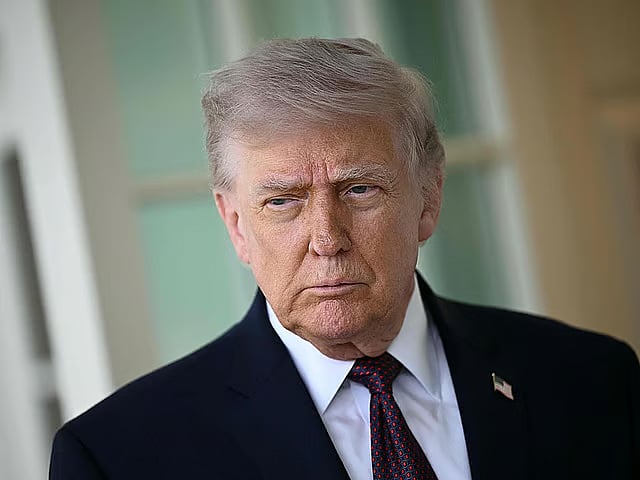
US President Donald Trump says Washington will soon decide whether to end the war with Iran "the nice way or the not-so-nice way," claiming Iran's military has been effectively neutralised and that oil flows through the Strait of Hormuz are back to pre-war levels. Vice President JD Vance says Tehran must make a significant cut to its nuclear enrichment capacity to secure a permanent ceasefire, though he admits Washington is unsure how much authority Iran's civilian leaders now hold after the country's top leadership was eliminated. Pressure on Iran's economy is mounting, with tanker data showing no crude loaded since August 25 under the US-led naval blockade, prompting Treasury Secretary Scott Bessent to question what the newly appointed acting oil minister is managing. Central Bank Governor Abdolnaser Hemmati has dismissed US predictions of an imminent economic collapse as "delusional," insisting Tehran has enough foreign currency reserves to secure basic necessities. Meanwhile, Qatar says mediation between the two sides continues, Oman has evacuated 10 crew from a vessel struck by a projectile in the Strait of Hormuz, and Saudi Arabia has restored its East-West Pipeline to 5.8 million barrels per day. Follow our live blog for the latest updates.
US‑Israel war on Iran: Recent developments
Trump says oil flows through Hormuz are back to pre-war levels
US President Donald Trump claimed that millions of barrels of oil have moved through the Strait of Hormuz over the past few days. Speaking to reporters before leaving for Maryland, he said shipments are now matching, and at times topping, the volumes seen before the war.
Trump also said Iran's oil minister has resigned, claiming the official admitted that Iran has no economy and no oil left.
Vance says Iran must cut enrichment capacity to end war
US Vice President JD Vance stated in an interview with journalists on October 7, 2026, that Iran must make a "meaningful" and "significant" reduction in its nuclear enrichment capacity to satisfy Washington's demands and bring an end to the ongoing conflict.
Vance emphasised that Washington remains open to a diplomatic agreement, but Iran must demonstrate concrete nuclear concessions — specifically scaling back its uranium enrichment infrastructure — to secure a permanent ceasefire.
Vance noted that while the US is engaged in backchannel discussions with Iranian President Masoud Pezeshkian and Foreign Minister Abbas Araqchi, Washington remains uncertain how much decision-making authority these civilian officials hold following the decapitation of Iran's top leadership.
Trump warns US may finish Iran war in a ‘not-so-nice’ way
US President Donald Trump stated during an address at an Anduril Industries event in Sparrows Point, Maryland, on October 6, 2026, that the United States must "finish up" the war with Iran, adding that Washington will soon decide whether to bring the conflict to an end the "nice way or the not-so-nice way."
Trump told attendees that the United States was doing "extremely well" against Iran and declared that its military capabilities had been effectively neutralised: "They have no military in sight. The whole place is shot. They were the bully of the Middle East, and they're not so much the bully anymore."
By giving a choice between the "nice way or the not-so-nice way," Trump implied an upcoming choice between a diplomatic settlement or an intensified military campaign aimed at forced resolution.
Trump: 'Nobody knows who is running Iran', Baghaei pushes back
US President Donald Trump stated in a press exchange on October 6, 2026, that his "biggest problem" in dealing with the conflict with Tehran is that "nobody knows who the hell is running" Iran after successive tiers of Iranian leadership were eliminated.
Speaking to reporters before boarding Marine One at the White House, Trump remarked: "Their leaders are gone, their second group of leaders are gone, and the biggest problem I have is nobody knows who the hell is running the country."
Iranian Foreign Ministry spokesman Esmaeil Baghaei pushed back on Trump's statements, asserting that Washington knows full well how Iran's decision-making structure works. Baghaei pushed the fault back onto Washington, citing "contradictory positions and mixed messaging from US officials".
Iran’s new oil minister questioned by Bessent
US Treasury Secretary Scott Bessent has publicly questioned the role of Iran’s newly appointed oil minister after tanker-tracking data showed that Iran has not loaded a single barrel of crude onto a vessel since late August, underscoring the impact of the US-led naval blockade on Tehran’s most vital revenue stream.
On October 6, Bessent posted on X: “Iran has a new oil minister. Considering Iran has not loaded a single barrel of crude onto a vessel since August 25th, what is the oil minister managing?”
The remark came hours after President Masoud Pezeshkian accepted the resignation of Oil Minister Mohsen Paknejad and appointed Hamid Bovard, head of the National Iranian Oil Company (NIOC), as acting minister.
Get updated faster and for FREE: Download the Gulf News app now - simply click here.
Iran economic collapse predicted by US will not come true: CBI chief
Central Bank of Iran (CBI) Governor Abdolnaser Hemmati dismissed US predictions claiming the Iranian economy would collapse in short order, calling the forecasts "delusional" and assuring the public that Tehran has sufficient foreign currency reserves to secure basic necessities.
Hemmati dismissed predictions by US Treasury Secretary Scott Bessent that Iran's economy would "collapse within two weeks." Hemmati cited a proverb ("Chickens are counted at the end of autumn") to assert that Washington's economic predictions will not materialise, as per Shafaq News.
Trend News Agency also detailed Hemmati's statements outlining that after failing in military objectives, the US transitioned to an "economic war" targeting Iran's foreign exchange market and financial system, while affirming that the CBI retains legal mechanisms to stabilise the market.
Hemmati, alongside Supreme National Security Council Chairman Mohsen Rezaei, asserted that U.S. predictions on Iran's imminent economic collapse lack credibility.
Saudi-led coalition says shot down Houthi missile north of Riyadh
The Saudi-led coalition battling Yemen's Houthis said Wednesday it had shot down a ballistic missile north of Riyadh.
"A ballistic missile launched by the terrorist Houthi militia north of Riyadh was intercepted and destroyed," the coalition's spokesman Major General Turki al-Maliki wrote on X.
Oil rises and stocks fall as Hormuz worries flare
Oil prices rose Wednesday and stocks fell amid fresh concerns about Middle East supplies following a warning that Iran appeared to be stepping up attacks in the Strait of Hormuz.
The retreat came as investors brushed off another record day on Wall Street where the Nasdaq and S&P 500 were boosted by a rush back into the AI trade that saw chip titan Nvidia push towards a $6 trillion market capitalisation.
Confidence has been given a boost this week as reports said that exports from the Middle East -- excluding Iran -- were pushing back towards pre-war levels.
However, both contracts rebounded Tuesday and rose in early Asian trade, as figures showed Tehran had increased strikes on tankers in the crucial Strait of Hormuz.
Get updated faster and for FREE: Download the Gulf News app now - simply click here.
Houthis say targeted Riyadh airport with ballistic missile
Yemen's Houthis said Wednesday they had targeted King Khalid International Airport in the Saudi capital with a ballistic missile, the latest in repeated salvos aimed at the site.
"Our armed forces have just targeted King Khalid Airport in Riyadh with a ballistic missile. The strike was accurate, by God's grace, and led to a disruption of air traffic at the airport," said Houthi military spokesman Yahya Saree in a statement on X.
In a separate post the Houthis said they also targeted an area near the airport in the interim government capital of Aden.
UAE condemns Houthi attacks on Saudi facilities, ships
The UAE has strongly condemned the Houthi group's continued attacks on civilians and civilian and economic facilities in Saudi Arabia. The condemnation also covers attacks on Saudi vessels in the southern Red Sea and the Bab Al Mandab Strait.
In a statement on Wednesday, the Ministry of Foreign Affairs (MoFA) said the attacks are a flagrant violation of Saudi Arabia's sovereignty and a threat to its security and stability.
Iran's military chief of staff says Oct 7 'accelerated decline' of Israel
The Hamas attack of October 7 has accelerated Israel's decline, the chief of staff for Iran's armed forces said Wednesday, as Israelis marked the third anniversary of the deadliest day in their country's history.
"The Resistance Front turned its defensive strategy into an offensive strategy for the legitimate defence of the Palestinian people and their land, and accelerated the decline of the Zionist regime," Ali Abdollahi said in a statement.
More than 200,000 people displaced by Yemen fighting: UN agency
More than 200,000 people displaced by Yemen fighting: UN agency
Stocks slide as oil climbs on Mideast flareup
Oil prices rose Wednesday on fresh concerns about Middle East supplies following a warning that Iran appeared to be stepping up attacks in the Strait of Hormuz, weighing on stock markets.
Crude futures had steadied Tuesday, helping Wall Street to fresh highs, with a large amount of the support coming from a rush back into the AI trade that saw chip titan Nvidia push towards a $6-trillion market value.
But Wall Street stocks pulled back at the opening bell, with a rise in bond yields on US government bonds to fresh 24-year highs as investors worried about inflation and interest rates.
"Rising Treasury yields and oil prices are creating renewed pressure after stocks received some relief from both fronts to start the week," said analysts at Briefing.com.
"In Europe, where there is a lower representation of AI-related names, investors are taking a more cautious stance," noted Russ Mould, investment director at AJ Bell.
Saudi Arabia-US naval heads meet
Saudi Arabia’s Chief of Naval Staff, Lieutenant General Mohammed Al Gharibi, on Wednesday received Vice Admiral Curt Renshaw, Commander of US Naval Forces Central Command and the US Fifth Fleet.
During the meeting, the two commanders discussed naval cooperation between Saudi Arabia and the United States in support of their mutual interests.
They also reviewed ways to strengthen maritime security and safeguard freedom of navigation in the region.
IEA ready to release more oil reserves if necessary
The International Energy Agency's member countries stand ready to release additional oil from their strategic reserves if necessary and will prioritise diesel due to tight supplies of the fuel, the head of the IEA said Wednesday.
IEA member states still have ample reserves of crude oil and refined products and stand "ready to release more of these stocks to the market if and when required" its director Fatih Birol said in a statement.
G7 countries, in coordination with the IEA, agreed last Friday to immediately release 100 million barrels of diesel and crude oil to ease global energy supply concerns caused by fallout from the US-Iran war.
While shipments of crude through the Strait of Hormuz have recently picked up, damage to refineries in the region, along with those in Russia, have led to shortages of some refined products like diesel.
Get updated faster and for FREE: Download the Gulf News app now - simply click here.
Iraq central bank devalues dinar as Middle East war hurts oil exports
Iraq's central bank devalued the dinar currency against the dollar on Wednesday, with the country facing a deepening crisis brought on by the Middle East war.
Crude oil sales account for nearly 90 per cent of Iraq's revenue but its exports have been hurt by the outbreak in February of the conflict between Iran and the United States, which choked off the Strait of Hormuz shipping route.
Consumer prices have also risen, while Iraq's foreign currency reserves have fallen by around $20 billion.
The central bank said in a statement late Tuesday that based on a government decision, "it had decided to adopt... a selling price of the US dollar to the public of 1,520 dinars".
Putin tells Tehran ready to help mediate Middle East war: Iran state media
Russian President Vladimir Putin told his Iranian counterpart Masoud Pezeshkian in a phone call that Moscow was ready to help efforts to mediate the Middle East war, Iranian state media reported on Wednesday, with the months-long conflict locked in a stalemate.
The Russian leader and Pezeshkian in their call spoke of the "positive and expanding trajectory of relations" between the two allies, stressing the need to further deepen ties, state news agency IRNA reported.
On the war, Putin "referred to efforts by some countries to mediate and help reduce tensions, saying that Russia supports" them, the agency added.
France to release diesel stocks to ease fuel prices: PM
French Prime Minister Sebastien Lecornu said Wednesday that he would make ten million barrels of diesel available to distributors in France, in a bid to help ease pressure on fuel prices.
The diesel, which was purchased before the recent price surge and would be made available at cost price, would "automatically lower prices at the pump by an estimated 12 to 18 cents per litre," he said during a televised address.
US calls for vigilance if travelling to Saudi
Due to the ongoing security situation in Saudi Arabia and Houthi public threats against airports and airspace across Saudi Arabia, the US Mission reminds all US citizens to exercise heightened vigilance.
US citizens should be aware of potential flight cancellations, airspace closures, and travel disruptions. "We recommend checking your flight departure status directly with the airline and with the airport. US government employees working in Saudi Arabia are not allowed to travel within 20 miles of the Yemen border due to safety risks and need special authorization to travel to the provinces of Jizan, Asir, Najran, and the cities of Qatif, Yanbu, and Taif," it tweeted. "US citizens are advised to not travel near the Yemen border. Follow the guidance of national alerts released by Saudi Arabia’s Civil Defense."
Saudi Arabia confirms airports attacked
Saudi Arabia’s civil aviation says the airports of Abha and Riyadh were attacked on Tuesday and Wednesday
Two residents, an Algerian and a Moroccan, were killed in the attack on the airport of Abha, the civil aviation said, adding that 28 residents and citizens were injured.
A Sudanese resident was killed in the attack on King Khalid International Airport in Riyadh, it added.
UN peacekeeping force says shots fired at post on Israel-Lebanon border
The United Nations Interim Force in Lebanon said one of its posts was targeted on Wednesday near the border with Israel by small-arms fire, but there were no casualties.
"This morning, several rounds of small arms fire impacted a UNIFIL position near Kfar Shouba along the Blue Line in Sector East," the UN force said in a statement, referring to the de facto border between Israel and Lebanon.
The blue helmets described the shooting as "unacceptable".
"Such deliberate attacks gravely endanger the lives of peacekeepers," it said, adding that it was investigating the incident.
Pentagon chief visits carrier returning from tough Iran war deployment
Defence Secretary Pete Hegseth on Wednesday hailed the USS Abraham Lincoln's crew while visiting the ship as it returned from a lengthy, difficult Iran war deployment in which multiple service members in the carrier strike group attempted suicide.
The massive nuclear-powered warship left California in November 2025 for duty in the South China Sea and was rerouted to the Middle East before US-Israeli attacks on Iran that began in late February, staying at sea until a Thailand port call in early September.
"What the USS Abraham Lincoln carrier strike group did, no other carrier strike group has ever done," Hegseth said in remarks to service members on the ship while it was at sea in the Pacific.
"Ten thousand sorties, 23,000 combat flight hours, almost 4,000 combat sorties," he said, later announcing the award of a presidential unit citation to the strike group for "extraordinary heroism against enemy forces."
IMF announces policy advisory program for war-ravaged Yemen
The International Monetary Fund said Wednesday it had approved an 18-month program to help war-ravaged Yemen achieve economic stabilization and strengthen its macroeconomic frameworks, even as its civil war rages on.
The IMF's "Staff-Monitored Program" offers technical assistance but does not have a financial component.
Yemen is among the poorest countries in the world and has been combatting a Houthi rebellion for years, with Saudi Arabia leading an international coalition that has been fighting the Iran-backed group since 2015.
The war has caused a humanitarian crisis that has left most of the population dependent on aid to survive.
Tanker off Qatar reports hits from multiple projectiles: maritime agency
A tanker sailing off the north coast of Qatar reported being struck "by multiple projectiles", causing an unspecified number of casualties, the UKMTO maritime agency said on Wednesday.
The incident took place 51 nautical miles (94 kilometres) off the coast of the tiny Gulf state, the British agency said, adding that authorities were investigating. It did not specify the origin of the ship.
India, Oman discuss Strait of Hormuz and regional security
India and Oman discussed bilateral relations, including political and strategic cooperation, trade and investment, energy, defence and maritime cooperation, and exchanged views on regional security and developments relating to the Strait of Hormuz during the 15th round of the India-Oman Strategic Consultative Group in New Delhi.
Iran, Oman agree on 'safe' Hormuz transit routes: Baghaei
Iran and Oman have agreed on the geographical coordinates of designated safe transit routes for ships entering and leaving the Strait of Hormuz, Iranian Foreign Ministry spokesman Esmaeil Baghaei said Wednesday.
The two countries also agreed on how the route coordinates will be communicated to the relevant international maritime body, Baghaei said, according to Iran’s state-run IRNA news agency.
The agreement builds on a phased Iran-Oman framework for restoring navigation through the strategic waterway. Oman and Iran previously agreed in August to establish a temporary navigational corridor, clear mines and work towards a permanent corridor, with traffic management and information-sharing arrangements.
However, the agreement does not by itself mean Hormuz is fully open or that commercial vessels have an unconditional guarantee of safe passage.
Iran has previously said reopening the waterway depends on wider conditions, while an Iranian official said on October 7 that Tehran planned to close what it considers “illegal routes” near Oman’s coast.
82 Iran-backed Houthi targets hit in Yemen destroyed, says Saudi-led coalition
The Saudi-led coalition said Wednesday it had destroyed 82 Houthi military targets in four Yemeni provinces following attacks on civilian airports in Saudi Arabia.
Coalition spokesman Major-General Turki Al-Maliki said the operation targeted sites in Saada, Hodeidah, Al-Jawf and Marib, including 11 mountain-based ballistic-missile storage facilities in Saada, as well as command-and-control centres, communications systems, missile and weapons depots and Houthi gathering sites.
Al-Maliki said the strikes followed Houthi attacks on King Khalid International Airport in Riyadh and Abha International Airport, declaring that attacks on civilian sites “will not go unpunished.”
Saudi authorities said the airport attacks killed three people and injured 36. The Houthis claimed responsibility, saying they had targeted the two airports with drones and ballistic missiles.
The latest exchange marks a sharp escalation in fighting as Saudi-backed Yemeni government forces battle to regain territory from the Houthis, amid a wider regional conflict.
Brent hovers above $100 as Hormuz risks collide with supply recovery
Oil markets remained volatile on Thursday (Oct. 8, 2026), with WTI at $88.93 a barrel, up 0.74%, Brent at $100.20, down 0.38%, and Abu Dhabi’s Murban at $106.70, up 0.47%, as of 8.08 am Tokyo time. The mixed performance reflects a market caught between improving Middle East oil flows and persistent security risks around the Strait of Hormuz.
Brent has struggled to fall decisively below $100 despite the recovery in Gulf crude exports: freight rates, war-risk insurance and inefficient alternative shipping routes remain exceptionally expensive. Tanker attacks around Hormuz are also keeping a geopolitical premium embedded in prices.
We are closing this live coverage. For the latest updates, click here.
Sign up for the Daily Briefing
Get the latest news and updates straight to your inbox
Network Links
GN StoreAbout Gulf NewsTerms & ConditionsReach by GNSitemapContact usPrivacy PolicyGN FocusHave your sayWork with usAdvertise with usGulf News epaperPrinting Services
Download our app
© Al Nisr Publishing LLC 2026. All rights reserved.