Dubai bans teachers from using personal phones, social media accounts to contact students
New KHDA policy covers online conduct, one-to-one meetings and staff behaviour
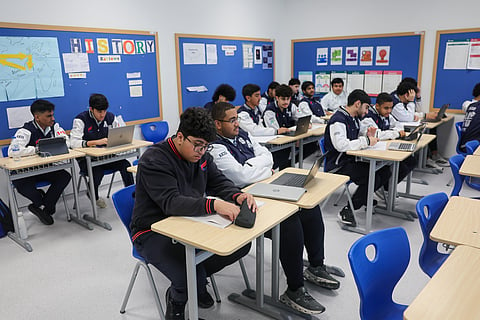
Dubai: Can teachers in Dubai use their personal mobile phones, WhatsApp or social media accounts to communicate with students?
Under new safeguarding requirements introduced by the Knowledge and Human Development Authority (KHDA), staff at private educational institutions are prohibited from using personal devices, private contact details or social media platforms to communicate with learners.
Instead, all teaching and communication must take place through institutionally approved devices and platforms.
The restrictions are part of KHDA's new Policy Framework for Safeguarding and Learner Protection in Dubai’s Private Educational Institutions, announced on November 13.
The framework establishes common safeguarding standards across Dubai's private education sector, including rules on professional conduct, reporting concerns and protecting learners from harm.
What communication is prohibited?
Under the framework's section on Professional Conduct and Safe Working Practice, institutions must:
“Prohibit personal or secretive relationships with learners, use of private contact details, and use of personal devices or social media for communication with learners.”
“Require communication and teaching to take place only through institutionally approved devices and platforms.”
In practice, this means teachers and other staff cannot use their personal WhatsApp accounts, private phone numbers or social media profiles to communicate with students.
Instead, communication must remain within the institution's approved channels, where appropriate safeguards and oversight can be maintained.
What other restrictions apply to teachers and staff?
The new framework also establishes professional boundaries governing how adults interact with learners, both online and in person.
Institutions must ensure staff:
Do not accept unauthorised gifts or show preferential treatment to particular learners.
Follow rules on photography, social media and digital content involving students.
Work in visible, open environments wherever practicable.
Follow documented supervision and safeguarding arrangements when one-to-one or closed-door interactions are necessary.
Institutions must also monitor staff suitability throughout employment and take appropriate action when concerns arise.
Who must follow the new rules?
The framework applies beyond private school teachers.
It covers KHDA-permitted private educational institutions across Dubai, including:
Early childhood centres and nurseries
Private schools
Universities and higher education institutions
Vocational and training institutes
The requirements extend to physical campuses and virtual learning environments.
All adults working with learners, including coaches, volunteers and third-party contractors, must acknowledge the institution's Code of Conduct during induction.
Safeguarding responsibilities also extend to learners aged 18 and above, with procedures adapted to adult consent and confidentiality.
How is the new framework different?
While many private educational institutions in Dubai already had safeguarding policies in place, KHDA's new framework introduces a unified set of mandatory standards across the sector.
These standards cover preventing and identifying harm, handling allegations, reporting safeguarding concerns and ensuring accountability. They also address risks such as cyberbullying, online grooming, digital coercion and the misuse of artificial intelligence.
Institutions must also appoint a safeguarding governor at board level and a designated safeguarding lead or child protection coordinator to oversee safeguarding responsibilities.
By requiring staff to use approved communication channels and maintain clear professional boundaries, the new policy aims to reduce the risk of inappropriate contact with learners and ensure safeguarding concerns are properly identified and reported.
When do the new rules take effect?
The framework has been introduced with a phased implementation period of up to 12 months, allowing institutions to update policies, train staff and review safeguarding procedures.
The requirements form part of KHDA's wider effort to establish consistent learner protection standards across Dubai's private education sector.


