US-Israel war on Iran: Nuclear talks stall as counterproposal stops short of highly enriched uranium deal
Counterproposal deepens rift over Iran’s enrichment as Washington weighs next steps
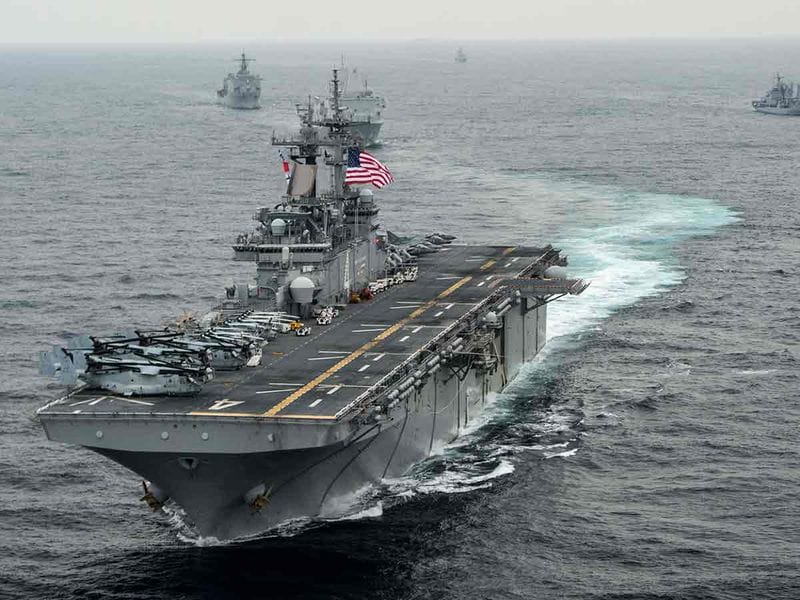
The Middle East is at a diplomatic crossroads today. US-Iran nuclear talks hang in a delicate balance, with Iran's latest counterproposal falling short of Washington's core demands yet Trump has paused a planned military strike on Tehran as negotiations continue. Meanwhile, the region's energy security is in focus after drone attacks struck near the UAE's Barakah Nuclear Power Plant, drawing swift condemnation from Islamic and international bodies. On the energy markets front, the US Treasury is taking steps to stabilise global oil prices by easing access to stranded Russian crude. As diplomacy and tension collide, today's developments could shape the trajectory of the entire region and the world. Follow our live coverage for the latest updates:
Oil prices fell sharply in early Asian trade, extending losses after recent volatility tied to disruptions around the Strait of Hormuz began to ease and tanker traffic showed tentative signs of recovery.
Market data at 9:27 am Tokyo time showed:
WTI crude at $102.5, down $1.87 (-1.79%)
Brent crude at $109.3, down $2.75 (-2.45%)
Murban crude at $106.7, down $1.28 (-1.19%)
The declines reflect a cooling of the risk premium that had built up over weeks of near-paralysis in shipping through Hormuz, the narrow waterway that handles roughly a fifth of global oil flows.
Iran’s latest counterproposal does not appear to meet US demands, as per the Institute for the Study of War (ISW), a Washington think-tank. A senior US official and source briefed on the matter told Axios on May 18 that Iran’s counterproposal does not contain a commitment “about suspending uranium enrichment or handing over its existing stockpile of highly enriched uranium (HEU).” US demands have been and continue to be that Iran must give its HEU to the US.
Get updated faster and for FREE: Download the Gulf News app now - simply click here.
Speaking later at a White House event, Trump said there had been a 'very positive development' and that Arab allies said a deal was near that would leave Iran without nuclear weapons, which Tehran denies pursuing.
"There seems to be a very good chance that they can work something out. If we can do that without bombing the hell out of them, I'd be very happy," Trump said.
Iran has repeatedly rebuffed Trump's offers and has exerted control over the Strait of Hormuz, the vital waterway into the Gulf, sending global oil prices spiraling.
He was quoted as saying: "We were getting ready to do a very major attack tomorrow, and I put it off for a little while—hopefully maybe forever... because we've had very big discussions with Iran, and we'll see what they amount to."
The Muslim Council of Elders, under the chairmanship of His Eminence Dr. Ahmed Al-Tayeb, Grand Imam of Al-Azhar, strongly condemned the targeting of the vicinity of the Barakah Nuclear Power Plant in the Al Dhafra region of the United Arab Emirates by drones. The Council also affirmed solidarity with the UAE. No casualties were reported in the attacks.
Get updated faster and for FREE: Download the Gulf News app now - simply click here.
The US Treasury Department issued a temporary 30-day general licence allowing the most energy-vulnerable nations to access Russian oil stranded at sea, aiming to stabilise global crude markets and redirect supply to "countries in need". Treasury Secretary Scott Bessent, in announcing the move, said the extension provides flexibility for specific licenses as needed.
The action is intended to help reroute existing supply away from China, which has been stockpiling discounted Russian oil, while ensuring oil reaches nations facing energy shortages.
Extending by 30 days US sanctions waiver for Russian oil cargoes already at sea, is expected to ease global energy prices amid Iran war risks.
The latest "temporary 30-day general license" will "provide the most vulnerable nations with the ability to temporarily access Russian oil currently stranded at sea," Treasury Secretary Scott Bessent said in a social media post.
The International Atomic Energy Agency (IAEA), affiliated with the United Nations, is closely monitoring the situation at the Barakah Nuclear Energy Plant in Abu Dhabi through continuous coordination with the relevant UAE authorities, while expressing its full readiness to provide assistance if needed.
The remarks were made this evening by Farhan Haq, Deputy Spokesman for the UN Secretary-General, who renewed the Secretary-General’s deep concern over reports received by the United Nations indicating that drone attacks yesterday caused a fire in an electricity generator within the vicinity of the Barakah plant.
Sign up for the Daily Briefing
Get the latest news and updates straight to your inbox
Network Links
GN StoreDownload our app
© Al Nisr Publishing LLC 2026. All rights reserved.