US-Iran war: Trump rules out strikes before midterms as Tehran weighs Hormuz plan; Iranian spies eye US bases in Germany
Tehran to answer US on Hormuz reopening plan within days as Trump hails ‘productive’ talks
US President Donald Trump says Washington is holding “productive discussions” with Tehran and has ruled out any attack on Iran before the November 3 midterm elections, though the US naval blockade of Iranian ports remains in place. Iranian Foreign Minister Abbas Araghchi says Tehran is reviewing the US response to its seven-day plan to reopen the Strait of Hormuz and will reply within days. Meanwhile, tensions are rising elsewhere in the region after Yemen’s Houthis targeted Riyadh’s King Khalid International Airport three times on Thursday, prompting security alerts for foreign nationals in Saudi Arabia. Stay with us for the latest updates.
German business weekly WirtschaftsWoche reported that Iranian intelligence services are focusing on US military installations in Germany —especially Ramstein Air Base and Spangdahlem Air Base — amid fears of possible covert attacks tied to the ongoing Iran conflict.
The report, citing several unnamed Western intelligence officials, said Israel warned US and German partners about three weeks ago of a potential threat, with concern centered on bases that support American operations and logistics linked to the Iran war.
Ramstein Air Base hosts the headquarters of US Air Forces in Europe – Air Forces Africa and NATO Allied Air Command, making it a key command, control, and logistics hub for US and allied air operations. Spangdahlem Air Base is a major NATO air base that has supported US fighter deployments and strike operations in Europe and beyond. Both are viewed as critical nodes for projecting US air power and sustaining operations tied to the Iran conflict, which is why they feature in threat assessments.
Iranian Foreign Minister Abbas Araghchi has said that Tehran was reviewing Washington’s response to its proposed “seven-day plan” to reopen the Strait of Hormuz and would reply within the next few days.
“The negotiation process is still ongoing, and messages are being exchanged through mediators,” Araghchi said, according to Iran’s official IRNA news agency.
The proposal calls for Washington to take agreed steps during the first four or five days, allowing normal navigation through the strategic waterway to resume on the 6th day and negotiations on a broader agreement to begin on the 7th. Iran’s demands include an end to hostilities, the release of frozen Iranian assets, the lifting of restrictions on Iranian oil exports and the termination of the US naval blockade of Iranian ports.
The diplomatic exchange comes as US President Donald Trump said Washington was holding “productive discussions” with Tehran and would not resume attacks on Iran before the November 3 US midterm elections.
However, the US blockade remains in place, and Washington has imposed fresh sanctions targeting Iran’s oil-shipping networks.
The outcome, however, will depend on whether Washington and Tehran can reconcile their competing demands over maritime access, sanctions, security and Iran’s nuclear programme.
US Secretary of War Pete Hegseth said Washington does not seek nation-building or a ground occupation in Iran, but warned that any military action ordered by President Donald Trump would be “swift and decisive”.
In an interview with Real America’s Voice aboard the USS Abraham Lincoln, Hegseth said Washington's goal was to prevent Iran from acquiring nuclear weapons. He warned Tehran it could take the “easy way or the hard way”, adding that the decision ultimately rested with Trump.
Hegseth has previously declined to rule out deploying US forces inside Iran.
US President Donald Trump said Washington was holding “productive discussions” with Iran and pledged not to attack the country before the November 3 US midterm elections. His statement signals a possible diplomatic opening, though it does not mean a peace deal or ceasefire has been reached.
Trump made the announcement on Truth Social on Thursday, October 8, saying the US would not attack Iran before the November 3 midterm elections. The statement came amid continued indirect negotiations over ending the war, which began in February 2026 with US and Israeli strikes on Iran.
The announcement may reduce the immediate risk of another US attack before the elections, but it does not establish a ceasefire or guarantee a diplomatic settlement. The war and disruption to shipping through the Strait of Hormuz continue to threaten energy supplies and keep oil prices volatile.
More than a dozen Iranian military and police personnel were killed or wounded in four armed attacks across southeastern Iran within 24 hours, the Baluch rights group Haalvsh reported Thursday.
The attacks occurred between Wednesday and Thursday in Nikshahr and Nosratabad in Sistan-Baluchestan province, as well as Faryab and Jalq.
In Nikshahr, Mohammad Reza Okati was killed and five other personnel wounded when two vehicles carrying military personnel came under attack, Haalvsh reported as cited by Iran International. Iran’s army separately confirmed Okati’s death and said three others were wounded.
In Nosratabad, Haalvsh reported at least three personnel killed and two wounded, identifying two of those reportedly killed. Iranian police separately confirmed the death of one officer. Major Mehdi Jamshidi was shot dead while travelling in a private vehicle in Faryab, according to Haalvsh.
The group also reported casualties in an attack on police headquarters in Jalq on Wednesday night, although the final toll remained unverified.
The Popular Fighters Front claimed responsibility for the attacks in Nikshahr, Nosratabad and Jalq, Haalvsh said. The group had not claimed responsibility for the killing in Faryab.
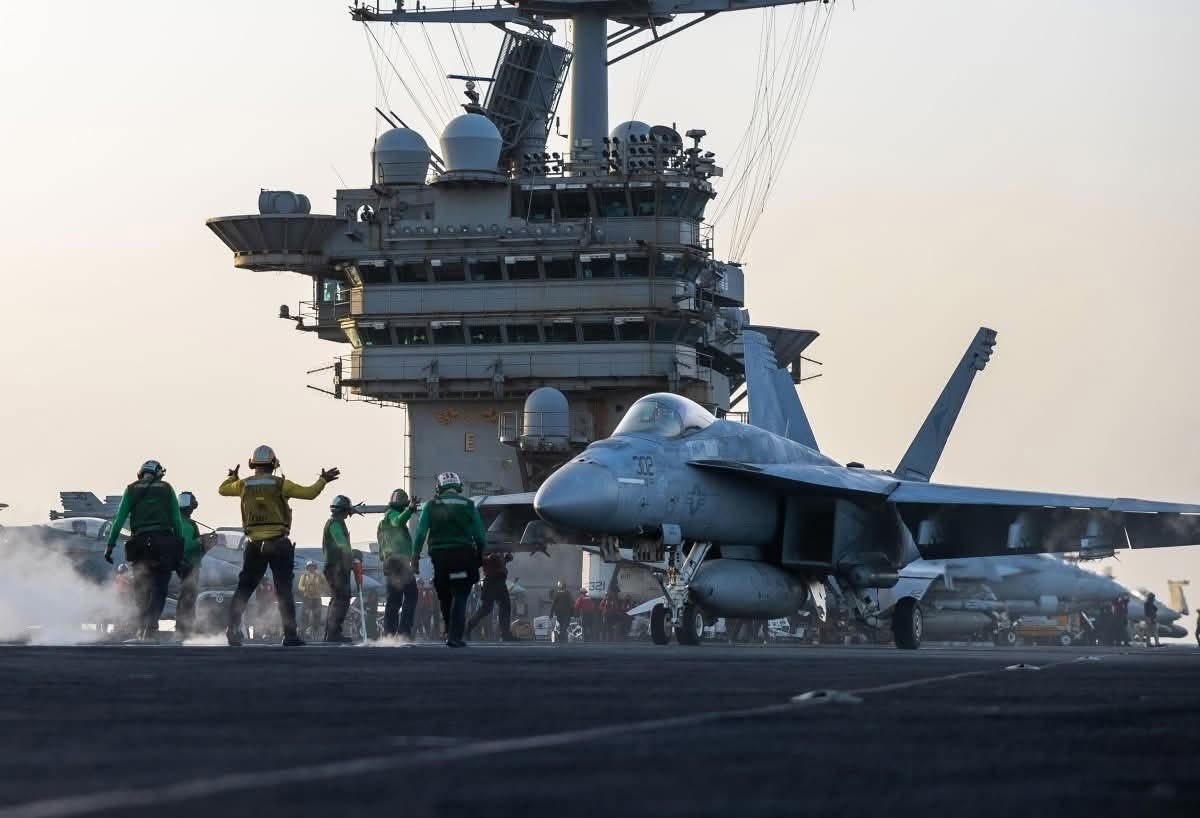
The USS Abraham Lincoln aircraft carrier, whose lengthy deployment in the Gulf supporting President Donald Trump's war on Iran sparked fears for the health of its huge crew, arrived back in its home port Thursday.
Families of servicemen and women lined the quayside in San Diego, California, to welcome home loved ones they have not seen for almost a year.
The massive nuclear-powered warship left California in November 2025 for duty in the South China Sea and was rerouted to the Middle East before US-Israeli attacks on Iran that began in late February.
Russian President Vladimir Putin held talks with Iranian counterpart Masoud Pezeshkian on Thursday and promised to "do everything" to help end the Middle East conflict, Russian news agencies reported.
"We are ready to do everything that is in our power to contribute to the settlement of this situation," said Putin ahead of a regional summit in the Central Asian nation of Turkmenistan, adding that Iran had made "real efforts to end the war" since US-Israeli attacks started on February 28.
Putin noted the "positive evolution" in relations between Iran and Russia.
The two have reinforced diplomatic and military links since Russia launched its offensive in Ukraine in February 2022, becoming increasingly reliant on each other.
Both leaders arrived Thursday evening ahead of the summit of the Commonwealth of Independent States (CIS) - a grouping of former Soviet nations - in the resort of Avaza on the Caspian Sea.
The presidents last met on the sidelines of the Shanghai Cooperation Organisation summit in Kyrgyzstan in September.
Ukraine and Western countries have accused Iran of supplying Russia with Shahed drones and short-range missiles for use in the military campaign.
Russia has been accused of supplying targetting data to Iran for its strikes on US interests in the Middle East.
The meeting came as talks between Tehran and Washington appear to be at an impasse. Pezeshkian said this week that negotiations with Washington were "meaningless".
Sign up for the Daily Briefing
Get the latest news and updates straight to your inbox
Network Links
GN StoreDownload our app
© Al Nisr Publishing LLC 2026. All rights reserved.