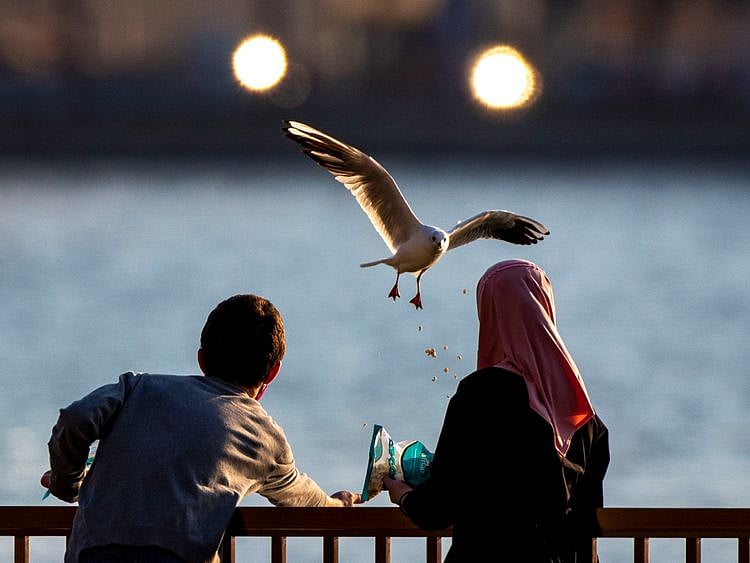
UAE residents enjoying the cooler winter months in the UAE
Dubai: Daytime temperatures are still sitting in the mid-30s, but winter is on its way. The UAE’s winter officially begins with the winter solstice on Tuesday, December 22.
Here’s when the cold actually sets in, how this year compares with last, what December could look like, and how residents can make the most of the season.
When does winter start in the UAE?
There are two ways of looking at it.
Astronomically, winter begins with the winter solstice, the shortest day and longest night of the year. Last year, Ibrahim Al Jarwan, Board Chairman of the Emirates Astronomical Society, said the winter season begins astronomically with the solstice, as reported by Gulf News. In 2025, the solstice fell on December 21. This year, it falls on December 22, and the season runs until the spring equinox in March.
Climatically, winter is generally considered to start at the beginning of December. That is also when Al Marba’aniyah begins. According to Al Jarwan, this 40-day season in the traditional Arab seasons runs from around December 7 to January 15, and it is seen as marking the start of the colder weather.
At the start of the season, daylight in the UAE lasts for about 10 hours and 32 minutes. From then on, daylight gradually increases until day and night are equal again, just before the spring equinox.
How this year compares with last year
So far, late October looks broadly similar to last year.
On Sunday, October 25, temperatures were expected to reach 35°C in Abu Dhabi, 34°C in Dubai and 35°C in Sharjah. Liwa and Al Ruwais could reach 37°C, and minimum temperatures ranged from 24°C to 28°C.
At the end of October last year, the National Centre of Meteorology (NCM) described “a gradual and pleasant cooling trend”. On October 30, 2025, highs of 30°C to 35°C were expected along the coast. Minimum temperatures in eastern areas were forecast to fall to around 15°C over the following days.
Cooler weather is on the way this year too. On October 20, Gulf News reported that by Saturday, October 24, temperatures were “forecast to decline gradually”. The same forecast put inland highs at up to 40°C.
Last December, temperatures dipped after widespread rain. On December 20, 2025, Jebel Jais recorded 3.5°C early on Saturday morning, one of the chilliest readings of the season at that point. Forecasts at the time put coastal highs at 20°C to 23°C, with nights of 12°C to 16°C.
Goswami added: "Winters in the UAE bring some beautiful opportunities for photography enthusiasts like me. The skies are overcast with rays of gentle sunshine peeking through. I clicked this photograph at the top of the Viewing Deck Park Summit at Jebel Jais, which is at an elevation of 1,415m. It was an hour trek to reach the peak but the sights were breathtaking."
What December could look like
According to NCM figures reported by Gulf News, December maximum temperatures range from 22°C to 27°C and minimums from 13°C to 17°C. The lowest December temperature ever recorded in the UAE is -0.7°C, at Jebel Jais in 2004.
This year may run warmer. The NCM puts the chance of El Niño conditions prevailing from November 2026 through March 2027 at 96 per cent. It says this could bring above-average temperatures and rainfall to the UAE, particularly towards the latter part of that period, with El Niño expected to begin affecting weather patterns in January. Gulf News has also reported that temperatures and rainfall are expected to be near or above seasonal averages over the same period.
In practical terms, that suggests December temperatures at or slightly above those averages. The NCM has not yet issued a specific December forecast.
What to expect through the season
Al Jarwan said last year that temperatures at the start of winter typically range between 12°C at night and 25°C during the day. By mid-February, they rise to around 15°C to 28°C, and by the end of the season, they reach approximately 18°C to 32°C.
Across the Arabian Peninsula, the coldest conditions are typically felt from mid-December to mid-February. In the UAE, Al Jarwan has said the lowest temperatures are typically recorded between January 12 and 25, when early-morning readings inland can fall below 8°C, and sometimes under 5°C.
“These days are particularly harsh in desert and open areas,” he said.
During winter, cold air masses linked to low-pressure systems also pass through every seven to 10 days. They can bring temperatures at least 4°C below seasonal averages. The UAE’s lowest temperature on record, -5.7°C, was taken on the slopes of Jebel Jais on February 3, 2017.
Evenings in the desert at Al Qudra
Al Qudra, in Dubai, is a popular spot for cycling on long desert tracks, wildlife spotting, sunset photography and stargazing. Entry is free, and bike rentals cost Dh50 to Dh150.
If you’re planning a short weekend camping trip, Dubai Municipality says you don’t need prior permission to pitch a tent in the desert. At Al Qudra Lake itself, however, camping and dog walking are not allowed.
For stargazers, the Geminid meteor shower peaked on the nights of December 13 and 14 last year. At their peak, under perfect dark-sky conditions, the Geminids often produce over 150 meteors per hour. The Dubai Astronomy Group scheduled stargazing sessions at Al Qudra Desert for the shower.
The great cormorant, a winter visitor to Al Qudra Lake, displays its graceful wings.
Hatta and Jebel Jais
In Hatta, kayaking costs Dh80 to Dh150 per session. Trail access for hiking is free, and there are mountain biking trails across the desert foothills. Adventure park activities such as ziplining and obstacle courses come in packages from Dh50 to Dh200. Hatta Campsite near Wadi Hub is a popular overnight camping spot.
In Ras Al Khaimah, Jebel Jais has ridge and summit hiking routes, viewing platforms for sunrise and sunset, and the Jebel Jais Flight zipline. Overnight camping is allowed in designated zones. It’s free, but campers need to bring their own full gear.
Camping season and the rules
Seasonal winter camps are also returning. In Umm Al Quwain, applications for winter campsites in Al Aqran and Al Thaniya are open until October 30, ahead of the season starting on November 1. Applications are restricted to holders of Umm Al Quwain-issued passports.
Municipalities in Sharjah and Fujairah can impose fines of up to Dh2,000 for pitching tents in unauthorised areas or leaving waste behind. Entering valleys or flood zones during rain can bring a Dh2,000 fine, 23 traffic points and a 60-day vehicle impoundment.
Festivals and outdoor attractions
Abu Dhabi’s Sheikh Zayed Festival runs from October 30 to March 14. It features:
Emirati heritage
Camel racing and falconry
International pavilions
Fireworks, drone and laser shows
In Dubai, Global Village opened on October 14 and runs until May. Dubai Miracle Garden reopened on October 8 and Dubai Safari Park on October 12.
Before winter, get moving
Before winter officially arrives, the Dubai Fitness Challenge runs from October 31 to November 29, with Dubai Run, Dubai Ride and fitness villages across the city.
Network Links
GN StoreAbout Gulf NewsTerms & ConditionsReach by GNSitemapContact usPrivacy PolicyGN FocusHave your sayWork with usAdvertise with usGulf News epaperPrinting Services
Download our app
© Al Nisr Publishing LLC 2026. All rights reserved.