Ramadan canon fire at Downtown Dubai.
Ramadan 2026 in Dubai: Everything you need to know about public parking, Salik and working hours
Find out how Ramadan affects Salik tolls, parking hours and work schedules
Last updated:
3 MIN READ
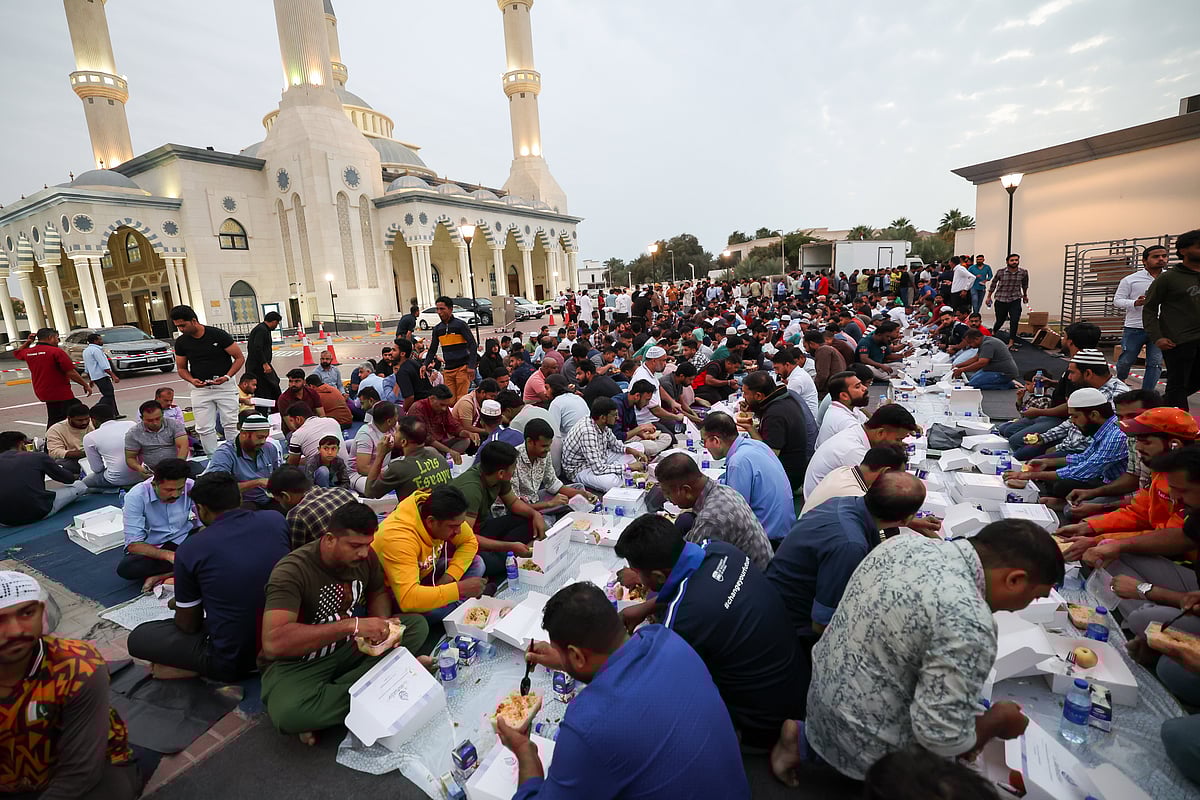
Residents enjoy the first iftar of the holy month of Ramadan at the Al Farooq Omar Bin Al Khattab Mosque, popularly known as the Blue Mosque, in Dubai (from March 1, 2025).
Virendra Saklani/Gulf News
Dubai: Ramadan is under a month away and is expected to begin on February 18, 2026. During the holy month, working hours and school hours are reduced to ensure people can return home in time to break their fast. As a result, several key services across Dubai also adjust their operating hours, including Salik (Dubai’s road toll system) and paid public parking.
Here’s what residents need to know during Ramadan, covering Salik toll timings, parking rules, working and school hours, and fasting durations.
Salik variable toll rates during Ramadan
Dubai’s Salik system operates using variable toll rates to help manage traffic flow across the city. Under normal circumstances, toll charges are set at Dh6 during peak hours and Dh4 during off-peak hours and Sundays, with free travel between 1am and 6am.
These timings are adjusted during Ramadan to reflect shorter working hours and changes in travel patterns, all aimed at easing congestion on Dubai’s roads.
Salik Ramadan toll timings
Monday to Saturday
Dh6 – 9am to 5pm (peak)
Dh4 – 7am to 9am and 5pm to 2am (low peak)
Free – 2am to 7am (off-peak)
Sunday
Dh4 – 9am to 5pm (peak)
Dh4 – 7am to 9am and 5pm to 2am (low peak)
Free – 2am to 7am (off-peak)
Dubai paid public parking timings during Ramadan
Since April 2025, Dubai’s largest public parking operator - Parkin has also introduced variable parking rates, with tariffs adjusted according to peak and off-peak hours. During peak hours, parking costs Dh6, while off-peak rates remain unchanged.
Throughout the year, paid parking hours usually run from 8am to 10pm. However, during Ramadan last year, the Roads and Transport Authority (RTA) previously announced adjusted timings from 8am to 6pm to 8pm to 10pm
It is important to note that multi-storey parking buildings are an exception, as they remain payable 24 hours a day, seven days a week.
Parkin is expected to officially announce public parking hours for Ramadan closer to the date.
Another key point for motorists is that some parking locations in Dubai fall under PARKONIC control, which means they operate with separate parking hours and fees. These areas are subject to their own rules, so drivers should always check the signboards displayed at the parking location to confirm timings and charges and avoid fines.
Working hours during Ramadan in the UAE
As Ramadan approaches, the Ministry of Human Resources and Emiratisation (MoHRE) mandates a two-hour reduction in daily working hours for all private-sector employees, regardless of religion.
In the federal government sector, Ramadan working hours are also adjusted in a structured way from Monday to Thursday - 9am to 2.30pm to Friday - 9am to 12 noon
Remote work on Fridays is often permitted for a portion of government employees, depending on operational requirements.
School hours during Ramadan
Schools across the UAE also operate on reduced schedules during Ramadan. Students attend a maximum of five hours per day, although parents are advised to check directly with their child’s school for exact timings. On Fridays, schools now close at 11.30am to align with the updated Friday prayer timing of 12.45pm.
Ramadan 2026 fasting hours in the UAE
Muslims in the UAE will observe shorter fasting hours during Ramadan 2026, marking a noticeable change from the longer daylight fasts experienced in recent years. As the holy month moves earlier in the Gregorian calendar, the time between dawn and sunset becomes shorter. This shift is due to Ramadan being based on the lunar (Hijri) calendar, which is approximately 10 to 11 days shorter than the Gregorian calendar.
Network Links
GN StoreAbout Gulf NewsTerms & ConditionsReach by GNSitemapContact usPrivacy PolicyGN FocusHave your sayWork with usAdvertise with usGulf News epaperPrinting Services
Download our app
© Al Nisr Publishing LLC 2026. All rights reserved.