US-Iran war: Yemen says 950 Houthis killed; Iran denies RAF Fairford plot, IRGC warns foreign powers off Strait of Hormuz
IMF cuts Middle East growth forecast amid war and Strait of Hormuz closure
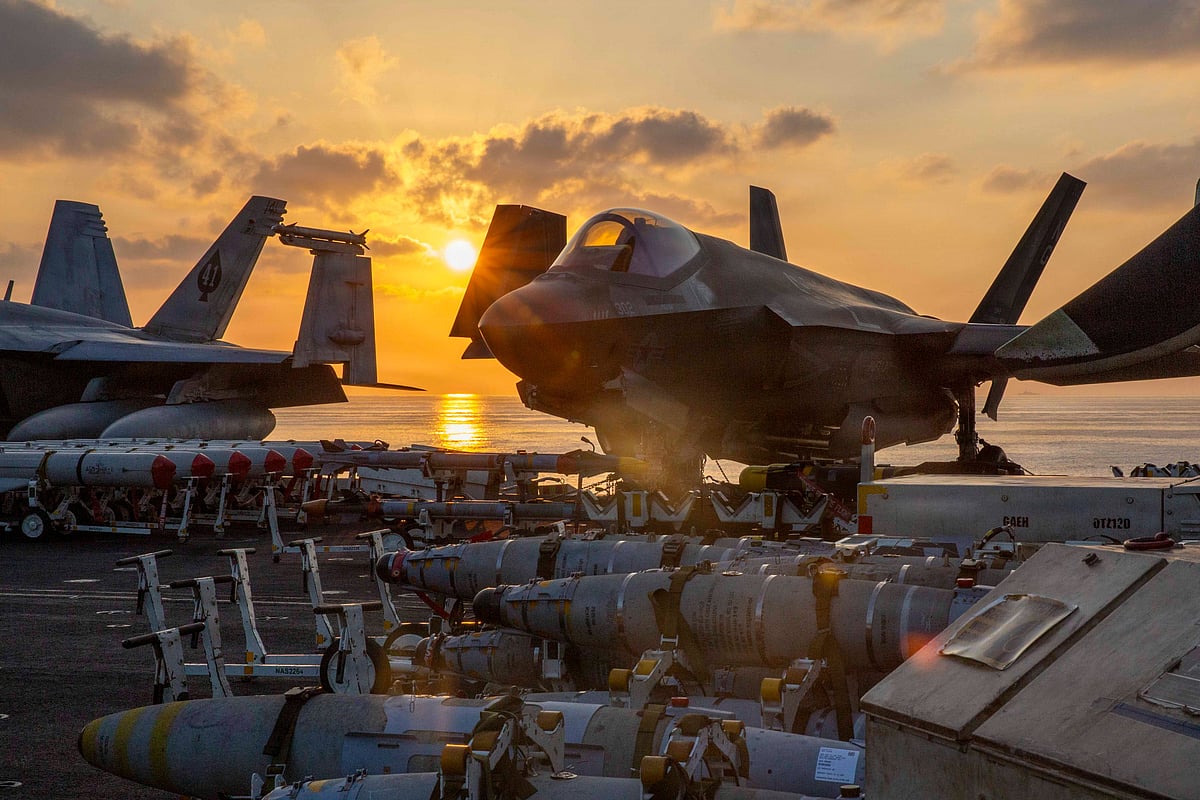
The Strait of Hormuz remains the pressure point of the war. A crude oil tanker was hit by an unknown projectile while heading out of the strait on Sunday, UKMTO said, as IRGC chief Ahmad Vahidi warned that no foreign power has the right to interfere in the waterway. The prolonged closure is now weighing heavily on the region: the IMF has cut its 2026 forecast for the Middle East and Central Asia to a 0.3 percent contraction. Meanwhile, Tehran is denying British claims it was behind a plot targeting RAF Fairford, and the Houthis say they fired a missile at Riyadh’s airport. Follow our live coverage.
Etihad Airways has cancelled a number of flights between Abu Dhabi and three Saudi cities, Riyadh, Dammam and Jeddah, warning that the situation remains fluid and further changes to its flight schedule are possible. The airline said all flights between Abu Dhabi and Riyadh had been cancelled until Monday, October 19, 2026. For services between Abu Dhabi and Dammam, Etihad cancelled flights EY575, EY576, EY573 and EY574 scheduled for Monday, October 12, along with all flights on Tuesday and Wednesday, October 13 and 14.
The International Monetary Fund (IMF) has sharply cut growth forecasts for the Middle East and Central Asia in 2026, as the ongoing war has sent economies into a tailspin.
In its latest World Economic Outlook report, the IMF said the regional economy was projected to contract by 0.3 percent, compared to its projected 1.9 percent growth six months ago.
It cited "a longer closure of the Strait of Hormuz, compared with the baseline assumptions in the April" report, predicting a major rebound in 2027 based on the expected reopening of the waterway.
Since the Middle East war began in late February with US-Israeli strikes on Iran, Tehran has sought to impose its control over the Strait of Hormuz, repeatedly attacking ships that transit without its authorisation.
Sanaa — Yemen’s internationally recognised government said its forces carried out 1,879 operations against the Iran-backed Houthis across multiple fronts as part of its ongoing “Dawn of Yemen” offensive.
Military spokesperson Col. Majeed al-Nuzaili said the operations killed 950 Houthi fighters and destroyed or disabled 380 military vehicles.
Al-Nuzaili said the operations targeted Houthi positions, command centers, weapons depots and other military assets. The announcement came as government forces pressed an offensive aimed at retaking territory still held by the group, including the capital, Sanaa. The figures could not be independently verified, and the Houthis did not immediately comment.
Iran challenged Britain to produce evidence linking Tehran to a suspected plot targeting RAF Fairford, rejecting Prime Minister Andy Burnham’s assessment that the operation was "almost certainly" directed by Iran’s Islamic Revolutionary Guard Corps.
Iran’s Foreign Ministry called the allegations unfounded, accusing London of making serious claims without presenting supporting evidence and seeking to divert attention from Britain’s involvement in US-Israeli military operations against Iran.
Burnham told Parliament that British authorities believed the suspected plot was “highly likely” to have been coordinated in Iran and “almost certainly” directed by the Revolutionary Guards.
Iran's Islamic Revolutionary Guard Corps chief, Ahmad Vahidi, warned foreign powers on Monday against threatening or interfering in the Strait of Hormuz and the Persian Gulf, reinforcing Tehran's opposition to an expanded foreign military presence in the strategic waterway.
“No extra-regional power has the right to threaten, maintain a hegemonic presence or interfere in the Strait of Hormuz and the Persian Gulf,” Vahidi said in a post on X.
Vahidi's remarks signal that Tehran intends to maintain its claim to a central role in determining security arrangements in the Gulf. They also underline the risk that disputes over military deployments and shipping restrictions could complicate efforts to restore normal commercial traffic.
Iran has repeatedly argued that countries outside the region should not dictate security arrangements in waters bordering its territory. The United States and its partners, meanwhile, have defended their military presence as necessary to protect navigation and regional security.
At least 94 people have been killed and 33 wounded in armed attacks and security operations in southeastern Iran since March 31, with clashes becoming more frequent and involving heavier weapons, a US-based human rights group reported Monday.
The Human Rights Activists News Agency (HRANA) documented at least 63 armed incidents between March 31 and Oct. 10, mainly in Sistan and Baluchestan province, which borders Pakistan and Afghanistan.
Yemen's Iran-backed Houthis claimed an attack targeting Riyadh's international airport on Monday, after a Saudi-led coalition said it had shot down a missile over the capital.
"Our armed forces were able to target (King) Khalid International Airport in the Saudi enemy's capital Riyadh this evening with a ballistic missile and the hit was precise," Houthi military spokesman Yahya Saree said. He added that the group also targeted the Khamis Mushait base in the kingdom's south with a drone.
Grand Mufti of Saudi Arabia, Chairman of the Council of Senior Scholars, and President of the General Presidency of Scholarly Research and Ifta Sheikh Dr. Saleh bin Fawzan Al-Fawzan, has condemned Houthi attacks on civilian facilities and the killing of innocent people, including worshippers travelling to the Grand Mosque in Makkah and the Prophet’s Mosque in Madinah.
The Grand Mufti, who also chairs the Council of Senior Scholars and heads the General Presidency of Scholarly Research and Ifta, described the targeting of civilians and worshippers as among the gravest crimes.
“The terrorist Houthi militia's targeting of civilian facilities and the killing of innocent people, including worshippers heading to the Grand Mosque and the Prophet's Mosque, is among the gravest of crimes for which Allah Almighty has threatened painful punishment,” he said, according to the Saudi Press Agency (SPA).
He added that those who targeted holy sites and people travelling to the Sacred House of Allah throughout history had faced destruction and dire consequences.
“We ask Allah Almighty to put an end to these criminals and protect our country and Muslim countries,” he said.
A crude oil tanker was struck by an unknown projectile while sailing outbound through the Strait of Hormuz on October 11, the United Kingdom Maritime Trade Operations (UKMTO) said.
In a warning issued on Monday, UKMTO said it had received a delayed report from a verified source about the incident in the strategic waterway.
Authorities are investigating, the agency said. It did not provide details about the vessel, the extent of any damage or possible casualties.
UKMTO advised vessels transiting the Strait of Hormuz to proceed with caution and report any suspicious activity to the agency.
Sign up for the Daily Briefing
Get the latest news and updates straight to your inbox
Network Links
GN StoreDownload our app
© Al Nisr Publishing LLC 2026. All rights reserved.