Footage of US airstrikes hitting Iran’s Bandar Abbas overnight on Tuesday (July 7) till early Wednesday (July 8, 2026).
US and Iran trade strikes: Trump says ceasefire ‘over’ after attacks on vessels in Hormuz, Bahrain and Kuwait
Trump discusses Hormuz security with NATO leaders as tensions with Iran escalate
Last updated:
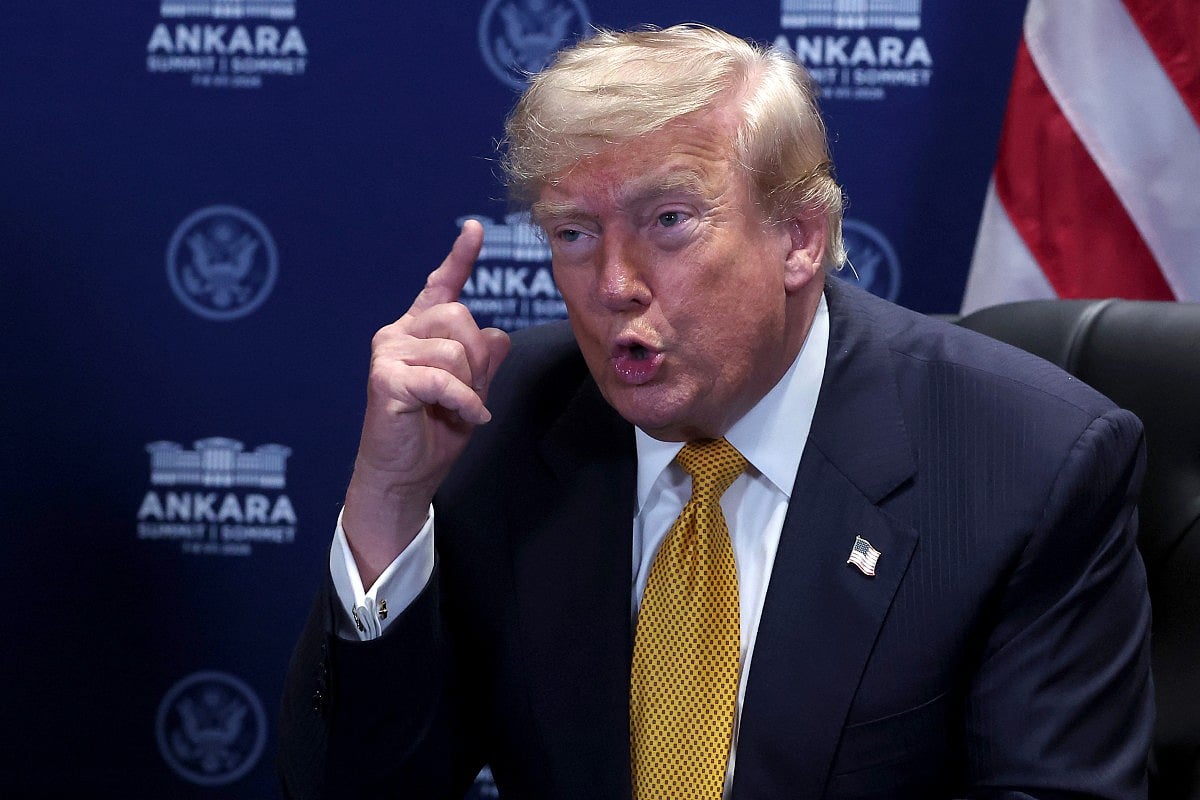
US President Donald Trump reacts as he meets with NATO Secretary General on the sidelines of the NATO summit in Ankara, on July 8, 2026.
AFP
The US has launched new strikes on Iran and revoked a waiver allowing Tehran to sell oil under a June 17 interim peace agreement, while reimposing sanctions on Iranian oil exports following attacks on commercial ships near the Strait of Hormuz. Explosions were reported on Kharg Island, a key oil export hub, as well as Bandar Abbas, Sirik and Qeshm Island. The strikes came as Iran held funeral events for late supreme leader Ali Khamenei, despite Tehran’s earlier warnings against attacks during the mourning period. Security concerns over the Strait of Hormuz are expected to be discussed by US President Donald Trump and NATO leaders in Ankara, while Khamenei’s coffin was taken to the Iraqi city of Najaf for a funeral procession. Follow our live blog for the latest updates:
US‑Israel war on Iran: Recent developments
Day 128: Massive turnout at Khamenei funeral
Day 127: Massive turnout at Khamenei funeral
US revokes temporary sanctions waiver on Iranian oil
The US Treasury Department on Tuesday revoked a licence that temporarily lifted oil sanctions on Iran, calling Tehran's actions in the Strait of Hormuz "wholly unacceptable."
"Iran's actions in the Strait were wholly unacceptable to the United States and will be met with consequences," a US official told AFP, after attacks on tankers in the key waterway.
The waiver announced in June had originally allowed the Islamic republic to produce, sell and deliver crude oil and related products through August 21.
Get updated faster and for FREE: Download the Gulf News app now - simply click here.
Iran reports explosions on sites around Strait of Hormuz
Multiple explosions were reported across southern Iran near the strategic Strait of Hormuz late Tuesday after the United States announced it had launched what it described as "powerful" military strikes in retaliation for Iranian attacks on commercial shipping, sharply escalating tensions around one of the world's most critical energy chokepoints.
Iran's state broadcaster IRIB reported that six explosions were heard on Qeshm Island, seven explosions struck the coastal city of Sirik, while additional blasts were reported in the major port city of Bandar Abbas, the headquarters of Iran's navy and a key base for the Islamic Revolutionary Guard Corps (IRGC).
Iranian media did not immediately provide casualty figures or confirm the targets that had been hit.
Iran denies responsibility for attack on Qatari LNG tanker
Iran has denied responsbility for the attack on the Qatari LNG tanker transiting off the coast of Oman.
Doha had earlier blamed the attack on Iran. US officials also accused Tehran of violating a ceasefire framework reached last month and endangering civilian shipping.
The US military then launched "powerful" strikes was in retaliation for what it described as Iranian attacks on commercial shipping. The move has sharply escalated tensions around one of the world's most critical energy chokepoint.
According to US officials, the strikes targeted Iranian military infrastructure, including air defense systems, coastal surveillance sites, anti-ship missile positions, drone launch facilities and other assets believed capable of threatening maritime traffic through the narrow waterway linking the Arabian Gulf with the Gulf of Oman.
Get updated faster and for FREE: Download the Gulf News app now - simply click here.
Oil jumps more than 3% as US strikes on Iran rattle Strait of Hormuz fears
Oil prices climbed sharply in early Asian trading on Wednesday after renewed military strikes involving Iran reignited concerns over the security of the Strait of Hormuz, one of the world's most important energy chokepoints.
As of 8:15 am (Tokyo time on Wednesday, July 8, 2026), market data showed Brent crude futures at $74.16 a barrel, up $2.17 (+3.01%), WTI at $72.43 a barrel, up $1.99 (+2.83%); and Murban crude at $68.97 a barrel, up $2.29 (+3.43%).
US natural gas also inched higher at $3.271 per million British thermal units, up 0.18%.
The rally followed reports of multiple explosions in southern Iran, including near Bandar Abbas, Qeshm Island and Sirik, shortly after the US announced what it described as "powerful" strikes against Iranian military targets following attacks on a Qatar vessel transiting Hormuz.
The developments heightened fears that fighting could spill further into the Strait of Hormuz, through which roughly one-fifth of the world's oil supply passes.
CENTCOM: US completes new strikes on Iran
US Central Command (CENTCOM) said US forces carried out a new round of retaliatory strikes against Iran on July 7, hitting more than 80 targets with precision weapons following attacks on commercial vessels in the Strait of Hormuz.
The strikes targeted Iranian air defence systems, command and control networks, coastal radar sites, anti-ship missile capabilities and more than 60 Islamic Revolutionary Guard Corps (IRGC) small boats operating near the strategic waterway, CENTCOM said.
The US said the operation was in response to attacks on three commercial ships — the Marshall Islands-flagged M/T Al Rekayyat, Saudi Arabia-flagged M/T Wedyan and Liberia-flagged M/T Cyprus Prosperity — describing the actions as a violation of the ceasefire and freedom of navigation.
CENTCOM said its forces remain ready to take further action if Iran does not adhere to the agreement.
Get updated faster and for FREE: Download the Gulf News app now - simply click here.
Iran says it will deliver a 'crushing response' to US strikes
Iran’s Khatam Al Anbiya Central Headquarters has condemned recent US strikes in southern Iran as a “blatant act of aggression”, saying they took place while the late supreme leader’s body was being held for funeral ceremonies in Iraq.
In a statement, the military warned that Iran’s armed forces would deliver a “crushing response” to the US actions.
Iran also said it would not accept foreign interference in the management of the Strait of Hormuz, insisting that commercial ships and oil tankers must use routes designated by Tehran to pass through the strategic waterway.
Bahrain sounds alert siren, urges residents to seek safe places
Bahrain’s Ministry of Interior has sounded an alert siren and urged citizens and residents to remain calm and move to the nearest safe location.
The ministry advised the public to follow safety instructions and remain vigilant.
Top Iran official accuses US of ‘major violations’ of Iran deal
Iran’s top negotiator Mohammad Bagher Ghalibaf has accused the United States of committing “major violations” of the memorandum of understanding (MoU) between the two countries.
In a post on X, Ghalibaf listed alleged violations, including interference with Iran’s arrangements in the Strait of Hormuz, continued threats of further strikes, the reinstatement of oil sanctions, attacks on southern Iran and what he called continued Israeli aggression in Lebanon.
“The era of bullying and extortion is over. It leads nowhere. We don’t fold,” he wrote.
Warning sirens sound across Kuwait
Warning sirens were heard across Kuwait, according to the Kuwait News Agency (KUNA).
Authorities have not provided further details on the reason for the alert. Residents have been urged to remain calm and follow official instructions.
Kuwait responds to ‘hostile missile and drone attacks’
Kuwait’s military said it is responding to “hostile missile and drone attacks” and urged residents to follow official safety and security instructions.
In a statement, the army confirmed that explosions heard across the country were caused by successful interceptions of incoming threats.
IRGC claims it shot down US MQ-9 drone over Bushehr
Iran’s Islamic Revolutionary Guard Corps (IRGC) has claimed that its air defence systems shot down a US MQ-9 drone over Khormuj in Bushehr province, according to Tasnim News.
IRGC spokesman Hossein Mohbi said the drone was downed following what he described as “aerial aggression” by the US military. The claim has not been independently verified.
Iran claims it targeted 85 US military sites in Bahrain and Kuwait
Iran’s Islamic Revolutionary Guard Corps (IRGC) said it struck 85 US military targets in Bahrain and Kuwait in response to what it called a US “ceasefire violation”, according to Iran’s Tasnim news agency.
The IRGC also claimed it shot down a US MQ-9 Reaper drone during the operation. The claims have not been independently verified.
Bahrain activates fresh alarm sirens; residents urged to remain calm
Bahrain has activated fresh alarm sirens, with citizens and residents urged to stay calm, move to the nearest safe location and follow updates through official channels.
Netanyahu warns Trump against F-35 sale to Turkey
Israeli Prime Minister Benjamin Netanyahu publicly opposed a possible US sale of F-35 stealth fighter jets to Turkey on Tuesday, warning that such a move would upset the regional balance of power, even as he sought to play down suggestions of a widening rift with U.S. President Donald Trump.
In an interview with CNN, Netanyahu said he had personally urged Trump not to proceed with the sale after the US president announced at the Nato summit in Ankara that his administration would lift defence sanctions on Turkey and consider restoring Ankara's access to the fifth-generation fighter aircraft.
"I don't think they should be given F-35s," Netanyahu said, arguing that providing Turkey with the advanced aircraft "would destroy the power balance in the Middle East."
US strikes on Iran 'absolutely necessary': Nato's Rutte
The overnight strikes on Iran by US forces were "absolutely necessary", Nato chief Mark Rutte said on Wednesday as the alliance began a key summit in Ankara. "I think it was absolutely necessary because when you have a ceasefire and Iran is basically violating the ceasefire — we see what happened yesterday with ships being attacked — I think it is totally crucial that the US forcefully react," he told journalists.
Get updated faster and for FREE: Download the Gulf News app now - simply click here.
Europe unveils $50 billion long-range missile project
A coalition of 12 countries, led by the UK, is launching a more than $50 billion (£37 billion/€43 billion) programme to develop a new long-range precision missile system aimed at strengthening Nato's defences against emerging threats across Europe.
The Deep Precision Strike initiative is expected to be formally discussed Wednesday during the Nato summit in Ankara, where allied leaders are focusing on defense spending, military readiness and Europe's long-term security amid continued tensions with Russia and uncertainty over future US military commitments.
British Prime Minister Keir Starmer said the project would help European allies develop advanced strike capabilities while reinforcing Nato's collective deterrence.
The missile is designed to hit targets at distances of nearly 200 miles (300 km) with high precision, with future variants potentially capable of reaching 1,250 miles (2,000 km). The system is not expected to enter service until the 2030s.
Iran claims strikes on Bahrain, says US violated deal: State media
Iran said it had carried out strikes on Bahrain in retaliation for US bombing of Iranian targets the previous day, with Tehran accusing Washington of violating their deal to end the war.
"In retaliation for the aggression of the American enemy... and for the violation of the agreement... army drones attacked the American enemy forces located at Sheikh Isa air base," Iran's military said in a statement carried by the official IRNA news agency.
Iran claims drone attack on Bahrain’s Sheikh Isa Air Base
Iran’s military has claimed it carried out a drone attack targeting US forces at Bahrain’s Sheikh Isa Air Base, following US strikes on southern Iran.
In a statement, the Iranian army said the “consequences” of what it described as repeated violations of the ceasefire with the US were “criminal”, warning that all American bases in the region would be considered legitimate targets for military drones.
The claim came shortly after Bahrain activated warning sirens for the second time on Wednesday morning.
Sirens blare in Bahrain for the third time
Authorities have activated the alarm siren, urging citizens and residents to stay calm, move to the nearest safe location, and monitor official channels for updates.
Explosions heard in Iran’s Bushehr: Reports
Iran’s Mehr News Agency is reporting that several explosions were heard in the southern port city of Bushehr and its surrounding areas this morning.
The agency also denied reports of an attack on Kharg Island in the Strait of Hormuz, citing its correspondent based there.
Gargash: Iran's attacks show failure to commit to de-escalation
Dr Anwar Gargash, Diplomatic Adviser to the UAE President, has said Iran's reported attacks on commercial vessels in the Strait of Hormuz and repeated aggression against Bahrain and Kuwait demonstrate that Tehran is unwilling to commit to de-escalation or move beyond the recent conflict.
In a post on X on Wednesday, Gargash said the reported attacks on Saudi and Qatari commercial vessels in the Strait of Hormuz, together with the repeated acts of aggression against Bahrain and Kuwait, were "a clear indication that Tehran is incapable of adhering to the requirements of de-escalation and turning the page on war".
"The Gulf Arab states cannot continue to be the target of Iran's oscillation between the logic of escalation and the path of rationality, stability and peace," he said.
Gargash's remarks came after Saudi Arabia and Qatar separately condemned reported attacks on commercial vessels linked to the two countries while transiting the Strait of Hormuz, with both holding Iran responsible and warning that the incidents threatened international maritime security and global energy supplies.
Get updated faster and for FREE: Download the Gulf News app now - simply click here.
Iran says IRGC Navy member killed in drone strike
A member of Iran’s Islamic Revolutionary Guard Corps (IRGC) Navy was killed during a confrontation with US drones in the southern port city of Bandar Mahshahr, the semi-official Tasnim news agency reported.
Iran blames US for escalation
Iran’s foreign ministry has blamed the United States for the latest escalation in hostilities, accusing Washington of “treaty-breaking” and undermining key parts of a deal to end the conflict, CNN reported.
In a statement, Tehran said US strikes on southern Iran, the reimposition of sanctions on Iranian oil, and continued fighting in Lebanon had made key parts of the agreement “ineffective”.
Washington said its early Wednesday strikes and renewed sanctions were a “punishment” for Iran’s recent attacks on commercial vessels in the Strait of Hormuz.
Get updated faster and for FREE: Download the Gulf News app now - simply click here.
Mediator Qatar calls for de-escalation after Iran attacks on Gulf
Qatar on Wednesday condemned strikes carried out by Iran against Kuwait and Bahrain and called for diplomacy, as hostilities resumed following attacks on tankers in the Strait of Hormuz.
Qatar, a key intermediary in talks between Iran and the United States, said it "emphasises the need to spare the region the consequences of these unjustified attacks", in a foreign ministry statement posted on X.
Doha also emphasised the need to "pursue the path of dialogue and diplomacy, to de-escalate tensions, and to build upon the progress achieved under the memorandum of understanding".
China warns US, Iran against 'reigniting' war, urges dialogue
China denounced a sharp escalation in hostilies in the Middle East after the United States struck dozens of targets in Iran, with Beijing's foreign ministry warning both sides against "reigniting" the war in the Middle East.
"Reigniting the war is not in the interests of either side, and military means cannot solve the fundamental problems," foreign spokesperson Mao Ning told a news conference, when asked about the strikes.
Iran reports strikes on two military bases in Bushehr
Two military bases in Iran’s southern Bushehr province were hit by projectiles early on Wednesday, according to a security official cited by Iran’s semi-official Fars news agency.
The strikes targeted one base in Dashti county and another near the town of Chogadak, the deputy security official to Bushehr’s governor said
Trump says US struck ‘dangerous people’ in Iran
US President Donald Trump speaks as he meets with NATO Secretary General on the sidelines of the NATO summit in Ankara, on July 8, 2026.
US President Donald Trump criticised Iran, calling its leaders “evil” and “sick” as a preliminary deal between Washington and Tehran appeared to face growing pressure.
Speaking at the NATO summit in Turkey, Trump accused Iran of being “dirty players” after attacks on commercial vessels in the Strait of Hormuz, which he said violated a ceasefire.
His remarks came after Iran’s Islamic Revolutionary Guards Corps (IRGC) said it had launched strikes on US military targets in Bahrain and Kuwait in response to American attacks on Iran.
Trump said the US was wasting time pursuing talks with Tehran, adding that Washington needed to “do our business” instead of continuing diplomatic efforts.
Trump says Iran ceasefire 'is over'
Trump told reporters at the NATO summit in Ankara that he believes the Memorandum of Understanding (MoU) with Iran is “over”.
Trump blasted Iran as "scum" and "cuckoo" after Washington launched strikes on the Islamic Republic overnight and Iran's Guards said they had targeted US bases in the Gulf.
"I think it's over. I don't want to deal with them any more, they're scum," Trump said at a NATO summit in the Turkish capital Ankara when asked if the truce with Iran was now finished.
Trump says 'very upset with NATO' as meets Rutte
Trump said he was very upset with NATO as he met with the military alliance's chief Mark Rutte at the opening of a key summit in Ankara.
"I'm very upset with NATO," he told reporters.
I'm not happy with NATO because of what they did with Greenland, and I'm not happy with NATO because of the fact that they didn't want to help us with the number one state sponsor of terror, that's Iran. They were unwilling to help us.Donald Trump
EU says US, Iran strikes 'further complicate' talks to end war
Exchanges of fire between the United States and Iran "further complicate already fraught talks to end the war", the EU's top diplomat Kaja Kallas said Wednesday.
"Iran's attacks on Bahrain and Kuwait are unacceptable," she said on X, adding EU foreign ministers would discuss with their Gulf counterparts Monday how to "preserve freedom of navigation" in the Strait of Hormuz and Red Sea.
'I voted for this': Trump shares "Boom" post
Trump endorsed recent American military actions against Iran, following an announcement by the US military that Tehran had targeted three vessels in the Strait of Hormuz amid ongoing peace talks.
In a post on his platform, Truth Social, Trump shared a screenshot of an X post that read, "I voted for this." The shared post also featured an animated image of an explosion with the word "Boom."
The post came hours after American forces struck more than 80 military targets inside Iran, an operation described by defence officials as a direct retaliation against Tehran's recent aggression towards commercial shipping lanes in the strategic waterway.
Trump blasts Spain, targets Greenland at NATO summit
Trump threatened to cut off trade with Spain and insisted he still wanted Greenland, as NATO leaders met for their summit in Ankara.
"I'm very upset with NATO," he told reporters as he met alliance chief Mark Rutte ahead of the main summit session.
"I'm not happy with NATO because of what they did with Greenland, and I'm not happy with NATO because of the fact that they didn't want to help us with the number one state sponsor of terror, that's Iran."
Trump singled out Spain for particular criticism calling it a "terrible partner in NATO".
"Spain is a wasted cause. We don't want to do any trade business with Spain anymore," he said, asking his Treasury Secretary Scott Bessent to "cut it off".
While Trump is still smarting from the European response to his war with Iran, he still also has not dropped his desire for NATO member Denmark's territory of Greenland.
"Greenland is a big problem for us," he told reporters, saying it was "very important for the United States, but it's not important for Denmark".
"We need it for protection of the world, not just the United States.. It doesn't help Denmark, but it helps us."
Spain says taking Trump threat to cut off trade 'calmly'
Spain is taking Trump's threat to cut off all trade in a row over defence spending and the Iran war "calmly and normally", government sources said.
"Our country maintains a magnificent social, cultural and economic relationship with the United States and it is not our intention for that to change," the sources said.
EU warns airlines against Iran, Iraq, Lebanon airspace
The European Union Aviation Safety Agency (EASA) on Wednesday advised airlines to avoid the airspace of Iran, Iraq and Lebanon amid rising regional tensions.
The directive, which remains in place until August 31 unless reviewed earlier, was issued due to concerns over the fragile ceasefire and the possibility of further military escalation.
EASA said its flight advisory was based on “ongoing high levels of tensions and the potential for further military action”.
The agency warned that if the current truce collapses, Iranian airspace could face “imminent threats”.
Kuwait intercepts two ballistic missiles, 13 drones
Kuwait’s Armed Forces said they intercepted two hostile ballistic missiles and 13 drones that breached the country’s airspace early Wednesday.
The Ministry of Defence said no casualties or material damage were reported following the interceptions.
Defence spokesperson Colonel Staff Saud Al-Otaibi said the armed forces remain on continuous operational readiness to protect the country’s security and ensure the safety of citizens and residents.
Iran says US strikes kill one in Khuzestan province
Iranian authorities said overnight US strikes hit areas in Khuzestan province, killing one person and injuring two others.
The attacks targeted locations in the cities of Mahshahr, Imam Khomeini Port and Hamidieh in southwestern Iran, according to a provincial security official quoted by Tasnim news agency.
Get updated faster and for FREE: Download the Gulf News app now - simply click here.
GCC condemns Iranian attacks on Bahrain, Kuwait
Jasem Mohamed Albudaiwi, Secretary-General of the Gulf Cooperation Council (GCC), has strongly condemned and denounced the Iranian attacks targeting the Kingdom of Bahrain and the State of Kuwait, saying they reflect Iran's continued approach of undermining regional and international efforts to promote security, peace and resolve the crisis.
"These attacks represent a blatant aggression and a flagrant violation of the sovereignty of both countries, a direct threat to the security, stability, and safety of citizens and residents, and a grave breach of the principles of international law and the United Nations (UN) Charter," Albudaiwi underscored.
He also underlined the GCC's full solidarity with Bahrain and Kuwait, and its backing for all measures they take to maintain their security and stability, as well as protect their citizens and residents on their territories.
Iran says Bandar Abbas airport unaffected after US strikes
Iran’s Hormozgan provincial airports administration said no damage was caused to infrastructure or equipment at Bandar Abbas International Airport following US attacks on the city on Tuesday night.
Get updated faster and for FREE: Download the Gulf News app now - simply click here.
Kuwait power lines damaged by shrapnel after attacks
Kuwait’s Ministry of Electricity, Water and Renewable Energy said several overhead power lines were damaged by shrapnel following attacks targeting the country in recent hours.
The ministry confirmed that the damage did not affect the continuity of electricity services.
In a statement on its official X account, the ministry said emergency teams had started assessing the damage and carrying out repairs in coordination with security authorities.
Hegseth cancels Israel visit, sources say
US Defense Secretary Pete Hegseth has canceled a planned visit to Israel on Wednesday as tensions between Iran and the United States escalate, according to two Israeli sources cited by CNN.
The visit would have marked Hegseth’s first trip to Israel as defence secretary. He was scheduled to meet Benjamin Netanyahu and Israel Katz, and visit Israeli Air Force bases, the sources said.
The trip was called off on Wednesday morning, despite preparations already being underway.
A key focus of the visit was reportedly to address Israeli concerns over a potential US sale of advanced F-35 Lightning II fighter jets to Turkey, a proposal raised by US President Donald Trump during the NATO Summit in Ankara.
Erdogan offers to assist Hormuz demining efforts
Erdogan says his country is prepared to contribute to demining efforts in the Strait of Hormuz.
The Turkish president made the remarks in a speech marking the opening of the summit he is hosting.
Earlier, Erdogan was seen in a huddle with Trump, joined by Turkish Foreign Minister Hakan Fidan and Intelligence Chief Ibrahim Kalin.
Turkey reveals its new military HQ
Turkey unveiled its new “Crescent and Star” military headquarters in Ankara to NATO defence ministers.
“This new headquarters complex will be fully operational soon and it will take its place among the largest military headquarters in the world,” Turkish Defense Minister Yasar Guler told his counterparts.
The design of the building, which is still under construction, replicates the image on Turkey’s flag when viewed from above.
“Being more than just a modern headquarters facility, it stands as a physical symbol of Turkey’s consolidated, agile and forward-looking defense posture,” Guler added.
Get updated faster and for FREE: Download the Gulf News app now - simply click here.
6,000 seafarers 'remain stranded' in Gulf: UN maritime head
Almost 6,000 seafarers "remain stranded" in the Gulf, the head of the International Maritime Organization said Wednesday as he called for "maximum restraint and de-escalation".
"I condemn the attacks over the past two days against several ships transiting the Strait of Hormuz," IMO secretary general Arsenio Dominguez said in a statement after US President Trump said the ceasefire with Iran was over. "These reckless attacks have again placed innocent seafarers in grave danger," Dominguez added.
Saudi oil tanker safe after Strait of Hormuz incident
Saudi Arabia’s national shipping company Bahri said its crude carrier Wadiyan was involved in an incident while transiting the Strait of Hormuz on July 7.
The company confirmed all crew members were safe, the cargo remained secure and the vessel was seaworthy.
India seeks safe Hormuz passage for nine ships
India is exploring options, including talks with Iran, to secure safe passage for at least nine oil tankers stranded in the Arabian Gulf as attacks in the Strait of Hormuz threaten a fragile ceasefire, sources said.
The Indian government is monitoring the movement of vessels carrying crude oil and liquefied petroleum gas, with the foreign ministry expected to engage Iranian authorities over the safety of Indian seafarers in the region.
Around 198 crew members are waiting to transit the strategic waterway, while hundreds of Indian mariners have been affected by disruptions since the Strait of Hormuz was effectively closed.
India has raised concerns over crew safety after three Indian seafarers were killed in US strikes on commercial ships in the Gulf of Oman in June.
Oil prices surge, stocks slide as Trump says Iran ceasefire over
Oil prices soared and stock markets slid Wednesday after US President Donald Trump said the ceasefire with Iran was over, following renewed strikes in the Middle East.
The latest bout of fighting was sparked by Iranian attacks on ships in the vital Strait of Hormuz shipping route.
Trump said at a NATO summit in Turkey the ceasefire was "over" but left the door open to more talks.
International benchmark Brent North Sea crude jumped more than five percent to around $78 a barrel.
'Want our normal lives back'
People in Bahrain and Kuwait awoke on Wednesday to the now familiar sound of warning sirens and explosions in the distance, as Iranian strikes again dashed hopes of a return to normalcy.
The latest round of strikes pushed US President Donald Trump to declare the ceasefire was "over", raising fears of renewed conflict in the Gulf, long seen as a safe haven.
As the two major powers fought, two small Gulf states paid the price.
"We want the situation to stabilise, we want our normal lives back. I run a business, and continued instability does me no good," Adel Mohammed, a Bahraini man in his sixties told AFP.
"The fact that Bahrain continues to be subjected to Iranian attacks makes me angry, it's completely unacceptable," he said.
LNG tanker Al Rukayyat struck in Strait of Hormuz
Qatar Gas Transport Company Limited (Nakilat) announced that its liquefied natural gas (LNG) carrier, Al Rukayyat, was struck by a projectile while transiting the Strait of Hormuz. The company confirmed that the incident resulted in no injuries to crew members, no environmental impact, and that the crew is safe.
In a statement released today, Nakilat explained that it is coordinating closely with the vessel and its crew and is continuously monitoring the situation in cooperation with the relevant authorities.
The company emphasised that the safety of its crew members, environmental protection, and the preservation of its assets and operational continuity remain its top priorities.
UAE condemns Iranian attack on Saudi tanker in Hormuz
The UAE has strongly condemned the Iranian attack targeting the Saudi tanker Wadiyan while it was transiting the Strait of Hormuz.
In a statement, the Ministry of Foreign Affairs said the attack posed a grave threat to the safety and security of international navigation and represented a dangerous escalation aimed at undermining the security and stability of one of the world’s most vital maritime waterways.
The UAE also expressed its full solidarity with Saudi Arabia, reaffirming its support for all measures aimed at safeguarding the security of the Kingdom’s vessels and national interests, and ensuring freedom of navigation in regional and international waters.
Bahrain condemns Iranian missile, drone attacks on civilians, says threats intercepted
The General Command of the Bahrain Defence Force (BDF) announced that Iran continues a systematic hostile approach through missile and drone attacks targeting civilians in the Kingdom of Bahrain. The General Command confirmed that the BDF's air defence systems successfully intercepted and destroyed a number of the attacks, and that all its services and units remain at the highest levels of readiness and full defensive preparedness.
The General Command urged the public to exercise caution around any unfamiliar or suspicious objects resulting from the attacks and to avoid approaching or handling them, noting that personnel of the Royal Field Engineering Unit remain on full alert to safely handle and neutralise such objects and ensure the safety of citizens and residents. It stressed that the deliberate use of missiles and drones to target civilians and private property constitutes a violation of international humanitarian law.
Trump vows fresh strikes on Iran, calls country "the bully of the Middle East"
US President Donald Trump said on X that the US had struck Iran "very hard" overnight and warned that further strikes could follow "again tonight." He described Iran's leadership as "cuckoo," adding that "there's something wrong with these people." Trump said that for 47 years, Iran has acted as "the bully of the Middle East," stressing that the country cannot be allowed to possess a nuclear weapon.
Arab Parliament condemns Iranian attacks on Kuwait and Bahrain
Mohammed bin Ahmed Al Yamahi, Speaker of the Arab Parliament, strongly condemned the Iranian attacks targeting the State of Kuwait and the Kingdom of Bahrain, describing them as a flagrant violation of the sovereignty of states, a serious breach of international law and the principles of good neighborliness, and a dangerous escalation that threatens the security and stability of the Gulf region while further increasing tensions.
In a statement issued today, the Speaker of the Arab Parliament stressed that any attack on the sovereignty or security of any Arab state constitutes an assault on Arab national security and a direct threat to regional peace and stability.
He called for the immediate and complete cessation of these attacks and provocations, urging adherence to the principles of good neighborliness, respect for the sovereignty of states, and non-interference in their internal affairs in order to preserve the security and stability of the region and spare its countries from further tensions and crises.
Trump tempers fury to end NATO summit on high note
US President Donald Trump offered NATO allies an unexpected warm embrace as they wrapped up a key summit Wednesday after earlier lashing out at them over their response to his war on Iran.
It was an abrupt swing from antagonism to affection within the space of a few short hours, illustrating the wide range of emotions exhibited by the mercurial US leader.
"It was a great meeting, there was a lot of love in that room, a lot of unity," Trump told reporters after the closed-door meeting of 32 heads of state at the NATO summit in the Turkish capital Ankara.
Lebanon to participate in Rome talks only if Israel withdraws from 2 'pilot' zones: diplomatic source
Lebanon demands Israel's withdrawal from two "pilot zones" in the south before participating in the next round of direct talks in Rome next week, a diplomatic source told AFP on Wednesday.
The source, requesting anonymity, said "Lebanon is stipulating Israel's withdrawal from two pilot zones in order to participate in the round of negotiations" that Italy and Israel said would take place in Rome on July 15 and 16, following a framework agreement signed last month.
Brent oil back above $80 per barrel on conflict concerns
The price of Brent crude, the benchmark international oil contract, jumped back above $80 per barrel on Wednesday after US President Donald Trump said the ceasefire with Iran was over.
The price of Brent crude for delivery in September soared 8.0 percent to $80.12 per barrel around 1520 GMT, while the benchmark US oil contract, WTI for August delivery, gained 7.7 percent to $75.83 per barrel.
No US injuries or major damage from Iran's latest attacks: US official
The latest attacks launched by Iran did not result in any American casualties or cause major damage to facilities, a US military official said on Wednesday.
"All missiles and drones fired by Iran were intercepted or failed to cause major damage," the official told AFP on condition of anonymity.
Eight Iran military personnel killed in US strikes: state media
The latest US strikes on southern Iran killed eight military personnel, Iranian state television said on Wednesday.
"Following the criminal aggression carried out this morning by the US terrorist army against areas in southern Iran, eight courageous members of the air and naval forces of the Islamic Republic of Iran's military in Bandar Abbas (south) and Bushehr (southwest) fell as martyrs," state television said, citing a statement from the military.
Trump says expects Iran flare-up to be over 'very quickly'
US President Donald Trump said Wednesday he expected the military flare-up with Iran overnight to end very quickly despite earlier statements saying the ceasefire was "over".
"I think anything that happens is going to be over very quickly and will only make it safer, including for oil... Anything that happens is going to happen very fast. We're not looking for long term," he said at the end of a two-day NATO summit in Ankara.
Mediator Pakistan urges Iran and US to exercise restraint, uphold MoU commitments
Mediator Pakistan urged the United States and Iran on Wednesday to exercise restraint and uphold the memorandum of understanding to halt the Middle East war after renewed fighting broke out.
"Pakistan urges all sides to uphold their respective commitments under the Islamabad Memorandum of Understanding (MoU)," the foreign office said in a statement which also called on "all parties to exercise restraint."
Lebanese state media says Israeli strike on south kills two
An Israeli strike on southern Lebanon killed two people on Wednesday, Lebanese state media reported, the latest attack despite a ceasefire in the Israel-Hezbollah war.
"Two young men were martyred after being targeted by an enemy drone... while they were walking in the vicinity of Ghandour Hospital in Nabatieh al-Fawqa," Lebanon's state-run National News Agency said, two days after a strike on the same town killed four civilians including a school principal.
Iran says FM called Qatari PM after military flare-up with US
Iran's Foreign Minister Abbas Araghchi made a call on Wednesday to the prime minister of mediator Qatar, during which they called for avoiding escalation following a flare-up with the United States.
"The two parties underscored the importance of using diplomatic means to resolve regional issues and emphasised the need to maintain contact and coordination to avoid an escalation of tensions in the region," an Iranian foreign ministry statement said of Araghchi's call with Qatar's Mohammed bin Abdulrahman Al Thani.
Explosion was heard in southern Iran: Mehr news
Explosions were heard on Wednesday in the southern Iranian cities of Bandar Abbas and Sirik, both in Hormozgan province, according to Iran's Mehr news agency. The reports came after US President Donald Trump said the truce with Iran was over and threatened further action, while an Iranian minister warned of a “fearless” response.
The US military is carrying out strikes against Iranian military targets in the Strait of Hormuz area, Axios reported, citing a senior American official.
US forces launch new strikes on Iran to curb threat to Hormuz: US military
The United States launched new strikes against Iran on Wednesday in a bid to curb Tehran's ability to target shipping in the Strait of Hormuz, the US military said.
US forces "have started conducting additional strikes against Iran to further degrade their ability to threaten freedom of navigation in the Strait of Hormuz," US Central Command said on X, adding that Washington is "holding Iran accountable for recent unjustified aggression against commercial shipping."
US military strikes Iranian targets in Chabahar
The United States launched its first military strikes on the southeastern Iranian port city of Chabahar.
Power cuts had been reported across the city.
It marks the first known American operation in the area since the April ceasefire and significantly expanding the geographical scope of the conflict beyond the Strait of Hormuz.
Explosions were reported across Chabahar late Tuesday, with Iranian state media confirming widespread power outages in parts of the city after the attacks. Residents reported hearing multiple blasts while emergency services responded to damaged infrastructure.
According to US military officials, the strikes targeted maritime infrastructure and military facilities believed to support Iran's ability to threaten commercial shipping.
Reports indicate that the latest US military strikes hit piers, a maritime traffic control tower and nearby military assets while avoiding civilian port facilities as well as critical energy infrastructure.
US bombing to 'get much worse' if Iran doesn't halt attacks: Trump
President Donald Trump warned late on Wednesday that US bombing of Iran will increase significantly if Tehran continues to attack ships in the Strait of Hormuz.
"This is in retribution for yesterday’s bombing of ships by Iran. If it happens again, it will get much worse!" the US president posted on social media over a picture of an apparent bombing of a site in Iran.
Oil surges as US expands Iran strikes, raising rears of wider supply disruptions
Oil prices jumped sharply in early Asian trading Thursday after the United States launched military strikes on Iran's strategic port of Chabahar, escalating tensions days after the collapse of an April ceasefire and renewing concerns over disruptions to global energy supplies.
As of 7:49 a.m. Tokyo time on Thursday, Brent crude, the international benchmark, climbed 5.20% to $78.02 a barrel, while West Texas Intermediate (WTI) rose 1.41% to $74.56.
Murban crude, Abu Dhabi's flagship export grade widely used by Asian refiners, surged 6.67% to $73.57, outpacing gains in other benchmarks. US natural gas edged 0.25% higher to $3.220.
The rally followed overnight U.S. strikes on military-linked targets in Chabahar, Iran's only oceanic port on the Gulf of Oman.
Iran to bury Khamenei in hometown as US ramps up strikes
Iranians were preparing on Thursday to bury their slain leader Ali Khamenei in his hometown of Mashhad in northeast Iran, as new US strikes threatened to trigger a fresh escalation in the Middle East war. The late supreme leader's burial follows a multi-day funeral ceremony that attracted millions of mourners across various cities in both Iran and Iraq.
Vance: We're going to punch back harder than before
US Vice President JD Vance on Iran: "The basic deal that we cut was 'we'll lift our blockade if you stop shooting at ships — but if you shoot at ships, we are going to punch back, and we're going to punch back harder than ever before.'"
US military starts striking bridges: Iranian media
The US has expanded its military campaign inside Iran to include transportation infrastructure, with Iranian state-affiliated media reporting strikes on a bridge in the northern province of Golestan and a railway line near Gorgan, in what would mark a significant escalation, if independently confirmed.
Fars News Agency reported that US strikes hit the Aq Tekeh Khan Bridge in Golestan province as well as sections of the Gorgan railway line, extending military operations deeper into northern Iran.
The reports could not immediately be independently verified. US military officials had not publicly confirmed the strikes as of early Thursday in Asia.
The reports currently originate primarily from Iranian media, including Fars, and have circulated on social media. The Pentagon has not publicly confirmed those specific targets.
US officials have reported a broader expansion of strikes against Iran, including strikes around Hormuz and targets in Chabahar.
Air raid sirens ring out in Bahrain
Air raid sirens rang out in Bahrain early on Thursday, the interior ministry said, after the Iran Revolutionary Guards vowed to respond to US strikes on the Islamic republic. "The siren has been sounded," the interior ministry said in a post on X. "Citizens and residents are urged to remain calm and head to the nearest safe place."
Kuwait says responding to 'hostile' missile, drone attacks
Kuwait's air defences were intercepting "hostile missile and drone attacks", its military said early on Thursday.
Iran says firefighter killed in reported US strike on Iranshahr Airport
A firefighter was killed in a reported US airstrike on Iranshahr Airport in southeastern Iran, Iranian state media said Thursday, as Washington widened its military campaign following the collapse of the US-Iran ceasefire.
According to Iran's state-run IRNA and the semi-official Mehr News Agency, the attack struck facilities at the airport, killing a firefighter and damaging the airport's flight operations building and meteorological station. The reports cited local officials, including the governor of Iranshahr and the deputy governor of Sistan and Baluchestan province.
The reported strike has not been independently verified, and the US military has not confirmed that Iranshahr Airport was among its targets.
Earlier, U.S. Central Command cknowledged launching another wave of strikes against Iran, saying the operation was intended to further degrade Tehran's ability to threaten freedom of navigation in the Strait of Hormuz after Washington accused Iran of attacking commercial vessels transiting the waterway.
Iranian media reported explosions across several locations in southern and southeastern Iran, including Chabahar, Konarak, Bandar Abbas, and Iranshahr, indicating the latest campaign has expanded beyond the immediate Strait of Hormuz region.
If confirmed, the strike on Iranshahr Airport would mark another escalation in the conflict by hitting infrastructure in Sistan and Baluchestan, a province bordering Pakistan that has largely remained outside previous rounds of US military operations.
The airport serves civilian flights but has also been reported by open-source analysts to support some government and security activities, although the United States has not publicly identified it as a military objective.
Iran chief negotiator says Hormuz strait to open only under 'Iranian arrangements'
Iran's chief negotiator Bagher Ghalibaf has said the Strait of Hormuz will reopen only under what he described as "Iranian arrangements," signaling that Tehran intends to retain significant control over commercial shipping despite mounting international pressure.
The remarks by Ghalibaf, who is also the Iranian Parliament Speaker, come after the collapse of the recent ceasefire and renewed US military strikes on Iranian targets linked to maritime operations.
Tehran has argued that any future navigation through the strait must recognise its security role, while Washington and Gulf Arab states insist that international transit rights cannot be conditioned on Iranian approval.
The latest comments suggest Tehran is no longer negotiating merely over reopening the waterway but over who sets the rules governing passage.
That position is likely to complicate diplomatic efforts, as the US and its allies maintain that freedom of navigation through international straits cannot be made contingent on unilateral Iranian conditions.
Get updated faster and for FREE: Download the Gulf News app now - simply click here
Strikes hit IRGC Aerospace Force facility: Report
A massive fire was reported at a facility belonging to Iran's Islamic Revolutionary Guard Corps (IRGC) Aerospace Force in Bushehr province after the US launched a new wave of strikes against Iranian military targets overnight, according to widely circulated videos and open-source accounts.
The footage has not been independently verified. Iranian authorities have not officially confirmed the extent of the reported damage.
The reported blaze comes as the US military said it struck dozens of 80 targets across Iran in retaliation for Iranian attacks on commercial shipping in the Strait of Hormuz.
Iranian state-affiliated media earlier confirmed explosions in and around Bushehr, but did not immediately specify which facilities had been hit or provide casualty figures. Residents reported hearing multiple blasts across the province.
The reported fire at the IRGC Aerospace Force site has fueled speculation that missile storage, drone infrastructure or command facilities may have been targeted, although neither Washington nor Tehran has released detailed damage assessments.
Open-source videos showing a large nighttime blaze remain unverified.
We are closing this coverage now. For the latest updates, click here.
Sign up for the Daily Briefing
Get the latest news and updates straight to your inbox
Network Links
GN StoreAbout Gulf NewsTerms & ConditionsReach by GNSitemapContact usPrivacy PolicyGN FocusHave your sayWork with usAdvertise with usGulf News epaperPrinting Services
Download our app
© Al Nisr Publishing LLC 2026. All rights reserved.