US launches new strikes on Iran, Israel threatens fresh strikes with greater force
Gulf bloc urges immediate steps to safeguard international shipping and energy supplies
Highlights
We are closing this coverage now. For the latest updates, click here.
Iran, Oman and Turkey foreign ministers push diplomatic solution in phone call
Iranian Foreign Minister Seyed Abbas Araghchi discussed the latest regional developments with his Omani and Turkish counterparts as well as Pakistan's army chief in separate phone calls following renewed US strikes on Iran, the Iranian Foreign Ministry said.
In phone calls with Omani Foreign Minister Sayyid Badr bin Hamad Al Busaidi and Turkish Foreign Minister Hakan Fidan, Araghchi discussed the recent developments in the Strait of Hormuz and other issues of common concern, read a ministry statement.
They stressed the importance of pursuing diplomacy and maintaining contacts and coordination to address regional issues and prevent further escalation, the statement said.
US keeps nuclear talks alive with Iran, calls shipping attacks ‘terrorism’
The US and Iran continue to hold technical negotiations over Tehran's nuclear program, even as the two countries exchange military strikes in one of the most dangerous escalations in years, a US official said Thursday.
The official told CNN that Washington remains committed to pursuing a diplomatic resolution despite President Donald Trump's authorisation of a new round of retaliatory strikes against Iranian military targets following attacks on 3 civilian tankers which the US and allies blamed on Iran.
"The United States is still committed to finding a resolution, and technical talks continue. Iran can never possess a nuclear weapon," the official said.
The talks underscore a dual-track US strategy of maintaining military pressure while leaving the door open for diplomacy to prevent Iran from developing a nuclear weapon.
However, the official said progress toward any broader agreement has been undermined by Iran's recent actions in the Gulf.
The latest developments reflect the increasingly complex nature of US-Iran relations, where military confrontation and diplomatic engagement are unfolding simultaneously.
While Washington insists that Iran must never acquire a nuclear weapon, it has also signaled that negotiations remain the preferred long-term path — provided Tehran halts attacks that threaten international shipping and regional stability.
Ship traffic through Strait of Hormuz plunges
Marine tracking firms have reported a sharp decline in commercial shipping through the Strait of Hormuz, highlighting growing concerns among shipowners and insurers after renewed military exchanges between the United States and Iran threatened one of the world's most critical maritime chokepoints.
According to maritime intelligence firms cited by The Wall Street Journal, vessel movements through the narrow waterway have fallen well below recent levels after the collapse of a fragile ceasefire.
Data from Kpler and Windward showed only about 25 vessel transits, compared with the 30 to 50 crossings recorded during the partial recovery in recent weeks.
Get updated faster and for FREE: Download the Gulf News app now - simply click here
Iran reports strikes on 2 military sites; US denies conducting new attacks
Iranian state media said two military facilities in southern Iran came under attack Thursday evening, but US officials denied that American forces were carrying out any new strikes, adding to uncertainty over the latest reported explosions.
The state-run IRNA news agency, citing Ehsan Jahanian, the political and security deputy governor of Bushehr province, reported that a military facility near the city of Bushehr was struck by what he described as "US-Israeli enemy projectiles".
The report did not specify the extent of the damage or whether there were casualties.
Iran warns US of 'firm and decisive' response
Iran has warned that it will deliver a "firm and decisive response" to what it called repeated violations by the US, and said it has already carried out actions targeting US interests and bases in the region.
In a strongly worded statement during an interview with IANS, Iran's Consul General, Saeid Reza Mosayeb Motlagh, said on Thursday that "Tehran had initially shown restraint in the face of US 'breaches of commitments" but was now compelled to respond, as it has done on previous occasions".
"This time, as before, we have responded accordingly, and we will deliver a firm and decisive response that, God willing, will once again make the aggressor regret its actions," he added.
The Consul General also said: "We have consistently demonstrated our commitment to negotiations and dialogue at all times before, during, and after both periods of attacks. Unfortunately, the United States has repeatedly undermined the principles of dialogue through its lack of commitment."
"US does not cease its violations," Iran "will be compelled to respond on the battlefield and through military means".
Iran said it has placed the issue on its agenda and has taken action against American interests in the region. It also addressed maritime security, saying it has "had to restrict passage" in some areas to ensure the safety of vessels and crews amid insecure conditions.
"Iran has consistently sought regional peace, stability, and prosperity, and continues to work toward these objectives," the statement noted.
No major damage from dozens of missiles, drones fired by Iran: US official
Dozens of missiles and drones fired by Iran caused no significant damage or injuries to American personnel, a US defense official said on Thursday.
The Iranian missiles and drones "were intercepted or failed to cause major damage," the official said on condition of anonymity, adding that there were "no US injuries."
Israel says ready to attack Iran for 'third time if necessary'
Israel's Defence Minister Israel Katz on Thursday said his country was prepared to resume its military campaign against Iran if needed, vowing to do so "with even greater force".
The latest remarks came as new fighting erupted between the United States and Iran, raising fears of a return to full-scale war after an April ceasefire and a June US-Iran agreement to end hostilities.
"The army is ready and on alert for a resumption of fighting, in order to regain air superiority and strike again... in Iran, to eliminate threats, including a third time if necessary," Katz said at a military ceremony.
"If we have to go back, we will go back, with even greater force," he added.
Speaking at the ceremony, Prime Minister Benjamin Netanyahu said Iran had been weakened by the two previous military campaigns Israel launched against it.
But he also acknowledged that the conflict was not yet over.
"The Iranian axis is weaker than ever before, while Israel is stronger than ever before," he said.
"We proved that the long arm of the Israeli Air Force can reach anywhere, from Yemen to Iran. Yet we must also acknowledge that the campaign is not over."
Arab Parliament condemns Iranian attacks on Jordan
Mohammed bin Ahmed Al Yamahi, Speaker of the Arab Parliament, has condemned the Iranian attacks that violated the airspace of the Hashemite Kingdom of Jordan, describing them as a dangerous escalation that threatens the security and stability of the region and endangers the safety of civilians and air navigation.
In a statement issued today, Al Yamahi affirmed the Arab Parliament's full solidarity with Jordan and its support for the measures taken by the Kingdom to safeguard its national security and sovereignty.
He called on the international community and the United Nations Security Council to intervene immediately to halt these violations, uphold international law and the Charter of the United Nations, and spare the region further tension.
Iran official says US strike targeted perimeter of nuclear plant
The United States targeted the perimeter of Iran's only civilian nuclear plant with a strike on Thursday, Iranian state media reported, citing the deputy governor of Bushehr province.
"Several areas in Bushehr province were targeted today, including the perimeter of the nuclear power plant, a military base in the town of Choghadak and a fishing pier in the south of the province," Ehsan Jahanian said, adding there were no reports of casualties so far.
It came after residents of Choghadak, which sits a little more than 20 kilometres from the Bushehr plant, reported hearing several explosions.
Strikes have previously landed near the power station during the Middle East war.
In April, the UN's nuclear watchdog, the IAEA, warned that attacks near the plant "pose a very real danger to nuclear safety and must stop".
The power station, built with Russian help, has one operational reactor and two further ones under construction. Russia evacuated its staff from the site during the war.
Non-profit monitor ACLED has reported four strikes near the plant during the war.
Air raid sirens sound in Jordan after Iranian missiles breach airspace
Air raid sirens sounded in Jordan after the Kingdom's airspace was breached by missiles fired from Iran.
Government Communication Minister and Government Spokesperson Mohammad Momani said the missiles were intercepted and the threat was dealt with.
UAE condemns Iran's renewed attacks on Bahrain, Kuwait
The United Arab Emirates has condemned in the strongest terms the renewed hostile attacks by Iran that targeted the Kingdom of Bahrain and the State of Kuwait with missiles and drones.
In a statement, the Ministry of Foreign Affairs (MoFA) affirmed that these hostile attacks constitute a flagrant violation of the sovereignty of the Kingdom of Bahrain and the State of Kuwait, and a threat to their security and stability.
Iran official says US strike targeted perimeter of nuclear plant: state media
The United States targeted the perimeter of Iran's only civilian nuclear plant with a strike on Thursday, Iranian state media reported, citing the deputy governor of Bushehr province.
"Several areas in Bushehr province were targeted today, including the perimeter of the nuclear power plant, a military base in the town of Choghadak and a fishing pier in the south of the province," Ehsan Jahanian said, adding there were no reports of casualties so far.
It came after residents of Choghadak, which sits a little more than 20 kilometres (12 miles) from the Bushehr plant, reported hearing several explosions.
Jordan shoots down 8 Iranian missiles over its territory
Jordan's state-run Petra news agency reported that the Jordanian Armed Forces intercepted and shot down eight missiles launched from Iran toward Jordanian territory. According to the military, the interception caused shrapnel to fall but resulted in no human casualties or material damage. The Armed Forces added that they remain at the highest level of readiness to protect the Kingdom's airspace and defend its sovereignty and territorial safety.
Lebanon says US delegation will oversee Israeli withdrawal from 'pilot zones'
A US delegation was expected to arrive in Lebanon soon to oversee the implementation of Israel's withdrawal from "pilot zones" in the south, the Lebanese presidency reported on Thursday, citing the American ambassador.
The US ambassador to Lebanon, Michel Issa, told President Joseph Aoun that "an American military delegation will arrive in Beirut in the coming days to... determine the mechanism for implementation on the ground," according to the Lebanese presidency.
The agreement - rejected by Hezbollah - does not set a timetable for Israel's withdrawal, and Israeli officials have also vowed that their forces will remain in a "security zone" 10 kilometres (six miles) deep as long as Hezbollah remains armed.
"It is essential to avoid any vacuum when Israeli forces withdraw from the designated area," Issa added, according to a statement from the presidency.
Lebanese President Joseph Aoun, for his part, once again called on the United States to "exert pressure on Israel to halt military operations and comply with the provisions of the framework".
Several explosions heard in Bushehr province: Iran media
Several explosions were heard on Thursday in Iran's Bushehr province, home to Iran's only civilian nuclear power plant, the Fars news agency reported, hours after the United States launched strikes on the Islamic republic.
Residents of Choghadak, around 20 kilometres (12 miles) from the plant, reported hearing the blasts, but "official news about the exact location of the explosions has not yet been released", Fars said. Strikes have previously landed near the power station during the Middle East war.
Kuwait intercepts 3 ballistic missiles, cruise missile, drones
Kuwait's armed forces intercepted three ballistic missiles, one cruise missile and 10 hostile drones detected in the country's airspace early Thursday, the Ministry of Defence said.
Kuwait News Agency (KUNA) quoted the Ministry Spokesperson Colonel Saud Al-Atwan as saying that the threats were successfully intercepted and neutralised.
Al-Atwan said falling debris caused material damage at several locations and left one person injured. The injured is receiving medical treatment and is in stable condition.
Khamenei coffin lands in Mashhad
A plane carrying the coffin of the late Iranian supreme leader landed in Mashhad on Thursday, ahead of his burial, state media reported.
Official news agency IRNA shared footage of the Mahan Air flight taxiing at the airport after landing.
The burial will be the final act of a multi-day funeral, after Iran's leader for more than three decades lay in state in Tehran before being processed through the Iranian capital and the holy Iraqi cities of Najaf and Karbala.
Fighter jet escorted Khamenei coffin to final burial in Mashhad
At least one fighter jet escorted the plane carrying late Iranian leader Ali Khamenei to his final burial in the eastern holy city of Mashhad on Thursday, footage from the supreme leader's website showed.
Khamenei's coffin, alongside those of family members killed in US-Israeli strikes in February that began the Middle East war, were transported from Iraq where massive crowds attended funeral ceremonies in the holy cities of Najaf and Karbala.
One injured in latest Iran attack on Kuwait: ministry
At least one person was injured on Tuesday, Kuwait's defence ministry said, following the latest Iranian attack on the country.
"The injured individual is receiving the necessary medical care and is in stable condition," defence ministry spokesman Colonel Staff Saud Abdulaziz Al-Atwan said, adding that four missiles and 10 drones had been "successfully intercepted and neutralised" at dawn.
Iran says US strikes on civilian infrastructure a 'gross war crime'
Iran's foreign ministry denounced US strikes against the country on Thursday, which it said targeted civilian infrastructure including railway bridges, as a "gross war crime".
The ministry in a statement said it "condemns in the strongest terms the aggressive attacks by the US terrorist army on several points in the southern coastal provinces and two bridges in the eastern provinces on the railway route to the holy city of Mashhad" and called the US administration "evil and psychopathic".
Bahrain intercepts several Iranian air attacks
Bahrain's air defence systems intercepted and destroyed several treacherous Iranian aerial attacks, the General Command of the Bahrain Defence Force said on Thursday.
In a statement carried by Bahrain News Agency (BNA), the General Command said that Iran continues its systematic hostile approach through missile and drone attacks targeting civilians in the Kingdom of Bahrain.
Khamenei coffin lands in Mashhad ahead of burial: state media
A plane carrying the coffin of late Iranian supreme leader Ali Khamenei landed in the eastern holy city of Mashhad on Thursday, ahead of his burial, state media reported.
Official news agency IRNA shared footage of the Mahan Air flight taxiing at the airport after landing in Khamenei's home city. He was transferred from Iraq, where ceremonies took place in the holy cities of Najaf and Karbala.
Iran health ministry says 14 killed in two days of US strikes
Two days of US strikes against Iran have killed 14 people and left 78 injured, Tehran's health ministry said on Thursday.
"Of the injured, 47 are still hospitalised and the rest have been discharged after receiving medical care," Hossein Kermanpour, the ministry's head of public relations posted on X.
IMF cuts 2026 world growth forecast, flags risks from new Mideast fighting
The IMF cut its 2026 global growth projection again Wednesday, flagging "uncertainty and risks" to the economic outlook as fighting reignited in the Middle East.
Global economic growth is estimated at 3.0 per cent this year, said the International Monetary Fund, down from 3.1 percent in its April forecast.
The projection, in its World Economic Outlook update, was made before renewed exchanges of fire between the United States and Iran in recent hours.
"Developments overnight illustrate the uncertainty and risks that surround the outlook," said Petya Koeva Brooks, deputy director at the IMF's research department.
"We're going to be monitoring developments very closely," she told reporters.
Amnesty urges investigating Israeli attacks on Lebanon as 'war crimes'
Amnesty International on Thursday accused Israel of wiping out families in its strikes on Lebanon during its war with Hezbollah, calling for these attacks to be investigated as war crimes.
Amnesty analysed three strikes on civilian homes between March 6 and 13, in which 24 civilians were killed, 12 of them children.
The London-based rights group accused Israel of "wiping out families" in those strikes and called for them to be treated as "war crimes".
The group said it reached out to Israeli authorities, who said that some of the attacks "were carried out against Hezbollah military objectives", while others were "referred for examination".
The authorities told Amnesty they were "committed to mitigating harm to civilians during operational activity".
"Despite follow up, the Israeli military did not provide specific information regarding the three attacks... including what the targets may have been," Amnesty added.
Its findings in the investigation were based on interviews with 15 people, including survivors, relatives, paramedics, journalists who visited attack sites and local officials.
"Based on the evidence gathered, in each of these air strikes, Amnesty International has reasonable basis to conclude that Israeli forces violated international humanitarian law, including by failing to distinguish between civilians and military objectives, by carrying out attacks directed against civilians or civilian objects, or by failing to take all feasible precautions to minimise harm to civilians," the report read.
Kristine Beckerle, Amnesty's deputy regional director for the Middle East and North Africa, said that "within the space of just a week - the Israeli military obliterated entire families, including a dozen children, in Lebanon, demonstrating a callous disregard for civilian lives".
"States must impose an immediate comprehensive arms embargo on Israel and use universal and extraterritorial jurisdiction to investigate and prosecute those responsible," she added.
French foreign minister blames Iran for US attacks
France's Foreign Minister Jean-Noel Barrot on Thursday said that had brought new US attacks upon itself by violating a truce deal.
"It was Iran that, by targeting ships sailing in Omani waters, violated its own commitments as well as international law," Barrot told TF1 television when asked about the latest US strikes.
"Iran violated the agreement reached with the United States" last month, Barrot added, calling for calm between the rival forces.
"This type of manoeuvre must absolutely stop so that these crucial negotiations can continue under the best possible conditions," he said.
The United States and Iran traded strikes for the second day Thursday as they battle over the strategic Strait of Hormuz.
Iran army targets sites in Kuwait, Qatar, Bahrain: state TV
Iran's military said it had targeted sites in Kuwait, Qatar and Bahrain with one-way attack drones on Thursday, state media reported, in retaliation for US strikes earlier in the day.
The army said "in continuation of the attacks by the Islamic Republic of Iran's army on US bases in the region" it had targeted a Patriot missile interceptor system in Kuwait, an early warning system in Qatar and fuel tanks in Bahrain with "a large number of various types of army kamikaze drones".
Khamenei's dayslong funeral in Iran, Iraq: In photos
Iran's dayslong funeral for late Supreme Leader Ayatollah Ali Khamenei began on Saturday, with authorities shutting down streets, airspace and daily life in Tehran as mourners commemorate the life of the man who led Iran for decades with an iron fist while confronting the West.
Khamenei’s body was taken Wednesday to the Iraqi city of Najaf, holy for millions of Shiite Muslims worldwide, and also to Karbala where Imam Hussein, grandson of the Prophet Muhammad, was killed in 680 AD. Thousands attended the funeral processions in Iraq before the body was to be returned to Iran.
Iran's Tehran-Mashhad railway suspended after US strikes
The train service between Tehran and Mashhad has been suspended after US strikes, state TV reported on Thursday, hours before late supreme leader Ali Khamenei was due to be buried in the eastern Iranian holy city.
The Islamic Republic of Iran Railways blamed "a criminal attack by the US-Israeli enemy" on the route and said it had dispatched repair teams, the state broadcaster reported, adding that road transport was being arranged for stranded passengers.
Earlier, Iran's Revolutionary Guards accused the United States of targeting "two bridges in the eastern provinces leading toward Mashhad in an effort to overshadow" Khamenei's funeral, state TV said.
The burial in Mashhad, Khamenei's hometown, will be the final act of a multi-day funeral, after Iran's leader for more than three decades lay in state in Tehran before being processed through the Iranian capital and the holy Iraqi cities of Najaf and Karbala.
Iran Guards say hit US bases in Kuwait, Bahrain, threaten to expand strikes: state TV
Iran's Revolutionary Guards (IRGC) said Thursday they had struck US military bases in Bahrain and Kuwait in response to fresh American strikes, in a statement carried by state television IRIB.
The Guards said they struck "key infrastructure and facilities" at US bases in Arifjan and Ali Al Salem in Kuwait, and Juffair and Sheikh Isa in Bahrain with missiles and drones.
They also warned their responses would expand to other bases across the region if US attacks were repeated.
Latest strikes hit 90 military targets in Iran: US military
US military officials said Wednesday that approximately 90 Iranian military targets were hit in their latest strikes, targeting air defense systems, missile and drone storage sites, and other assets.
The United States "completed an additional round of strikes against Iran, July 8, to further degrade Iran's ability to attack commercial shipping and innocent civilian mariners in the Strait of Hormuz," according to a statement posted to X by US Central Command (CENTCOM).
Strikes hit IRGC Aerospace Force facility: Report
A massive fire was reported at a facility belonging to Iran's Islamic Revolutionary Guard Corps (IRGC) Aerospace Force in Bushehr province after the US launched a new wave of strikes against Iranian military targets overnight, according to widely circulated videos and open-source accounts.
The footage has not been independently verified. Iranian authorities have not officially confirmed the extent of the reported damage.
The reported blaze comes as the US military said it struck dozens of 80 targets across Iran in retaliation for Iranian attacks on commercial shipping in the Strait of Hormuz.
Iranian state-affiliated media earlier confirmed explosions in and around Bushehr, but did not immediately specify which facilities had been hit or provide casualty figures. Residents reported hearing multiple blasts across the province.
The reported fire at the IRGC Aerospace Force site has fueled speculation that missile storage, drone infrastructure or command facilities may have been targeted, although neither Washington nor Tehran has released detailed damage assessments.
Open-source videos showing a large nighttime blaze remain unverified.
Iran chief negotiator says Hormuz strait to open only under 'Iranian arrangements'
Iran's chief negotiator Bagher Ghalibaf has said the Strait of Hormuz will reopen only under what he described as "Iranian arrangements," signaling that Tehran intends to retain significant control over commercial shipping despite mounting international pressure.
The remarks by Ghalibaf, who is also the Iranian Parliament Speaker, come after the collapse of the recent ceasefire and renewed US military strikes on Iranian targets linked to maritime operations.
Tehran has argued that any future navigation through the strait must recognise its security role, while Washington and Gulf Arab states insist that international transit rights cannot be conditioned on Iranian approval.
The latest comments suggest Tehran is no longer negotiating merely over reopening the waterway but over who sets the rules governing passage.
That position is likely to complicate diplomatic efforts, as the US and its allies maintain that freedom of navigation through international straits cannot be made contingent on unilateral Iranian conditions.
Iran says firefighter killed in reported US strike on Iranshahr Airport
A firefighter was killed in a reported US airstrike on Iranshahr Airport in southeastern Iran, Iranian state media said Thursday, as Washington widened its military campaign following the collapse of the US-Iran ceasefire.
According to Iran's state-run IRNA and the semi-official Mehr News Agency, the attack struck facilities at the airport, killing a firefighter and damaging the airport's flight operations building and meteorological station. The reports cited local officials, including the governor of Iranshahr and the deputy governor of Sistan and Baluchestan province.
The reported strike has not been independently verified, and the US military has not confirmed that Iranshahr Airport was among its targets.
Earlier, U.S. Central Command cknowledged launching another wave of strikes against Iran, saying the operation was intended to further degrade Tehran's ability to threaten freedom of navigation in the Strait of Hormuz after Washington accused Iran of attacking commercial vessels transiting the waterway.
Iranian media reported explosions across several locations in southern and southeastern Iran, including Chabahar, Konarak, Bandar Abbas, and Iranshahr, indicating the latest campaign has expanded beyond the immediate Strait of Hormuz region.
If confirmed, the strike on Iranshahr Airport would mark another escalation in the conflict by hitting infrastructure in Sistan and Baluchestan, a province bordering Pakistan that has largely remained outside previous rounds of US military operations.
The airport serves civilian flights but has also been reported by open-source analysts to support some government and security activities, although the United States has not publicly identified it as a military objective.
Kuwait says responding to 'hostile' missile, drone attacks
Kuwait's air defences were intercepting "hostile missile and drone attacks", its military said early on Thursday.
Get updated faster and for FREE: Download the Gulf News app now - simply click here
Air raid sirens ring out in Bahrain
Air raid sirens rang out in Bahrain early on Thursday, the interior ministry said, after the Iran Revolutionary Guards vowed to respond to US strikes on the Islamic republic. "The siren has been sounded," the interior ministry said in a post on X. "Citizens and residents are urged to remain calm and head to the nearest safe place."
US military starts striking bridges: Iranian media
The US has expanded its military campaign inside Iran to include transportation infrastructure, with Iranian state-affiliated media reporting strikes on a bridge in the northern province of Golestan and a railway line near Gorgan, in what would mark a significant escalation, if independently confirmed.
Fars News Agency reported that US strikes hit the Aq Tekeh Khan Bridge in Golestan province as well as sections of the Gorgan railway line, extending military operations deeper into northern Iran.
The reports could not immediately be independently verified. US military officials had not publicly confirmed the strikes as of early Thursday in Asia.
The reports currently originate primarily from Iranian media, including Fars, and have circulated on social media. The Pentagon has not publicly confirmed those specific targets.
US officials have reported a broader expansion of strikes against Iran, including strikes around Hormuz and targets in Chabahar.
Vance: We're going to punch back harder than before
US Vice President JD Vance on Iran: "The basic deal that we cut was 'we'll lift our blockade if you stop shooting at ships — but if you shoot at ships, we are going to punch back, and we're going to punch back harder than ever before.'"
Iran to bury Khamenei in hometown as US ramps up strikes
Iranians were preparing on Thursday to bury their slain leader Ali Khamenei in his hometown of Mashhad in northeast Iran, as new US strikes threatened to trigger a fresh escalation in the Middle East war. The late supreme leader's burial follows a multi-day funeral ceremony that attracted millions of mourners across various cities in both Iran and Iraq.
Oil surges as US expands Iran strikes, raising rears of wider supply disruptions
Oil prices jumped sharply in early Asian trading Thursday after the United States launched military strikes on Iran's strategic port of Chabahar, escalating tensions days after the collapse of an April ceasefire and renewing concerns over disruptions to global energy supplies.
As of 7:49 a.m. Tokyo time on Thursday, Brent crude, the international benchmark, climbed 5.20% to $78.02 a barrel, while West Texas Intermediate (WTI) rose 1.41% to $74.56.
Murban crude, Abu Dhabi's flagship export grade widely used by Asian refiners, surged 6.67% to $73.57, outpacing gains in other benchmarks. US natural gas edged 0.25% higher to $3.220.
The rally followed overnight U.S. strikes on military-linked targets in Chabahar, Iran's only oceanic port on the Gulf of Oman.
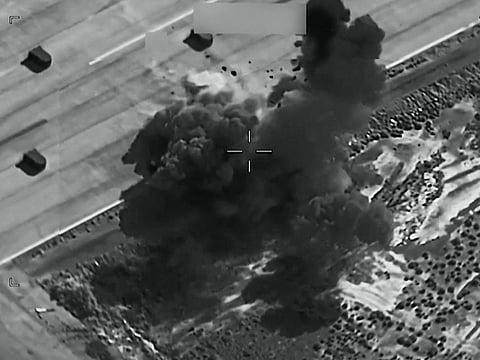
US bombing to 'get much worse' if Iran doesn't halt attacks: Trump
President Donald Trump warned late on Wednesday that US bombing of Iran will increase significantly if Tehran continues to attack ships in the Strait of Hormuz.
"This is in retribution for yesterday’s bombing of ships by Iran. If it happens again, it will get much worse!" the US president posted on social media over a picture of an apparent bombing of a site in Iran.
US military strikes Iranian targets in Chabahar
The United States launched its first military strikes on the southeastern Iranian port city of Chabahar.
Power cuts had been reported across the city.
It marks the first known American operation in the area since the April ceasefire and significantly expanding the geographical scope of the conflict beyond the Strait of Hormuz.
Explosions were reported across Chabahar late Tuesday, with Iranian state media confirming widespread power outages in parts of the city after the attacks. Residents reported hearing multiple blasts while emergency services responded to damaged infrastructure.
According to US military officials, the strikes targeted maritime infrastructure and military facilities believed to support Iran's ability to threaten commercial shipping.
US forces launch new strikes on Iran to curb threat to Hormuz: US military
The United States launched new strikes against Iran on Wednesday in a bid to curb Tehran's ability to target shipping in the Strait of Hormuz, the US military said.
US forces "have started conducting additional strikes against Iran to further degrade their ability to threaten freedom of navigation in the Strait of Hormuz," US Central Command said on X, adding that Washington is "holding Iran accountable for recent unjustified aggression against commercial shipping."
Explosion was heard in southern Iran: Mehr news
Explosions were heard on Wednesday in the southern Iranian cities of Bandar Abbas and Sirik, both in Hormozgan province, according to Iran's Mehr news agency. The reports came after US President Donald Trump said the truce with Iran was over and threatened further action, while an Iranian minister warned of a “fearless” response.
The US military is carrying out strikes against Iranian military targets in the Strait of Hormuz area, Axios reported, citing a senior American official.
Iran says FM called Qatari PM after military flare-up with US
Iran's Foreign Minister Abbas Araghchi made a call on Wednesday to the prime minister of mediator Qatar, during which they called for avoiding escalation following a flare-up with the United States.
"The two parties underscored the importance of using diplomatic means to resolve regional issues and emphasised the need to maintain contact and coordination to avoid an escalation of tensions in the region," an Iranian foreign ministry statement said of Araghchi's call with Qatar's Mohammed bin Abdulrahman Al Thani.
US‑Israel war on Iran: Recent developments
Day 131: Trump tempers fury to end NATO summit on high note
Day 130: Iran reports explosions on sites around Hormuz Strait
Day 129: Body of Khamenei arrives in Qom ahead of procession
Day 128: Massive turnout at Khamenei funeral
Day 127: Massive turnout at Khamenei funeral
Day 126: Netanyahu, Trump agree to meet in US 'soon'
Day 125: Iran denounces US-led security summit of 12 nations
Day 124: Iran says Qatar talks with US on war MoU concluded
Day 123: Iran says US blockade stopped oil exports completely
Day 122: IRGC Navy spokesperson Akbarzadeh dies in car 'mishap'
Day 121: Iran warns against attacks from regional territory
Day 120: US–Iran ceasefire under strain as drones target Bahrain


