US military strikes Chabahar for first time since ceasefire, opening new front along Iran's strategic Indian Ocean coast
US expands conflict beyond Strait of Hormuz with first strikes on Chabahar port
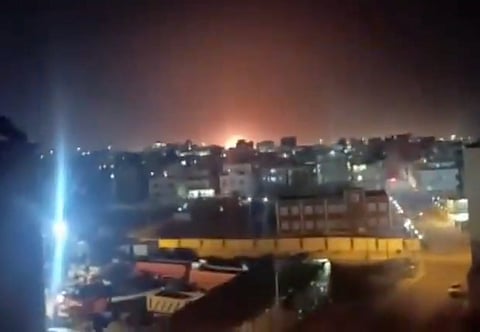
The United States launched its first military strikes on the southeastern Iranian port city of Chabahar.
Power cuts were reported across the city.
It marks the first known American operation in the area since the April ceasefire and significantly expanding the geographical scope of the conflict beyond the Strait of Hormuz.
Get updated faster and for FREE: Download the Gulf News app now - simply click here
Explosions were reported across Chabahar late Tuesday, with Iranian state media confirming widespread power outages in parts of the city after the attacks. Residents reported hearing multiple blasts while emergency services responded to damaged infrastructure.
Infrastructure hit
According to US military officials, the strikes targeted maritime infrastructure and military facilities believed to support Iran's ability to threaten commercial shipping.
Reports indicate that the attacks hit piers, a maritime traffic control tower and nearby military assets while avoiding civilian port facilities as well as critical energy infrastructure.
The operation came hours after President Donald Trump declared that the ceasefire negotiated earlier this year was "over," blaming Tehran for attacks on commercial vessels transiting the Strait of Hormuz. NATO Secretary General Mark Rutte later defended the U.S. response, calling it "absolutely necessary" after what he described as repeated Iranian violations of the truce.
Why Chabahar matters
The strike is strategically significant because Chabahar lies on the Gulf of Oman, outside the narrow Strait of Hormuz. It is Iran's only deep-water oceanic port and serves as one of Tehran's most important gateways to the Indian Ocean.
The port has long been viewed as a critical economic lifeline and has received major investment from India as part of efforts to establish a trade corridor linking South Asia with Afghanistan and Central Asia while bypassing Pakistan.
Unlike previous US operations concentrated around Bandar Abbas and military installations overlooking the Strait of Hormuz, striking Chabahar signals that Washington is now willing to target Iranian facilities farther east along the country's coastline.
First operation since April ceasefire
The attack represents the first US military action in the Chabahar area since the Pakistan-brokered ceasefire reached in April temporarily halted major hostilities between Washington and Tehran.
That truce had largely frozen direct military operations while negotiations continued, although tensions steadily increased following repeated maritime incidents in the Gulf.
The ceasefire unraveled after Iran was accused of attacking several commercial vessels in the Strait of Hormuz, prompting Washington to launch more than 80 strikes against Iranian military targets and revoke sanctions relief that had allowed limited Iranian oil exports.
Latest developments
The Pentagon said the strikes were intended to degrade Iran's ability to threaten international shipping and were not aimed at occupying territory or expanding the conflict.
Iran condemned the attacks as a violation of the ceasefire and warned of a "massive" response against US forces in the region.
The renewed fighting has heightened concerns over the security of one of the world's most important maritime trade routes, with analysts warning that further escalation could disrupt global energy supplies and increase shipping costs throughout the Gulf and Indian Ocean.


