Iran says Doha talks on implementing MoU with US have concluded
Channel to track violations of Iran-US war MoU to start operating Thursday
Highlights
We are closing this coverage now. For the latest updates, click here.
US, Iran agree to establish communication channel
US President Donald Trump said that indirect talks with Iran in Qatar were "making progress", offering a tentative sign that diplomacy was holding after recent exchanges of fire threatened efforts to end the Middle East war.
Iran's Deputy Foreign Minister Kazem Gharibabadi, who led Tehran's delegation, later said the talks had concluded and that the sides had agreed to establish a communication channel by Thursday to report and record violations of their initial memorandum of understanding.
Iran had insisted there would be no direct negotiations in Doha on the deal, which aims to end the war that began with US-Israeli strikes on Iran in late February.
"As far as things are going, the denuclearisation of Iran is moving along well," Trump told reporters before boarding Air Force One.
Get updated faster and for FREE: Download the Gulf News app now - simply click here.
Israel-Hezbollah front 'quiet'
On the Lebanon front, fighting between Israel and Hezbollah has also been relatively "quiet". Iran-backed Hezbollah drew Lebanon into the wider Middle East war in March with rocket fire at Israel, triggering Israeli airstrikes and a ground invasion. Tehran has insisted any final deal should include an end to the Lebanon conflict and the withdrawal of Israeli troops from the south, part of which they occupy.
Trump, Vance says indirect talks with Iran 'making progress'
US President Donald Trump said late on Wednesday that indirect talks with Iran in Qatar were making progress, a tentative sign that diplomacy was holding after recent exchanges of fire threatened efforts to end the Middle East war.
Iran's Deputy Foreign Minister Kazem Gharibabadi, who led Tehran's delegation, later said the talks had concluded and that the sides had agreed to establish a communication channel by Thursday to report and record violations of their initial memorandum of understanding.
Iran had insisted there would be no direct negotiations in Doha on the deal, which aims to end the war that began with US-Israeli strikes on Iran in late February.
The Qatar discussions, held at a lower level and focused on implementing the memorandum, were meant to "build on the progress made at the Lake Lucerne Summit," a diplomat told AFP on condition of anonymity.
Tehran denied Trump's earlier claim that the talks would be direct, with foreign ministry spokesman Esmaeil Baqaei saying Iran had "no plans for negotiations with the American side at any level over the coming days."
Gharibabadi said the discussions also covered frozen Iranian assets, whose release Tehran has demanded as part of any settlement.
He said officials reviewed the use of part of an initial $6 billion and agreed that goods needed by Iran would be purchased and made available.
Get updated faster and for FREE: Download the Gulf News app now - simply click here.
US crude oil production hits record 21.84 million barrels per day
Total US production of crude oil and petroleum products increased by 254,000 barrels per day in April to a record 21.84 million barrels per day, according to government data. Crude oil production alone rose by 216,000 barrels per day to 13.93 million barrels per day.
Year-over-year, total production surged by 1.01 million barrels per day or 4.9%. Since the 2008 financial crisis, total US petroleum output has quadrupled. Over the same period, crude oil production has soared +250%.
Crude oil extends post-war slump as Hormuz fears fade, prices sink below peak levels
Global oil prices extended their decline on Thursday morning (July 2, 2026, 8:12 am Tokyo time) as easing geopolitical tensions in the Middle East and the gradual reopening of shipping through the Strait of Hormuz continued to ease concerns over supply disruptions.
According to OilPrice.com, West Texas Intermediate (WTI) crude fell 58 cents, or 0.85%, to $68.00 per barrel.
Murban crude, the benchmark for Middle Eastern exports, posted the steepest decline, tumbling $3.37, or 4.88%, to $65.64 per barrel.
Trading Economics reported that Brent crude — the international benchmark — dropped $1.78, or 2.45%, to $71.162 per barrel as of 8.30am Tokyo.
Hormuz traffic rebounds slowly despite ceasefire, well below pre-conflict levels
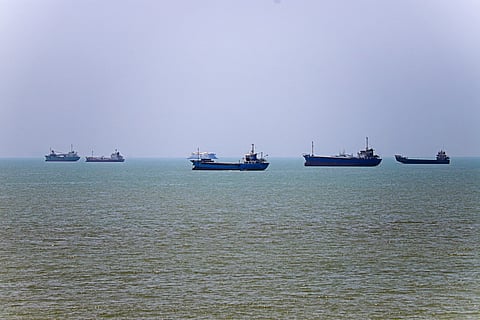
Commercial shipping through the strategically vital Strait of Hormuz is gradually recovering, but traffic remains significantly below normal levels following the recent US-Iran conflict.
According to MarineTraffic vessel-tracking data, 34 ships transited the strait on Tuesday, marking a modest improvement from the near-standstill seen during the height of hostilities. Even so, the figure remains well below the pre-conflict average of roughly 100 daily crossings, underscoring the lingering caution among shipping companies, insurers and energy traders.
The Strait of Hormuz's reopening became one of the central provisions of the US-Iran Memorandum of Understanding (MOU) signed on June 17, which committed both sides to the immediate resumption of commercial navigation through the waterway as part of broader confidence-building measures aimed at de-escalating tensions.
While traffic is steadily recovering, the latest shipping data suggests the maritime corridor has yet to return to business as usual, highlighting continued concerns over regional security despite ongoing negotiations between Washington and Tehran.
Iran-US Doha talks conclude on war deal
Iranian Deputy Foreign Minister Kazem Gharibabadi announced on Wednesday the conclusion of talks in Doha on implementing the memorandum of understanding between Tehran and Washington on ending the Middle East war, state media reported.
The participants agreed that "a communication channel would be established by tomorrow" (Thursday) to report and record violations of the memorandum, the IRNA state news agency quoted Gharibabadi as saying.
'Iran, Iran!' Iranian World Cup squad serenaded on return home
Iran's disappointed World Cup squad returned to a much warmer welcome at Tehran airport on Wednesday than they experienced on arrival in the US for their three group games.
"Iran, Iran!" a crowd of several hundred children, their parents and devoted fans chanted in unison.
Some waved the Iranian national flag while others sported bracelets with the national colours or wore the jersey of "Team Melli" as they feted the squad who had gone so close to reaching the knockout stages for the first time.
They finished third in the group, having drawn all three of their matches, but missed out as one of the eight best third-placed sides on goal difference.
Dubai Catholic churches announce 100% reopening
Two of Dubai's largest Catholic churches have announced a full reopening, allowing parishioners to once again participate in all church activities after temporary restrictions introduced earlier this year.
St. Mary's Catholic Church in Oud Metha and St. Francis of Assisi Catholic Church in Jebel Ali have confirmed that they are resuming normal operations following the latest directives from the authorities.
Trump upbeat as US, Iran hold indirect talks in Qatar
US President Donald Trump hailed the progress on Wednesday of indirect talks between the United States and Iran in Qatar, as the sides aimed to push forward negotiations and quell tensions following exchanges of fire.
The US leader said there had been "very good meetings" in Doha after an early dispute over the format threatened to overshadow discussions.
Iran insisted there would be no direct negotiations between the sides in the Qatari capital on the two parties' memorandum of understanding aimed at ending the Middle East war, which broke out with US-Israeli strikes on Iran in late February.
In a Virginia meeting with US soldiers, JD Vance said technical negotiations with Iran underway in Doha are "going well".
Get updated faster and for FREE: Download the Gulf News app now - simply click here.
Israel has deployed tanks along its border with Lebanon
Israel defence minister says troops to stay in Lebanon, Syria, Gaza 'until further notice'
Israel's defence minister said Wednesday that Israeli forces would remain in so-called security zones established in Lebanon, Syria and Gaza "until further notice".
"The IDF will remain in the security zones in Lebanon, Syria and Gaza until further notice, in order to protect Israel's residents and communities from jihadist terrorists," Israel Katz said, according to the defence ministry.
"We will not withdraw from the security zones," Katz said at a function held in honour of Israeli soldiers killed during the 2006 war in Lebanon.
Iran warns of swift response amid US-Iran talks
Iran has warned that any threat to its people or leadership will be met with an immediate and forceful response. In a post on X, Iranian Foreign Minister Abbas Aragchi said the US president had committed the US to muzzling its "pets" in Tel Aviv, warning that Tehran would retaliate if Washington's allies acted against that commitment.
The remarks came as the US and Iran held technical talks in Doha on Wednesday, as per Reuters, aimed at agreeing on shipping flows through the Strait of Hormuz and securing a lasting ceasefire, according to a source close to the talks and an Iranian official.
Aragchi's post was a response to comments from Israeli Defence Minister Israel Katz, who said Iran's supreme leader was "marked for death."
Trump says Iran talks were 'very good'
President Donald Trump hailed the progress on Wednesday of indirect talks between Iran and the United States, saying there had been "very good meetings" in Doha.
"As far as things are going, the denuclearisation of Iran is moving along well. They've had very good meetings, and we'll see," Trump told reporters as he prepared to board his new Qatar-gifted Air Force One plane for a trip to North Dakota.
"We hit them very hard... but we're getting along very well," he said of the talks, which are aimed at quelling tensions following exchanges of fire between the two sides.
Get updated faster and for FREE: Download the Gulf News app now - simply click here.
Shipping companies, unions still consider Hormuz a warzone
Unions and shipping companies said on Wednesday that they would continue to designate the Strait of Hormuz as a warlike operations area, after two ships were attacked despite a ceasefire between Iran and the US.
"This decision recognises the continuing and significant risk to life and the rapidly evolving situation in the area," said a joint statement by International Transport Workers' Federation (ITF) union and the Joint Negotiating Group (JNG), an umbrella organisation representing shipping owners.
A source familiar with the discussions told AFP that "Had the ships not been struck on two separate days since last Thursday, and had entries and exits continued smoothly, it is likely this week could have seen a change" in the designation.
Israel defence minister says troops to stay 'indefinitely' in Lebanon, Syria, Gaza
Israel's defence minister said Wednesday that Israeli forces would remain in self-proclaimed "security zones" established in Lebanon, Syria and Gaza, without any timeline for withdrawal.
"The IDF will remain in the security zones in Lebanon, Syria and Gaza indefinitely in order to protect our residents and communities from jihadist elements," Israel Katz said.
"We will not withdraw from the security zones," Katz said at function held in honour of Israeli soldiers killed during the 2006 war in Lebanon.
Katz also reiterated an earlier warning to Iran, saying the Islamic republic would be struck with "full force" if it attacked Israel over its operations in Lebanon.
A ship ran aground in Strait of Hormuz, Iranian state TV reports
A ship ran aground in the Strait of Hormuz after not running Iran's approved route through the water, Iranian state television reported Wednesday. The report identified the affected vessel as a foreign container ship, but offered no other immediate details.
Iranian state TV said the ship "ran aground with its cargo because of shallow waters along the route it had chosen and was unable to continue sailing." It said shippers needed to follow the instructions of Iran's paramilitary Revolutionary Guard in the strait.
The Guard's navy "has repeatedly warned captains, shipowners and officials of shipping companies around the world that any entry or exit through routes other than the "Route of Authority" in the Persian Gulf could lead to irreparable incidents," it said. The report did not mention the two ships Iran attacked in recent days for daring to head out through the strait without Tehran's permission, including one that was carrying crude oil from Qatar.
US, Iran officials to hold indirect talks in Doha
Officials from the United States and Iran will on Wednesday hold indirect technical talks on their deal aimed at ending the Middle East war, a diplomat with knowledge of the talks told AFP.
"US and Iranian officials are to hold indirect technical talks on Wednesday in Doha with Qatari and Pakistani mediators on the memorandum of understanding building on the progress made at the Lake Lucerne Summit," the diplomat said.
US envoys Jared Kushner and Steve Witkoff will not be taking part in the technical talks, the diplomat added, after they met with Qatar's Prime Minister Sheikh Mohammed bin Abdulrahman Al Thani on Tuesday.
Both the US and Iran had said they would send officials for meetings in Qatar.
State TV cuts short Iran negotiator interview, drawing ire
Iranian state television on Tuesday cut short the broadcast of an interview with Mohammad Bagher Ghalibaf, Iran's top negotiator in talks with the United States, drawing criticism from his team.
"This discussion was delivered to the Islamic Republic of Iran Broadcasting (IRIB) more than 2 hours before the broadcast time; but unfortunately, the broadcast of this discussion was stopped in the middle of it," said a statement by the parliament media centre on Wednesday.
"This is despite the fact that this discussion was recorded and the least duty of the IRIB officials was to coordinate it with the parliament's media centre if they decided not to broadcast part of the discussion contrary to procedures," the statement added.
The state broadcaster argued that the interview was cut into two parts and the second section will air on Wednesday night.
The parliamentary media centre noted that the parts that were cut included the topics of UN nuclear watchdog inspections, the country's frozen assets, and a 300-billion-dollar reconstruction credit.
During the state TV interview on Tuesday, Ghalibaf argued that the memorandum has enabled Iran to sell its oil as the US removed its own blockade of the Strait.
"From the day the blockade was lifted until today, we have exported more than 40 million barrels of oil," he said, adding that "by contrast, during the previous 50 to nearly 60 days, we were genuinely unable to export even a single barrel of oil."
Vance and Rubio take different approaches as Iran tests their 2028 prospects
Vice President JD Vance and Secretary of State Marco Rubio appear to be staking out differing approaches to carrying out President Donald Trump’s national security agenda as the possible 2028 presidential rivals jostle for position in a divided Republican Party. With vastly different backgrounds and policy experience, they have moved along separate paths to stake out territory: Rubio, the son of Cuban immigrants with a long history in the Senate and major interest in Latin America, and Vance, a child of the Midwest and Marine Corps veteran who served in the Senate for only two years before being tapped as Trump's 2024 running mate, with a message of opposing foreign wars.
Flashpoint: Oman floats post-war plan for Strait of Hormuz
Oman has quietly circulated a proposal to the United States and other allied governments outlining a long-term framework for managing the strategically vital Strait of Hormuz, signaling that the waterway may not simply return to its pre-conflict status quo even as maritime traffic gradually stabilises.
The proposal, reportedly by CNN citing diplomatic sources, comes amid ongoing diplomatic efforts to establish new security and navigation arrangements following months of regional conflict.
Muscat's plan explores mechanisms to improve navigational safety, environmental protection and maritime security, including possible service fees tied to those functions, though Oman has stressed it remains committed to international maritime law and freedom of navigation.
Iran says US blockade stopped oil exports completely
Chief negotiator Mohammad Bagher Ghalibaf on Tuesday said Iran was unable to export any oil during the US blockade on its ports, noting that exports have since surged.
"From the day the blockade was lifted until today, we have exported more than 40 million barrels of oil," he said in an interview on state television. "By contrast, during the previous 50 to nearly 60 days, we were genuinely unable to export even a single barrel of oil."
Ghalibaf outlines strict preconditions for negotiations
Iran’s Parliament Speaker Mohammad Bagher Ghalibaf said the country will not enter further negotiations for a final agreement until key provisions of a memorandum of understanding (MoU) are implemented.
He said Iran would not proceed with talks unless clauses 1, 4, 5, 10 and 11 of the MoU are fulfilled.
The clauses cited include a cessation of hostilities in Lebanon, the removal of what Iran describes as a US naval blockade in the Strait of Hormuz, and guaranteed safe passage for commercial vessels without charges for a limited 60-day period.
They also cover waivers for the export of Iranian crude oil and petroleum products, as well as the release of frozen Iranian assets.
Ghalibaf’s remarks underline Tehran’s position that progress in negotiations depends on full implementation of agreed conditions, particularly those linked to maritime security and sanctions relief.
Iran prioritises diplomacy with US but remains ready for war
Iran's chief negotiator Mohammad Bagher Ghalibaf on Tuesday said that Iran was prioritising diplomacy with the United States, but remained ready for war.
"We are pursuing dialogue, but if the dialogue is not implemented, we are also prepared for war and will respond accordingly," Ghalibaf said in an interview on state television, as Iranian and US delegations were due to hold separate discussions in Doha.
Qatar: US-Iran technical talks ongoing, no high-level meetings
Qatar said that technical talks between Iran and the United States are continuing, although no high-level meetings are currently taking place under the existing negotiation framework.
Majed Al Ansari, adviser to Qatar’s prime minister and Foreign Ministry spokesperson, said visits by US envoys Steve Witkoff and Jared Kushner to Doha were part of wider consultations with Qatari officials and mediators on regional issues, including Iran and Lebanon.
Speaking at a media briefing, Al Ansari said technical contacts between Tehran and Washington have continued since earlier Switzerland meetings through both direct and indirect channels.
He added that Iranian and US technical delegations remain engaged in discussions in different formats, with mediators supporting efforts to keep the process moving in Doha and elsewhere.
Modi, Pezeshkian discuss West Asia peace efforts
Prime Minister Narendra Modi held a phone call with Iranian President Masoud Pezeshkian, welcoming the recent understanding aimed at ending the West Asia conflict.
During the conversation, President Pezeshkian briefed PM Modi on the latest regional developments and the path forward.
PM Modi reiterated India’s consistent position that all issues must be resolved through dialogue and diplomacy, stressing the need for sustained efforts to ensure lasting peace and stability in the region.
The Prime Minister also underlined the importance of safeguarding freedom of navigation and ensuring secure shipping lanes and commerce in the region.
This is part of ongoing diplomatic engagement between the two leaders. In their earlier talks in March, both sides had discussed regional security concerns, including the protection of civilian lives and critical infrastructure.
PM Modi had also previously highlighted the importance of keeping maritime routes open and secure.
UN chief warns cash crunch threatens Palestinian refugee agency
UN chief Antonio Guterres warned of the "increasingly precarious" situation of the UN agency for Palestinian refugees known as UNRWA, saying that millions of people's livelihoods were at risk.
The secretary-general said that further funding cuts for UNRWA - which Israel has criticized as politically biased - could "push conditions beyond breaking point."
Because of insufficient funding, UNRWA has scaled back its operations since the start of the year.
"As we meet here today, the safety and welfare of millions of Palestine refugees hangs in the balance," Guterres told a donor conference for the UN agency.
He noted the "utterly appalling" living conditions in Gaza, violence by Israeli settlers in the West Bank and Israeli strikes on Lebanon.
"It [UNRWA] faces sweeping restrictions throughout the Occupied Palestinian Territory. And a cash shortfall that imperils its work across the region," Guterres said.
"I am appalled by continuing efforts to marginalize and undermine UNRWA through disinformation, smear campaigns, legislative actions, operational restrictions, diplomatic roadblocks and more," he said.
Israel has long opposed UNRWA, created by the UN General Assembly in 1949, and intensified its criticism after October 7, alleging that employees participated in the deadly 2023 attack on Israel.
Strait of Hormuz threat level raised to 'substantial'
The maritime security threat level in the Strait of Hormuz has been raised to “substantial”, according to the Joint Maritime Information Center (JMIC), even as commercial shipping continues to move normally through the key waterway.
According to CNN reports, the JMIC said vessels have maintained regular transits over the past 48 hours, using both the southern Omani corridor and the northern Iranian-controlled route, while US-assisted shipping operations continued without disruption.
Despite steady movement, the advisory body warned of ongoing security concerns, including mine risks, navigation interference, drone activity and surveillance in the region.
The JMIC confirmed that no verified maritime security incidents were recorded during the latest reporting period.
Based in Bahrain, the Joint Maritime Information Center is a US-led multinational body established in 2024 that monitors maritime risks and works with partners including UKMTO.
US‑Israel war on Iran: Recent developments
Day 123: Iran says US blockade stopped oil exports completely
Day 122: IRGC Navy spokesperson Akbarzadeh dies in car 'mishap'
Day 121: Iran warns against attacks from regional territory
Day 120: US–Iran ceasefire under strain as drones target Bahrain
Day 119: Lebanon, Israel, US sign trilateral deal in Washington
Day 118: Oil price spikes after IRGC strike on ship in Hormuz
Day 117: Iran-Gulf reconciliation talks expected in Saudi Arabia