US Secretary of State Rubio assures Gulf states ahead of Iran talks in Switzerland June 29 or 30
Qatar expects its LNG operations to return to normal levels within a matter of weeks
Highlights
We are closing this coverage now. For the latest updates, click here.
No tolls allowed on Strait of Hormuz: Rubio
US State Secretary Marco Rubio has reited a firm stance that no tolls will be allowed on the Strait of Hormuz, even as US-Iran tensions simmer over waterway fees. In a post on X (formerly Twitter) Wednesday, the official White House rapid response account amplified comments from Rubio underscoring the Trump administration's position that the Strait of Hormuz must remain free and open to international shipping without any charges. Rubio stated: "The whole world will be against any mechanism that charges money to use an international waterway. It's that simple. The President has already said it — that's not going to happen. When we mean open the Straits, we mean open the Straits free."
Technical talks with Iran are set to move ahead: Rubio
The Trump administration said "technical negotiations" with Iran will continue in the coming days, but acknowledged that the future of Tehran's nuclear programme remains the biggest hurdle to securing a lasting ceasefire after months of conflict.
Secretary of State Marco Rubio said discussions with Iranian officials would move forward, with negotiators expected to tackle complex technical issues surrounding Iran's nuclear activities, which US officials have repeatedly said must never lead to the development of a nuclear weapon.
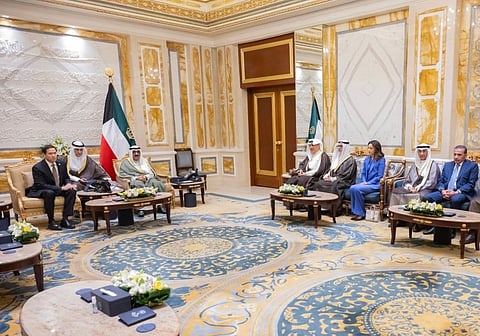
Speaking during a diplomatic tour of the Arabian Gulf, Rubio said he visited Kuwait, the United Arab Emirates and Bahrain to thank the three US partners for what he described as their "incredible support" during the recent conflict and subsequent ceasefire efforts.
Rubio stressed that Washington would not sideline its regional partners while pursuing a diplomatic agreement with Tehran. He assured that the US would "never undermine" Gulf allies, adding his meetings as "very frank, honest, important."
The comments underscore the administration's effort to reassure Gulf states, many of which have long viewed Iran's expanding military capabilities and regional influence as a direct security threat. Officials have said any long-term agreement must address concerns shared by US allies while preventing Iran from rebuilding its nuclear program.
NATO chief sidesteps Trump's remarks backing some Iranian missiles, stresses nuclear threat
NATO Secretary General Mark Rutte on Wednesday declined to say whether he agreed with US President Donald Trump's recent remarks suggesting Iran could retain some conventional ballistic missiles, instead reiterating the military alliance's longstanding position that Tehran must never acquire nuclear weapons.
Speaking outside the White House after meeting with Trump, Rutte avoided weighing in on the U.S. president's comments when questioned by CNN's Kaitlan Collins.
"I can't comment on everything," Rutte said. "What is important here is for NATO — that we always had a consistent position as an alliance with the United States, all the 32 nations — that Iran should never get its hands on the nuclear capability."
Rutte's remarks came days after Trump said he would support Iran possessing "some" conventional ballistic missiles, arguing that such weapons "aren't the problem." The comments marked a notable shift in tone after Trump had previously called for eliminating the threat posed by Iran's ballistic missile program as part of broader efforts to curb Tehran's military capabilities.
Oil prices retreat as fears of supply disruption ease
Global oil prices have fallen to their lowest levels since the outbreak of the Iran war earlier this year, as traders increasingly bet that a US-Iran agreement will keep the strategically vital Strait of Hormuz open and allow energy exports to return to normal.
Brent crude, the international benchmark, fell below $74 per barrel, while US West Texas Intermediate crude fell below $70, and Murban crude dropped 4.57% to $66.45 (down $3.18) as of 7.48am in Tokyo, erasing most of the "war premium" that had built up during months of conflict.
Trump faces Republican backlash over Iran war as White House seeks $87.6B from Congress
US President Donald Trump came under sharp criticism from fellow Republicans during a closed-door meeting on Capitol Hill, exposing deepening divisions within his own party over the months-long Iran war, just hours before the White House formally asked Congress to approve $87.6 billion in emergency funding to cover military operations and other priorities.
The tense meeting reportedly featured a heated exchange between Trump and Republican Sen. Bill Cassidy, one of several GOP lawmakers who have questioned the administration's handling of the conflict and the framework agreement reached to end hostilities with Iran. Republican concerns have centered on the war's objectives, mounting costs, and whether the administration has secured meaningful strategic gains.
The clash came a day after the Senate delivered a symbolic rebuke by approving a bipartisan war powers resolution seeking to curb Trump's authority to launch future military action against Iran without congressional approval, reflecting growing unease in both parties over the conflict and its constitutional implications.
Despite the political backlash, the Trump administration has asked Congress to approve $87.6 billion in supplemental spending. Of that amount, about $67 billion would replenish Pentagon weapons stockpiles, strengthen the U.S. defense industrial base, and fund military operations linked to the Iran conflict. The package also includes aid for American farmers affected by trade disruptions, funding to combat the Ebola outbreak in Africa, and other domestic priorities aimed at broadening congressional support.
Rubio says 'no country' supports imposing fees in Hormuz strait
US Secretary of State Marco Rubio said on Wednesday that he believed all countries were against Iran imposing fees for transiting the crucial Strait of Hormuz.
"I know of no country on the planet that supports tolling or fees for the use of the strait," Rubio said during a tour of the Gulf to reassure close US allies who were hit hard by Iran during the Middle East war.
US promises to protect Gulf states' interests in Iran talks
Secretary of State Marco Rubio promised the United States' Gulf allies that Washington would protect their interests as it seeks to hammer out a final settlement of the Middle East war in talks with Iran.
Rubio was on a regional tour to reassure the Gulf states, which were targeted by Tehran's missiles and drones during the conflict and saw their crucial oil and gas shipments effectively cut off by an Iranian blockade of the Strait of Hormuz.
Tehran has emerged emboldened from the war, vowing not to relinquish control of the vital waterway and going so far as to call its initial deal with Washington to stop the fighting "a declaration of America's defeat".
During a visit to Kuwait City, Rubio said Washington would be on the same page as Gulf states as it wrangles with Iran over a permanent settlement to the conflict.
"We're going to be completely aligned with our partners in the Gulf. That's why we're meeting with all of them tomorrow," he said, adding the US would "engage them on conversations about every decision that's made with regards to this negotiation".
Rubio is due to attend a Gulf Cooperation Council meeting in Bahrain on Thursday after sitting down with the leaders of Kuwait and the United Arab Emirates on Wednesday.
Rubio expects US-Iran talks in Switzerland on June 29 or 30
US Secretary of State Marco Rubio said on Wednesday that technical negotiations between Washington and Tehran are expected to resume later this month in Switzerland.
"The technical group will be back, I believe, on the 29th or the 30th... I believe they're going back to Switzerland, if I'm not mistaken," Rubio said.
Israel PM Netanyahu completes testimony in corruption trials
Israeli Prime Minister Benjamin Netanyahu has concluded his testimony in his graft trials, a justice ministry spokeswoman told AFP on Wednesday, as he grapples with a US-Iran deal widely interpreted as detrimental to the country's interests.
Netanyahu has testified in 98 hearings since December 2024, many of them shortened or delayed upon the request of his lawyer Amit Hadad due to his security meetings, government duties or health issues.
UN maritime head tells AFP will take 'few weeks' to evacuate all Gulf sailors
The evacuation of more than 11,000 sailors stranded in the Gulf owing to the US-Iran war will take "a few weeks", the head of the International Maritime Organization told AFP Wednesday.
"It will take us a few weeks before we can actually complete the evacuation" of about 600 ships stuck since the start of the conflict, IMO secretary-general Arsenio Dominguez said in an interview.
Israeli defence minister says 'no US demand' to withdraw from Lebanon
Israeli Defence Minister Israel Katz said Wednesday that the United States has not demanded that Israel withdraw its troops from southern Lebanon, a condition set by Lebanon in ongoing ceasefire negotiations.
"We have announced that in any case we are not withdrawing and, as of this moment -- and this is a diplomatic achievement -- there is no American demand for Israel to withdraw from Lebanon," Katz said in an interview at a convention of local leaders in Tel Aviv.
When asked if the army would adhere to such a US request if it was made, Katz said he told US Defense Secretary Pete Hegseth and Israeli Prime Minister Benjamin Netanyahu told US President Donald Trump that "we are there to protect the residents of the north" of Israel.
Italy slams NATO chief's comments on Iran war flights
Italy on Wednesday criticised comments by NATO chief Mark Rutte on the politically sensitive issue of US forces using bases in Italy during the Iran war.
Responding to President Donald Trump's criticism of NATO allies for not supporting the US, Rutte told Fox News that Europe was in fact a "platform of power projection for the United States".
"Five hundred US planes took off from US bases in Italy to support (Operation) Epic Fury. So this is massive," Rutte told the network ahead of an expected meeting with Trump.
He said there were between 4,000 to 5,000 sorties by US planes from European bases during the conflict.
Italy's defence ministry in a statement said Rutte's words gave "a completely misleading message by confusing the type of flights that were authorised".
US Embassy in Kuwait resumes operations
The US Embassy in Kuwait has resumed normal operations after months-long suspension prompted by security concerns linked to Iranian attacks in the region, the US State Department said on Wednesday.
The embassy had halted some activities amid heightened tensions following exchanges of strikes between Iran, the US and Israel, which raised concerns over the security of American personnel and facilities across the Gulf region.
Qatar PM in Oman to prepare for talks between Gulf, Iran on Hormuz
Qatar's Prime Minister Sheikh Mohammed bin Abdulrahman Al Thani travelled to Oman on Wednesday to initiate talks between the Gulf states, Iraq and Iran on the Strait of Hormuz, a diplomat briefed on the discussions told AFP.
"The Qatari prime minister travelled to Muscat in preparation for talks between Iran, the Gulf nations and Iraq on the operation of the Strait of Hormuz," the diplomat told AFP, saying the discussions were separate from US-Iran negotiations.
A separate summit was also expected between the Gulf countries and potentially with other regional neighbours with Iran to mend ties in Saudi Arabia.
Israeli strike on vehicle in south Lebanon kills two: state media
Iran-Gulf reconciliation talks expected in Saudi Arabia
Talks on reconciliation between Gulf countries and Iran are expected to take place in Saudi Arabia, a diplomat with knowledge of the arrangements told AFP on Wednesday.
A summit aimed at mending ties between Gulf nations, Iran and possibly other regional neighbours in the aftermath of the Middle East war was expected in Riyadh, the diplomat said, without specifying a date.
Iran says UN nuclear inspections tied to final deal with US
Iran’s Deputy Foreign Minister Kazem Gharibabadi has said that access for UN nuclear inspectors to damaged nuclear facilities will be addressed only within the framework of a final agreement with the United States.
He added that any inspections would depend on the “practical steps” taken by the other side to lift all sanctions, according to a post on X.
Gharibabadi also noted that no Iranian officials met with International Atomic Energy Agency (IAEA) chief Rafael Grossi during recent talks in Switzerland, despite a request for such a meeting.
His comments came shortly after Grossi said inspections of Iranian nuclear sites were “going to happen,” stressing that timing was secondary to the process itself.
EU agency: Airlines should still avoid Iranian airspace
The European Union Aviation Safety Agency (EASA) has advised airlines not to operate in the airspace of Iran, Iraq and Lebanon, while urging caution across several neighbouring countries, including the UAE, Saudi Arabia, Oman, Qatar, Bahrain, Kuwait, Jordan and Israel.
EASA said the regional security environment has improved since the US-Iran ceasefire was extended under a 60-day memorandum of understanding, but warned that tensions remain high and the risk of sudden escalation persists. The agency highlighted the potential for ceasefire violations, particularly around the Strait of Hormuz, and said operators should maintain up-to-date risk assessments and contingency plans.
Pakistan says US-Iran technical talks to resume next week
Pakistan said on Wednesday technical talks that Islamabad has been mediating between the United States and Iran were set to restart next week.
"Talks will resume next week, I presume on Tuesday," Pakistan's foreign ministry spokesman Tahir Andrabi told journalists in Islamabad, adding next Monday or Wednesday were also possible start dates and without providing details on the location of discussions.
Tehran says end of Lebanon war 'as important' as end of Iran war
Iran says deal to end Mideast war 'declaration of US defeat'
The deal between Iran and the United States to end the Middle East war is "America's declaration of defeat", Mohammad Bagher Ghalibaf, the head of the Iranian negotiating team, said on Wednesday.
"The Islamabad understanding was not the result of pressure and coercion, but rather the result of the resistance and authority of the brave Iranian nation," Ghalibaf said at a conference in Azerbaijan broadcast on Iranian television.
"That is why, the Islamabad Memorandum of Understanding became a declaration of America's defeat," he said, adding that security in the Middle East must be ensured by the countries of the region.
Oman, IMO establish temporary Hormuz shipping corridor
Oman’s Maritime Security Centre said the Sultanate, in coordination with the International Maritime Organization (IMO), has established a temporary shipping transit corridor through the Strait of Hormuz to support freedom of navigation and the safe movement of vessels.
In a statement posted on X, the centre said the initiative reflects Oman’s commitment to international maritime law and follows recent understandings reached between the United States and Iran. The corridor will operate along coordinates announced by the IMO and Omani authorities.
Vessels wishing to use the route have been advised to coordinate with the IMO before transiting the strait.
Iran's top diplomat speaks with Hamas
Iran's top diplomat spoke with a senior official from the Palestinian militant group Hamas regarding talks between Iran and the United States, state television reported on Wednesday.
Abbas Araghchi discussed the "latest developments" in the region with Basem Naeem, a member of Hamas's political bureau, Iranian television said.
The call follows the signing last week of a memorandum of understanding between Iran and the United States aimed at bringing a lasting end to hostilities in the Middle East.
The text does not mention Gaza but stipulates "an immediate and permanent cessation of military operations on all fronts, including in Lebanon".
Hamas has welcomed the agreement and expressed hope that it would also help end the violence in the Gaza Strip, which has been devastated by over two years of war with Israel.
During the call, Araghchi "reaffirmed the Islamic republic's continued support for Palestinians and their just cause until their legitimate national rights are fully realised", according to a transcript reported by Iranian television.
Get updated faster and for FREE: Download the Gulf News app now - simply click here.
Trump orders probe because gas prices not falling enough
Donald Trump said on Wednesday he ordered an investigation into major oil companies over high gasoline prices as the US leader faces criticism over the impact of the Mideast war.
Global petroleum prices soared after Iran blocked the flow of oil through the vital Strait of Hormuz in response to US-Israeli strikes in February.
"The big Oil Companies are not dropping their price at the pump commensurate with the sharply lower prices they are paying for Oil," Trump wrote on Truth Social.
"Those prices are dropping like a rock! In other words, customers are being 'gouged'," he added.
Gasoline prices are a political issue in the United States, where fossil fuel-powered vehicles are many Americans primary means of transport.
Trump has faced criticism for launching the war and its impact on the fuel costs paid be millions of Americans as November's congressional elections draw closer.
The president repeatedly predicted that fuel prices would "come down like a rock" after the conflict ended.
But economists dispute that claim, expecting oil prices to take months to return to pre-war levels.
Tehran and Washington have struck an initial deal that includes the resumption of oil tanker traffic through Hormuz, though issues like Iran's nuclear programme are still in dispute.
Gasoline prices are still above their pre-war levels, but have come down since the initial deal was announced.
IAEA says inspections of Iran’s nuclear sites will proceed
The head of the U.N.'s nuclear agency signaled Wednesday that Iranian nuclear enrichment sites would be visited by his inspectors, a key component in the interim deal between the United States and Iran to reach an end to the war.
The comment by International Atomic Energy Agency head Rafael Mariano Grossi was the firmest yet from the United Nations agency, which is viewed as key in determining the status of Iran's nuclear stockpile.
Grossi says inspections are 'going to happen'
"I can understand political statements, they are part of the reality, but the fundamental thing I would like to remind you and draw your attention to is that there has been a Memorandum of Understanding, signed by both presidents," Grossi told journalists at a news conference at the tsunami-hit Fukushima Daiichi nuclear power plant.
The accord "says explicitly that the nuclear activities that are going to be carried out with the regards to the nuclear material facilities will be supervised by the IAEA - in all letters," he said.
Grossi added: "Obviously, to do that, we will have to inspect. Whether this happens the day after tomorrow or in one week or in 10 days, it's important, but not essential. This is going to happen."
Those inspections are key for the deal, which calls for Iran's stockpile of uranium to be "downblended" from highly enriched levels.
Pakistan, Iran foreign ministers hold talks on regional stability
Pakistan's Interior Minister Mohsin Naqvi has met his Iranian counterpart Eskandar Momeni for discussions focused on Pakistan-Iran relations and the evolving regional situation following the recent peace agreement.
The two sides reviewed areas of cooperation and exchanged views on maintaining stability in the region in the aftermath of recent diplomatic developments.
Dr Eskandar Momeni also expressed gratitude for the warm reception extended to the Iranian president and his delegation during their visit to Pakistan.
Qatar to resume normal LNG production ‘within a few weeks’, PM says
Qatar expects its liquefied natural gas operations to return to normal levels within a matter of weeks, Qatar’s Prime Minister Sheikh Mohammed bin Abdulrahman Al Thani said, according to the Financial Times.
He added that direct communication between Washington and Tehran would be essential to reopening the Strait of Hormuz.
QatarEnergy had suspended LNG production following the outbreak of military action involving the United States and Israel against Iran on February 28, after a drone strike on the Ras Laffan facility.
Brent crude falls below $77 as oil extends slide
Crude oil prices extended losses in Asian trading on Wednesday (June 24) as easing fears of supply disruptions in the Middle East outweighed lingering geopolitical tensions, with traders betting that the fragile ceasefire between Israel and Iran would hold and keep oil flowing through the Strait of Hormuz.
As of 12:58 pm Tokyo time on Wednesday, Brent crude — the international benchmark — fell 79 cents, or 1.02%, to $76.29/barrel, while US West Texas Intermediate (WTI) dropped 80 cents, or 1.09%, to $72.41 a barrel, according to market data provided by the user.
Other benchmarks also traded lower, reflecting broad weakness across the energy complex.
Trump slams US Congress for 'poorly timed and meaningless' Iran war powers vote
US President Donald Trump on Tuesday criticized Congress passing a largely symbolic resolution calling for an end to the war with Iran, calling it "poorly timed and meaningless."
"So, I have Iran on the 'ropes,' ready to go down for the fall...and the U.S. Senate decides to have a poorly timed and meaningless War Powers Act Vote," Trump wrote on his Truth Social platform of the 50-48 Senate vote, adding: "These Senators have just made my job more difficult, but I will get it done, one way or the other, because I always get it done!"
US Senate votes to limit Trump's Iran war powers
The Senate for the first time approved a war powers resolution Tuesday seeking to block U.S. military action against Iran, as lawmakers warily watch President Donald Trump's efforts to resolve a conflict that the administration launched on its own and now needs Congress to fund.
It was the 10th time the Senate has tried to stop the war, and the outcome, on a vote of 50-48, was a stunning turnaround from past efforts. While the resolution is largely symbolic, and does not carry the full force of law, it reflects the growing concerns from a number of Republican lawmakers in both the House and Senate over both the war and the deal Trump struck with Iran to end it. The House approved the resolution earlier this month.
Trump responded angrily Tuesday night on his Truth Social platform, calling the vote "poorly timed and meaningless" and saying it "provided aid and comfort" to Iran.
Read more here.
South Korea says four more ships clear Strait of Hormuz
South Korea's Ministry of Oceans and Fisheries said four additional South Korean-operated vessels have safely transited the Strait of Hormuz and are continuing their voyages without disruption. The latest departures bring the total number of South Korean-linked ships to exit the area to six.
'Four vessels operated by our shipping companies that were waiting inside the Strait of Hormuz have passed through the strait and are sailing normally,' the ministry said, according to Yonhap News Agency.
The ministry said the four vessels carried 26 South Korean crew members. One of the ships is currently en route back to South Korea.
Iran's missile programme not part of agreement with US: President Pezeshkian
Iranian President Masoud Pezeshkian said that the missile programme of the Islamic Republic is not included in the 14-point memorandum of understanding (MoU) with the United States and will not be part of any such arrangement in the future.
According to a video shared by the Iranian state media Islamic Republic of Iran Broadcasting (IRIB), Pezeshkian made the remarks while speaking at a news conference in Pakistan during his visit to Islamabad.
"The discussion over our missiles does not exist in the MoU, and it never will," Pezeshkian said, firmly rejecting any linkage between Iran's missile capabilities and the agreement with the United States.
He further defended Iran's missile programme, describing it as a critical element of the country's defence strategy. "If we did not have the missiles we use for our defence, Israel and the United States would have devastated Iran," he said.
Rubio: Lebanon ceasefire 'separate' from Iran deal
US Secretary of State Marco Rubio said in Abu Dhabi that lasting peace and stability in the Middle East cannot be achieved as long as Iranian-backed proxy groups continue launching attacks and engaging in militant activities across the region, while stressing that discussions over a Lebanon ceasefire are "separate" from ongoing negotiations with Iran.
Trump signals fresh US-Iran thaw, says ‘fair deal’ within reach
US President Donald Trump his administration was working toward a "fair deal" with Iran, expressing optimism that negotiations were progressing and describing relations between the two countries as positive despite lingering disagreements over key issues, including nuclear inspections and sanctions relief.
"We're trying to work out a fair deal with Iran," Trump told reporters, adding that the United States and Iran were "getting along well" as negotiators seek to finalize an agreement aimed at ending months of conflict and preventing Tehran from developing nuclear weapons.
Evacuation of more than 11,000 seafarers underway: IMO
The International Maritime Organisation (IMO) has started implementing a large-scale operation to facilitate the safe movement of hundreds of vessels and the evacuation of more than 11,000 seafarers who had been stranded in the Arabian Gulf during months of heightened tensions.
The agency said it had secured safety guarantees from relevant parties.
The operation, coordinated with Iran, Oman, and the US, follows a recent peace agreement and provides two temporary routes through the Strait of Hormuz.
Oman announces temporary maritime corridor through Strait of Hormuz
Oman said on Tuesday it had coordinated with the International Maritime Organisation (IMO) to establish a temporary maritime corridor for vessels transiting the Strait of Hormuz, as authorities move to restore safe commercial shipping through one of the world's most critical energy chokepoints following months of regional conflict.
According to Oman's state news agency, ships wishing to use the temporary corridor must coordinate with the IMO using navigation coordinates issued by the organisation and Omani authorities.
The measure is intended to safeguard freedom of navigation in accordance with international law and the United Nations Convention on the Law of the Sea, which guarantees transit passage through international straits without the imposition of transit fees.
Vessels wanting to use the temporary corridor would need to coordinate with the IMO, based on coordinates announced by the organisation and Omani authorities, it added.
The measure was aimed at ensuring freedom of navigation through the strategic waterway in line with international law and the law of the sea, which uphold freedom of navigation without imposing transit fees.
US Congress passes symbolic Iran war rebuke to Trump
The US Senate passed a largely symbolic resolution calling for an end to President Donald Trump's war with Iran, delivering a fresh rebuke to the White House as it tries to negotiate a lasting settlement with Tehran.
The House-passed measure, adopted by the Senate in a 50-48 vote, directs Trump to remove US forces from hostilities with Iran unless Congress explicitly authorizes military action.
Because the measure is a "concurrent resolution," it does not go to Trump's desk for signature and carries disputed legal force.
US‑Israel war on Iran: Recent developments
Day 116: Rubio lands in UAE on first leg of Gulf tour
Day 115: Iran will agree to allow weapons inspection: Vance
Day 114: Iranian military says halting offensive vs Israel
Day 113: Trump threatens US tolls on Hormuz strait if Iran talks fail
Day 112: Israeli strike hits south Lebanon despite truce deal
Day 111: Iran leader approves US deal despite 'different view'
Day 110: Trump signs surprise interim deal with Iran to pause war


