Trump extends Iran ceasefire but maintains Strait of Hormuz blockade
Trump's ceasefire extension came hours before it was believed to be set to expire
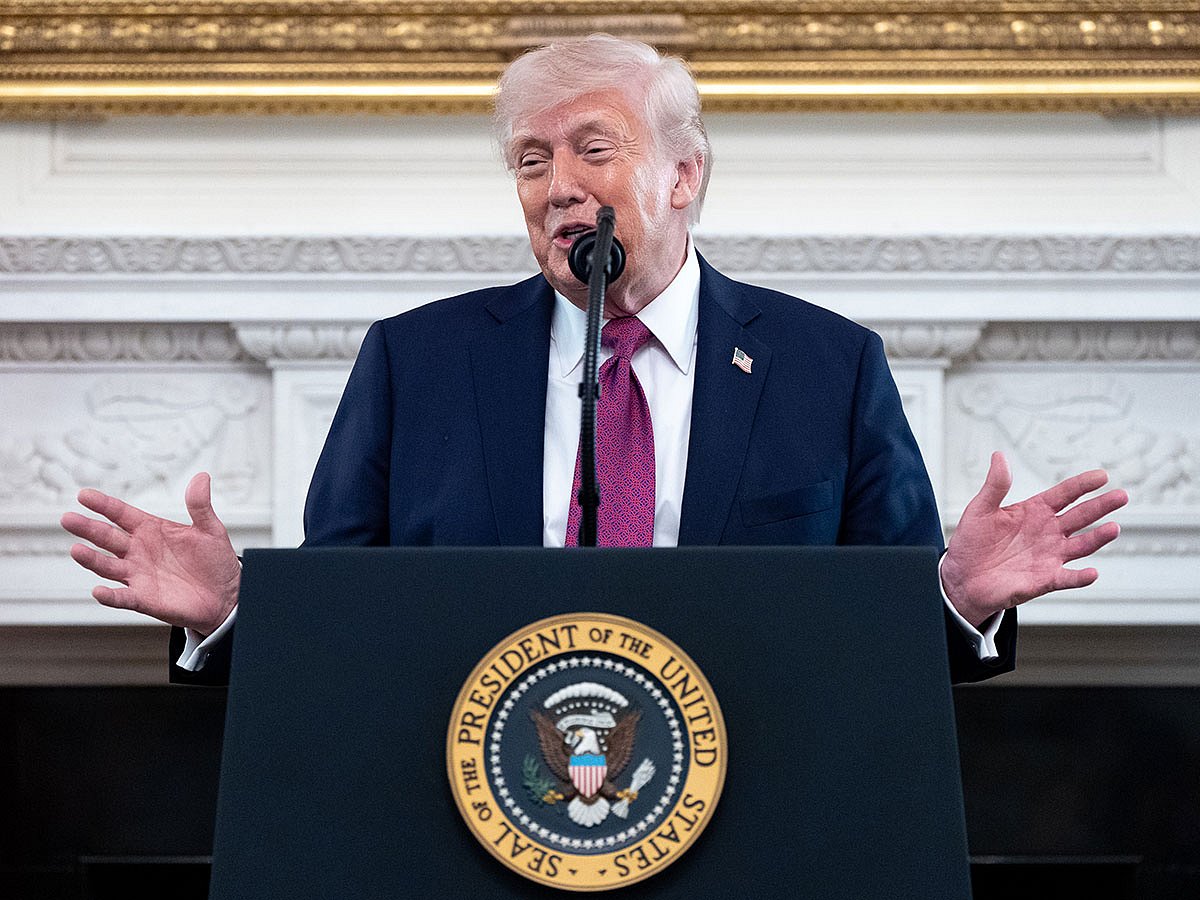
Donald Trump has extended the ceasefire with Iran, averting a return to fighting just hours before it was due to expire. Pakistan’s Prime Minister Shehbaz Sharif has thanked Trump for extending the truce. Trump said the US will maintain its blockade of the Strait of Hormuz and Iranian ports until Tehran submits a 'unified proposal' and talks are completed. Iran has yet to respond to Trump’s ceasefire extension. Follow our live blog for the latest updates.
Donald Trump has extended the ceasefire with Iran, but Tehran has not yet confirmed whether it will attend a new round of peace talks with the U.S. later this week.
In an interview with the BBC, Iranian Foreign Ministry spokesman Esmail Baghaei said Iran approached the first round of Islamabad talks 'with good faith and a sense of seriousness, but you have a negotiating party that has shown its lack of seriousness, lack of good faith.'
Donald Trump has claimed that Iran is 'collapsing financially' in a post on Truth Social, saying the country is 'starving for cash' and losing around $500 million a day.
Trump alleged that Iran’s military and police are complaining about unpaid wages and said Tehran wants the Strait of Hormuz reopened 'immediately'.
He added that the situation amounts to an 'SOS', amid ongoing tensions over the US blockade of Iranian maritime routes.
Get updated faster and for FREE: Download the Gulf News app now - simply click here.
The disruption to shipping through the Strait of Hormuz is exposing a structural constraint in global energy markets: alternatives exist, but were they ever designed to fully replace the corridor?
The strait is not just another transit route. It is the only maritime exit from the Arabian Gulf to open seas. The United Nations Conference on Trade and Development estimates that roughly 20%–25% of global seaborne oil and about 20% of liquefied natural gas pass through it each day. That concentration of flows explains why disruptions quickly translate into global price volatility.
The International Energy Agency has described the current outage as the largest oil supply disruption in history. Its Executive Director Fatih Birol said recently that it amounts to the “biggest energy crisis in history,” according to Reuters. Crude prices also surged as markets began pricing in prolonged supply disruption from the Gulf.
The United States has not moved a key missile defense system out of South Korea, a US military official said Tuesday, following reports that Washington was shifting parts of it to the Middle East.
The Washington Post reported last month, citing unnamed officials, that the United States was moving parts of its Terminal High Altitude Area Defense (THAAD) system out of South Korea for use in its war with Iran.
The report had caused disquiet in South Korea, where the system is a pillar of national defense against nuclear-armed North Korea.
The commander of the US forces in South Korea said Washington had "not moved any THAAD systems" out of the country.
"THAAD still remains on the peninsula currently," Xavier Brunson said at a US Senate committee hearing in Washington.
"We are sending munitions forward (to the Middle East), and those are sitting right now waiting to move," Brunson said without providing further details.
Oil prices fell along with stocks Wednesday as investors assess the chances of US-Iran peace talks after Donald Trump extended his ceasefire at the eleventh hour but kept his blockade of the Strait of Hormuz in place.
With the two-week truce in its final hours, the US president said he would push the deadline back indefinitely following a request from mediator Pakistan and stressing the need to give Tehran's "fractured" leadership time to form a proposal.
He had previously indicated he would not extend the truce and warned he would resume bombing the Islamic republic when it expired.
The decision not to carry out fresh attacks on Iran but continue to prevent its ships from passing through the Strait - a major sticking point between the rivals - left traders awaiting clearer developments.
Iranian hard-liners rallied late Wednesday night as possible talks in Islamabad with the United States broke down, with members of Iran's paramilitary Revolutionary Guard apparently bringing a ballistic missile on a mobile launcher to one event.
Footage aired by Iranian state TV showed men carrying Kalashnikov-style assault rifles riding atop a missile that resembled a Qadr ballistic missile in Iran's capital, Tehran.
Such Qadr missiles can release individual bomblets known as cluster munitions, which Iran used widely when attacking Israel during the war.
In a social media post accompanied by footage of warplanes, ships and US troops, CENTCOM highlighted remarks from US Central Command chief, Admiral Brad Cooper, speaking alongside Defense Secretary Pete Hegseth at a recent briefing.
“We are rearming. We’re retooling, and we’re adjusting our tactics, techniques and procedures,” Cooper said, adding that US forces are adapting during the ceasefire period.
The update comes after Donald Trump announced an extension of the truce with Iran, which had been set to expire today.
Trump offered a combative social media post Tuesday night after indefinitely extending a ceasefire in the Iran war after talks in Islamabad failed to materialize.
Writing on his Truth Social website, Trump contended that "Iran doesn't want the Strait of Hormuz closed, they want it open" so they can sell their crude oil.
Trump said if he allowed that to happen, there "can never be a Deal with Iran, unless we blow up the rest of their Country, their leaders included!"
It's unclear what the next step forward is to resume talks in Pakistan's capital.
Secretary-General António Guterres said the US announcement that it is extending the ceasefire will create "critical space for diplomacy and confidence-building between Iran and the United States," according to his spokesperson.
"We encourage all parties to build on this momentum, refrain from actions that could undermine the cease-fire, and engage constructively in negotiations to reach a sustainable and lasting resolution," U.N. spokesperson Stephane Dujarric said late Tuesday.
The secretary-general "fully supports" Pakistan's efforts to facilitate U.S.-Iran talks and hopes its efforts "will contribute to creating conditions conducive to a comprehensive and durable resolution to the conflict," Dujarric said.
Crude oil futures spiked early on Wednesday, with Brent jumping 3.14% to $98.48 per barrel and West Texas Intermediate (WTI) rising 1.1% $90.66 as of 8.58 am Tokyo time on Wednesday (April 22, 2026).
The rise is US crude oil futures coincides with Washington’s announcement of an indefinite extension of the ceasefire with Iran.
WTI crude futures rose to as high as US$90.70 per barrel and were trading up 59 cents, or 0.7 percent, at $90.26.
US President Donald Trump has said the US will not lift the Hormuz blockade until a "deal" made. The US president's comments come amid uncertainty as Iran skips peace talks in Pakistan, and Iran-linked ships are seized by the US Navy.
US forces have boarded the crude oil tanker M/T Tifani in the Indian Ocean, marking what appears to be a new escalation in efforts to disrupt Iran-linked shipping. The move, confirmed by Pentagon, came as the 330-metre very large crude carrier (VLCC), built in 2003, was sailing far away from Hormuz while appearing fully laden with crude. The Tifani was reportedly carrying about 2 million barrels of crude loaded at Kharg, a key Iranian oil export hub, earlier this month. Tracking data showed the vessel passed Dondra Head on April 19 and entered Southeast Asia on April 20 before being boarded by US Marines.
The Middle East conflict and the disruption around the Strait of Hormuz are shaking confidence in the world’s most important oil chokepoint, according to International Energy Agency (IEA) chief Fatih Birol. He warned that even if the waterway reopens quickly, the oil market will not simply snap back to normal, because restoring output, shipping flows and investment "will take time".
Pakistan's Prime Minister Shehbaz Sharif has thanked Donald Trump for extending the the ceasefire with Iran, saying the move will give diplomacy more time to progress.
In a post on social media, Sharif said he was expressing gratitude both personally and on behalf of Field Marshal Syed Asim Munir, describing the extension as an opportunity for “ongoing diplomatic efforts to take their course”.
He added that Pakistan would continue to push for a negotiated settlement and voiced hope that both sides would respect the truce and work towards a comprehensive peace deal.
Sharif also pointed to a planned second round of talks in Islamabad, which he said could help secure a permanent end to the conflict.
US President Donald Trump issued a statement on Truth Social asserting that he was extending the ceasefire with Iran. He wrote: "Based on the fact that the Government of Iran is seriously fractured, not unexpectedly so and, upon the request of Field Marshal Asim Munir, and Prime Minister Shehbaz Sharif, of Pakistan, we have been asked to hold our Attack on the Country of Iran until such time as their leaders and representatives can come up with a unified proposal.
"I have therefore directed our Military to continue the Blockade and, in all other respects, remain ready and able, and will therefore extend the Ceasefire until such time as their proposal is submitted, and discussions are concluded, one way or the other."
Get updated faster and for FREE: Download the Gulf News app now - simply click here.
Sign up for the Daily Briefing
Get the latest news and updates straight to your inbox
Network Links
GN StoreDownload our app
© Al Nisr Publishing LLC 2026. All rights reserved.