US-Israel-Iran war: Tehran threatens American bases from Middle East to Europe; Houthi missile debris lands in Mecca, Eisenkot cautions Netanyahu
US expands efforts to block Iran's military supply routes via Caspian Sea
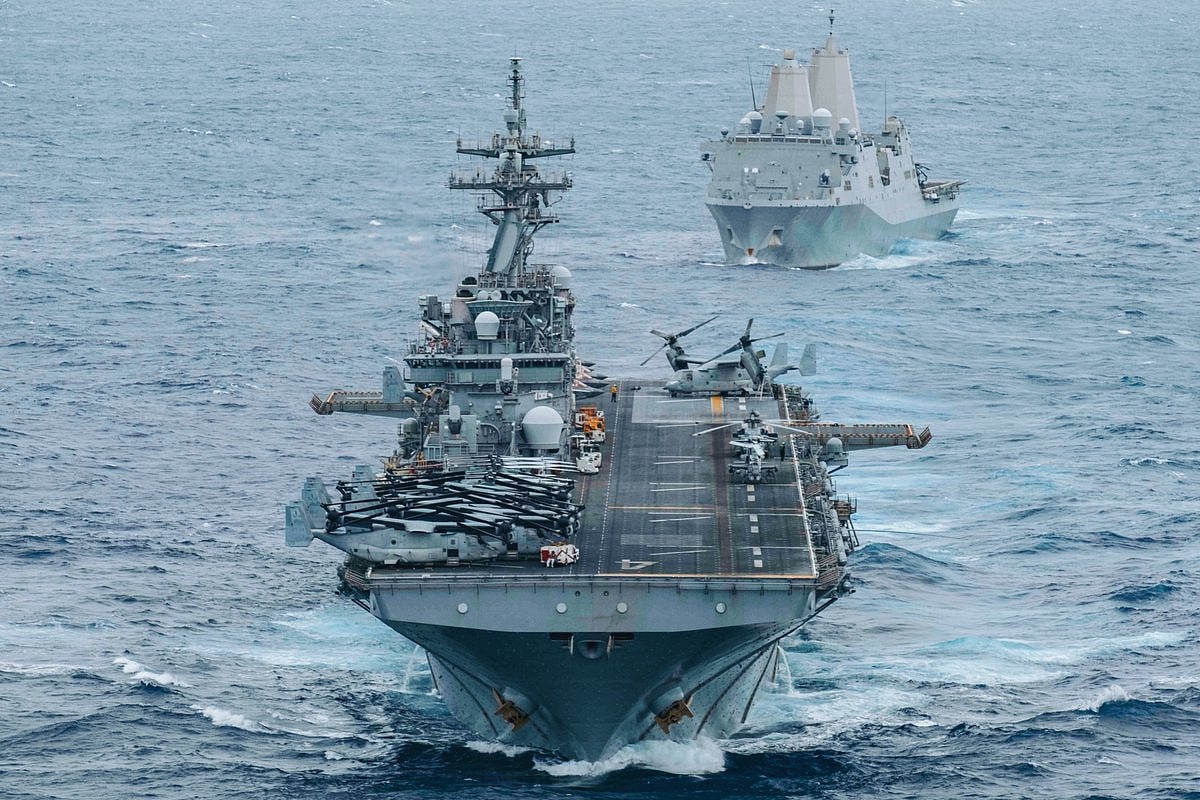
Iran has warned that US military bases stretching from the Middle East to Europe could become targets if Washington launches another war, with former IRGC commander Mohsen Rezaei declaring there would be “no safe distance, no safe haven”. The threat comes as the Houthis stepped up attacks on Saudi Arabia, with debris from two intercepted ballistic missiles falling on a village in the Makkah Region and two more missiles downed near Riyadh. In Washington, US President Donald Trump used his Veterans Day address to defend the war, saying it would be over “soon”, while Treasury Secretary Scott Bessent became the third cabinet member to move to a military base amid Iran-linked threats. US Central Command also said it was extending its pressure on Iran to overland routes and the Caspian Sea. Follow our live blog for the latest updates.
Debris from two ballistic missiles fired by the Houthis towards Saudi Arabia’s Mecca Region fell on Sabuhah village after the missiles were intercepted and destroyed, the kingdom’s General Directorate of Civil Defence said, according to the Saudi Press Agency (SPA).
Civil Defence teams responded to the falling debris on Wednesday, November 11, and authorities acted immediately to protect lives and property, the directorate said.
Israeli politician Gadi Eisenkot has warned caretaker Prime Minister Benjamin Netanyahu against launching potentially dangerous military operations before a new government takes office, amid Israeli reports of disagreements over possible strikes against Iran.
In a letter sent Wednesday, November 11, Eisenkot urged Netanyahu to exercise restraint, arguing that major security decisions during the political transition could undermine Israeli democracy and public confidence in government institutions.
“Show restraint and caution, and refrain from dangerous moves that can wait until a new government with the Knesset’s confidence is sworn in,” Eisenkot wrote.
He warned that deploying security forces without a direct and immediate threat requiring urgent action could have devastating consequences.
The warning comes amid reports by Israeli media that Netanyahu has sought military action against Iran despite objections from Israel Defence Forces (IDF) Chief of Staff Lieutenant-General Eyal Zamir.
Netanyahu remains caretaker prime minister and retains authority over the military until a successor government is formed. The dispute highlights the tension between executive security powers and political accountability during a sensitive transition.
Get updated faster and for FREE: Download the Gulf News app now - simply click here.
Iran has warned that US military installations stretching from the Middle East to Europe could become targets if Washington launches another war against the Islamic Republic, raising the prospect of a wider confrontation beyond the Gulf.
Mohsen Rezaei, a senior Iranian security figure and former commander-in-chief of the Islamic Revolutionary Guard Corps (IRGC), issued the warning in a post on X on Wednesday.
“If the US launches another war against Iran, every military base involved in the aggression — from West Asia to Europe — will be a legitimate target for Iran’s lethal strikes,” Rezaei wrote.
He added: “NO SAFE DISTANCE. NO SAFE HAVEN. NO IMMUNITY.”
Its significance of Rezaei's statement lies in the geographic scope of the threat: Tehran is signalling that any renewed US military campaign could expose American forces and facilities far beyond the immediate battlefield.
The United States is widening its campaign to choke off Iran's military supply networks, extending pressure beyond the Strait of Hormuz to the country's land borders and the Caspian Sea.
US Central Command (CENTCOM) says American forces are working around the clock to keep the strategic waterway open to commercial shipping while strictly enforcing what it calls an "ironclad naval blockade" against Iran.
In a November 11 statement posted on X, CentCom said it was also working with other US government agencies to prevent Iran's Islamic Revolutionary Guard Corps (IRGC) from using overland routes and the Caspian Sea to move advanced weapons systems, dual-use technology, sanctioned materials and illicit revenue.
The announcement signals a broader US strategy: restrict not only Iran's ability to export oil and generate revenue, but also its capacity to import military equipment, obtain sensitive technology and rebuild its weapons industry.
The latest operation builds on the establishment of Task Force Iron Gate, announced on November 7.
Iran's foreign ministry on Wednesday designated Argentina's navy and air force as terrorist organisations following a similar move by Buenos Aires months earlier.
In late March, Argentina designated Iran's Islamic Revolutionary Guard Corps, the ideological arm of its military, as a terror organisation, citing its support for Lebanese militant group Hezbollah.
Two Yemeni security sources reported explosions on Wednesday in Aden, the seat of the country's internationally recognised government, attributing them to missile strikes on anti-Houthi coalition targets.
The sources told AFP that two missiles had targeted a camp of the Saudi-led coalition in Aden's west, while a third missile targeted another camp in the centre of the city, which was attacked several times last month by the Iran-backed Houthis.
Day 256: Iran warns US as Gaza crisis deepens
Day 253: UAE rescues 22 crew in Gulf of Oman
Sign up for the Daily Briefing
Get the latest news and updates straight to your inbox
Network Links
GN StoreDownload our app
© Al Nisr Publishing LLC 2026. All rights reserved.