Eisenkot warns Netanyahu against Iran strike as Israel faces political transition
Netanyahu faces criticism over potential Iran strike during leadership shift
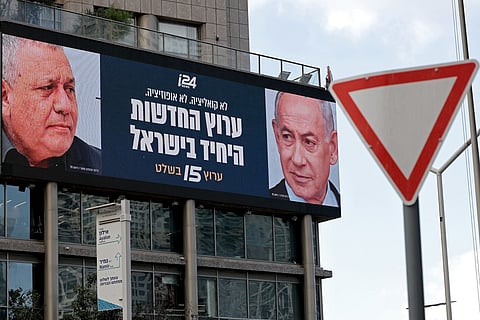
Israeli politician Gadi Eisenkot has warned caretaker Prime Minister Benjamin Netanyahu against launching potentially dangerous military operations before a new government takes office, amid reports of disagreements over possible strikes against Iran.
In a letter sent Wednesday, November 11, Eisenkot urged Netanyahu to exercise restraint, arguing that major security decisions during the political transition could undermine Israeli democracy and public confidence in government institutions, Israeli media reported.
“Show restraint and caution, and refrain from dangerous moves that can wait until a new government with the Knesset’s confidence is sworn in,” Eisenkot wrote.
Get it: Fast, verified news for FREE ... download the Gulf News app — simply click here
He warned that deploying security forces without a direct and immediate threat requiring urgent action could have devastating consequences.
The warning comes amid reports by Israeli media that Netanyahu has sought military action against Iran despite objections from Israel Defence Forces (IDF) Chief of Staff Lieutenant-General Eyal Zamir.
Gadi Eisenkot is an Israeli ex-military general, and the leader of the center-right Yashar party. Eisenkot served in the Israel Defense Forces (IDF) for over four decades. From 2015 to 2019, he served as the 21st Chief of the General Staff of the IDF. He is of Moroccan-Mizrahi Jewish heritage. He entered politics in 2022, initially joining the National Unity party. Following the October 7, 2023 Hamas-led attacks, he joined PM Benjamin Netanyahu’s emergency unity government as a minister without portfolio and served in the war cabinet. He resigned in June 2024, criticising Netanyahu's post-war strategy and handling of the conflict. In 2025, he founded the Yashar party and ran as the primary challenger to Netanyahu in Israel's October 2026 legislative election. After the election, President Isaac Herzog formally tasked Eisenkot with the initial mandate to build a governing coalition.
Channel 12 reported that Zamir had opposed unspecified military action, having reportedly resisted a similar proposal before Israel's October 27 election. The military leadership was concerned that escalation could derail the vote.
Eisenkot's letter did not explicitly mention Iran, but its timing has heightened scrutiny of the reported dispute.
Eisenkot also accused Netanyahu's office of failing to arrange security briefings and asked Attorney-General Gali Baharav-Miara to intervene, seeking regular access to intelligence assessments and security information.
Netanyahu's camp rejected the criticism, accusing Eisenkot of politicising national security matters and arguing that security decisions should not be debated publicly.
The political confrontation follows Israel's October 27 election. President Isaac Herzog formally tasked Eisenkot with forming a government on November 8 after 67 lawmakers recommended him, compared with 46 backing Netanyahu.
Eisenkot has 28 days, with a possible 14-day extension, to assemble a governing coalition.
Netanyahu remains caretaker prime minister and retains authority over the military until a successor government is formed. The dispute highlights the tension between executive security powers and political accountability during a sensitive transition.


