US-Iran ceasefire: Trump-Iran play blame game, posture over Strait of Hormuz after talks fall through
Says US ready to 'finish up' Iran at the 'appropriate moment'
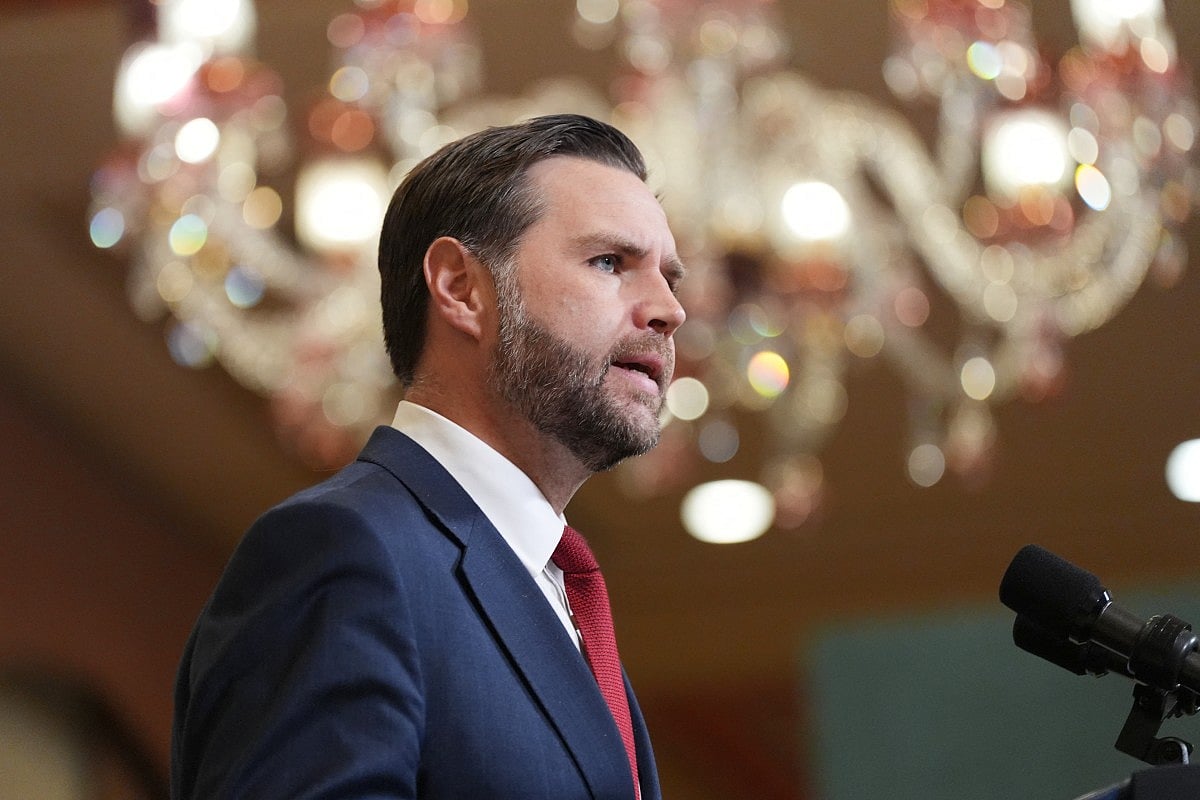
US Vice President JD Vance said marathon talks with Iran in Pakistan ended without a deal, as Tehran refused to commit to abandoning a nuclear weapon. Discussions covered Iran’s nuclear programme and the Strait of Hormuz, according to Iran’s foreign ministry. Donald Trump said the outcome “makes no difference”, while Iran described talks as “intensive” and urged the US to avoid “excessive demands and unlawful requests.” Follow our live coverage for the latest developments in the region.
US President Donald Trump said Saturday he was not bothered about the outcome of US-Iran talks in Pakistan, insisting the United States had come out ahead from the war.
Whether we make a deal or not makes no difference to me. The reason is because we've won. We're in very deep negotiations with Iran. We win regardless. We've defeated them militarily.Donald Trump
Trump was speaking as Vice President JD Vance was leading the US delegation in the Pakistani capital Islamabad, with discussions with Iran heading into a second day.
Trump also repeated the US military's statement that US Navy warships on Saturday transited through the Strait of Hormuz, the vital gateway to the oil-rich Gulf, to begin clearing it of Iranian mines.
The account was denied by Iran, which has exerted power over the narrow waterway and with it the world's oil supply in retaliation for the attack launched on February 28 by the United States and Israel.
"We have minesweepers out there. We're sweeping the strait," Trump said.
"We'll open up the strait even though we don't use it, because we have a lot of other countries in the world that do use it that are either afraid or weak or cheap," Trump said.
He again voiced frustration with allies from NATO, who stayed on the sidelines during the war, and who were not consulted in advance.
"We were not helped by NATO, that I can tell you," Trump said.
A third round of ceasefire talks between the United States and Iran concluded before dawn Sunday local time, and discussions between the heads of the delegations will resume after a break, two Pakistani officials said.
Some technical personnel from both teams are still meeting, said the officials, who spoke on condition of anonymity because they were not authorized to brief the press.
The success of peace talks between the United States and Iran depends on Washington avoiding "excessive demands" and "unlawful requests," the Iranian foreign ministry's spokesman said early Sunday after marathon talks in Islamabad.
"The success of this diplomatic process depends on the seriousness and good faith of the opposing side, refraining from excessive demands and unlawful requests, and the acceptance of Iran's legitimate rights and interests," Esmaeil Baqaei wrote on X.
He added that the two sides had discussed a range of issues including the strategic "Strait of Hormuz, the nuclear issue, war reparations, the lifting of sanctions, and the complete end of the war against Iran."
Vice President JD Vance said negotiations between the US and the Iranians have ended without a deal after the Iranians refused to accept American terms to not develop a nuclear weapon.
The high-stakes talks ended after 21 hours, Vance said, with the vice president in constant communication with President Donald Trump and others in the administration.
“But the simple fact is that we need to see an affirmative commitment that they will not seek a nuclear weapon, and they will not seek the tools that would enable them to quickly achieve a nuclear weapon,” Vance told reporters. “That is the core goal of the president of the United States. And that’s what we’ve tried to achieve through these negotiations.”
We just could not get to a situation where the Iranians were willing to accept opur terms. We leave here with a very simple proposal- a method of understanding that is our final and best offer. We'll see if the Iranians accept it. We were constantly in communication with the team because we were negotiating in good faith.JD Vance
The US vice president said he spoke with Trump “a half dozen times, a dozen times, over the past 21 hours” and also spoke with secretary of state Marco Rubio, Treasury secretary Scott Bessent and Adm. Brad Cooper, head of the United States Central Command.
“We were constantly in communication with the team because we were negotiating in good faith,” Vance said.
The U.S. vice president spoke at a podium in front of a pair of American flags, with special envoy Steve Witkoff and Jared Kushner to his side. He spoke for one minute before taking three questions from reporters.
His entire remarks lasted just more than three minutes. He offered thanks and walked away without taking additional questions.
Iran’s Fars news agency says progress toward a deal depends on Washington changing its “unreasonable demands”, with the Strait of Hormuz among key sticking points.
It said both sides’ experts are working to find common ground, while the Pakistani mediator is trying to narrow differences and bring positions closer.
The agency added that negotiators have paused to consult their technical teams on draft proposals, with talks expected to resume once new texts are prepared.
US Vice President JD Vance boarded his government plane at 7:08 a.m. local time in Islamabad, planning to depart Pakistan after he said that Iran declined to back down on developing a nuclear weapon. That’s according to a reporter traveling with Vance.
The war with Iran started at the end of February and the extensive talks ended after 21 hours. The US and Iran agreed to a two-week ceasefire on April 7 for negotiations.
Talks in Islamabad lasted 21 hours but ended without an agreement to halt the war
“We’ve had a number of substantive discussions… but we have not reached an agreement,” Vance said, calling it “bad news for Iran much more than… the United States”
“We just could not get to a situation where the Iranians would accept our terms,” he said
He thanked Pakistan’s leadership, praising Prime Minister Shehbaz Sharif and Field Marshal Asim Munir for facilitating the talks
Any shortcomings “wasn’t because of the Pakistanis, who did an amazing job”
Halting Iran’s nuclear capability remains Trump’s “core goal”
Trump was closely involved, speaking with Vance “a half dozen” to “a dozen times” during negotiations
The US reiterated its position: “Our final and best offer”
Pakistan's foreign minister insisted Washington and Tehran must uphold a ceasefire agreement, after marathon talks between the two sides to end the war in the Middle East ended without an agreement.
"It is imperative that the parties continue to uphold their commitment to ceasefire," said Ishaq Dar, whose government hosted the talks and acted as a mediator.
"Pakistan has been and will continue to play its role to facilitate engagement and dialogue between the Islamic Republic of Iran and the United States of America in the days to come," he said in a brief statement broadcast by state media.
Pakistan Foreign Minister Ishaq Dar called on Iran and the United States to keep their commitment to maintain a ceasefire after the countries ended historic, face-to-face talks without an agreement.
Pakistan will continue to play a mediating role and try to facilitate dialogue between Iran and the US in coming days, Dar said.
We hope that the two sides will continue with the positive spirit to achieve durable peace and prosperity for the entire region and beyond.Ishaq Dar
Australian Foreign Minister Penny Wong on Sunday urged a continuation of the Middle East ceasefire after US-Iran talks ended with no deal.
"The priority now must be to continue the ceasefire and return to negotiations," Wong said in a statement, adding it was "disappointing that the Islamabad talks between the United States and Iran have ended without agreement".
Iran's foreign ministry said no one had held any expectation that talks with the United States could have reached an agreement within one session after the negotiations in Islamabad stalled on Sunday.
"Naturally, from the beginning we should not have expected to reach an agreement in a single session. No one had such an expectation," ministry spokesperson Esmaeil Baqaei said, according to state broadcaster IRIB.
He said Tehran was "confident that contacts between us and Pakistan, as well as our other friends in the region, will continue".
The Israel Defence Forces (IDF) said it struck a rocket launcher in southern Lebanon that was “positioned and ready to launch” towards Israel.
In a statement on Telegram, the military said the launcher was identified in the Jouaiyya area and was “struck and dismantled” before it could be used.
The IDF also shared video footage showing the strike.
Iran’s Foreign Ministry said that negotiations with the US fell apart over a “gap between our opinions over two or three important issues.”
“Ultimately the talks didn’t result in an agreement,” spokesman Esmaeil Baghaei told Iran’s state TV. He did not detail what those issues were.
On some topics, Baghaei said US and Iranian negotiators “actually reached mutual understanding.” The negotiators discussed the Strait of Hormuz, Baghaei said, but did not mention discussion of nuclear weapons.
The Iranian delegation, including Parliament Speaker Mohammad Bagher Ghalibaf and Foreign Minister Abbas Araghchi, has departed Pakistan following the breakdown of talks, Mehr news agency reported.
The development comes shortly after US Vice President JD Vance also left Islamabad, saying negotiations with Iran ended without a deal after Tehran rejected Washington’s terms.
Iran says more than 2,000 children were wounded in US-Israeli attacks on the country, according to the head of its emergency department.
Jafar Miadfar told Mehr news agency that 2,115 people under the age of 18 were injured, including 124 children under five and 24 under the age of two.
He added that around 5,000 women were also among the wounded.
Most of the reported casualties occurred in the provinces of Tehran, Khuzestan, Lorestan, Isfahan, Kermanshah and Ilam.
Saudi Arabia’s Ministry of Energy said key energy facilities affected by recent attacks have recovered and restored operations, strengthening supply reliability.
The East-West pipeline has resumed its full pumping capacity of around seven million barrels per day, after earlier disruptions reduced capacity by about 700,000 barrels per day.
Production at the Manifa oil field, which had fallen by roughly 300,000 barrels per day, has also been fully restored.
However, work is still ongoing to bring the Khurais field back to full production after a similar 300,000 barrels per day impact.
Officials said the rapid recovery highlights the operational resilience of Saudi Aramco and the kingdom’s energy sector, ensuring stable oil supplies to global markets.
UK government minister Wes Streeting on Sunday said it was "disappointing" that negotiations between the United States and Iran in Islamabad had stalled.
"It's obviously disappointing that we haven't yet seen a breakthrough in negotiations and an end to this war in Iran that is a sustainable one," Streeting told Sky News.
As ever in diplomacy, you're failing, until you succeed. So while these talks may not have ended in success, (it) doesn't mean there isn't merit in continuing to try.Wes Streeting
The strike came without warning morning and hit a home of seven people in the Lebanese town of Maaroub, Lebanon’s state-run National News Agency reported.
Israel did not immediately comment on the strike.
Israel’s government has said its strikes target operatives or infrastructure belonging to the Hezbollah militant group.
Israel’s strikes over Beirut have decreased in recent days, but its attacks on southern Lebanon have intensified alongside a ground invasion.
The Kuwait Army General Staff has announced that its Explosive Ordnance Disposal (EOD) team is conducting an operation to handle unexploded ordnance and shrapnel on Sunday morning.
The controlled operation is taking place between 10:00am and 12:00pm (local time), authorities said.
Residents were also informed that any explosions heard during this period are part of the ongoing EOD activity and are not a cause for alarm.
Mohammad Bagher Ghalibaf has issued his first official remarks following the conclusion of talks held in Islamabad talks.
In posts on X, the Iranian Parliament Speaker said he had stressed ahead of negotiations that “we have the necessary goodwill and will, but due to the experiences of the two previous wars, we have no trust in the opposing side.”
He added that the US delegation ultimately “failed to gain the trust” of the Iranian team during this round of discussions.
Ghalibaf also expressed appreciation to Pakistan for facilitating the negotiations, sending his regards to the Pakistani people.
The General Command of the Bahrain Defence Force (BDF)آ announced that all its weapons and units are at the highest levels of readiness and defensive preparedness.
The BDF affirmed that since the start of the heinous Iranian attacks, it has been able to intercept and destroy 194 missiles and 516 drones that targeted Bahrain.
It urged everyone to be careful not to approach or touch any strange or suspicious objects that may be remnants of the Iranian attack.
Pope Leo XIV expressed his closeness to the people of Lebanon on Sunday, saying there was a "moral obligation" to protect them while calling on warring parties to seek peace.
Lebanon was drawn into the Middle East war last month as Israel pursues the Iran-backed Hezbollah group, with Lebanese authorities reporting more than 2,000 people been killed in Israeli strikes.
"I am closer than ever, in these days of sorrow, fear, and unconquerable hope in God, to the beloved Lebanese people," the pope told the crowd at St Peter's Square following his Regina Coeli prayer.
"The principle of humanity, inscribed in the conscience of every person and recognised in international law, entails the moral obligation to protect the civilian population from the atrocious effects of war," he said.
As he has done in the past, without citing names, the American pope called on the parties involved to seek a peaceful resolution.
The entire US negotiating team has left the failed Iran talks in Islamabad, a US official said Sunday, leaving nobody in the Pakistani capital to pursue back-channel discussions.
During a refuelling stop in Germany's Ramstein Air Base for Air Force 2, carrying Vice President JD Vance back from negotiations on ending the Middle East war, a US official told reporters that no team members stayed behind in Islamabad, including chief negotiators Steve Witkoff and US President Donald Trump's son-in-law Jared Kushner.
Speculation had risen that one or both of Trump's envoys might stay behind to pursue further discussions, after the marathon talks failed to produce any substantive progress over the conflict with Iran.
Russian President Vladimir Putin told his Iranian counterpart, Masoud Pezeshkian, on Sunday that he was ready to help mediate efforts to achieve peace in the Middle East, the Kremlin said.
"Vladimir Putin emphasised his readiness to further facilitate the search for a political and diplomatic settlement to the conflict, and to mediate efforts to achieve a just and lasting peace in the Middle East," the Kremlin said in its readout of the call.
Diplomacy is "essential" to resolve the war in the Middle East, a European Union spokesman said Sunday.
Noting failed US-Iranian talks hosted by Pakistan, EU foreign affairs spokesman Anouar El Anouni said "we salute Pakistan for its mediation efforts" and added Brussels would contribute to further efforts to reach a settlement in coordination with its partners.
President Donald Trump on Sunday said the US Navy would "immediately" begin a blockade to stop ships from entering or leaving the Strait of Hormuz, after US-Iran peace talks in Pakistan ended without an agreement.
Trump sought to exert strategic control over the waterway responsible for the transportation of 20 per cent of global oil supplies before the war, hoping to take away Iran's key source of economic leverage in the fighting.
The president added that he has "instructed our Navy to seek and interdict every vessel in International Waters that has paid a toll to Iran. No one who pays an illegal toll will have safe passage on the high seas."
Trump also said the US was ready to "finish up" Iran at the "appropriate moment," stressing that Tehran's nuclear ambitions were at the core of the failure to end the war.
Face-to-face talks ended earlier Sunday after 21 hours, leaving a fragile two-week ceasefire in doubt.
Oman's foreign minister on Sunday called for more talks between Iran and the US and for the ceasefire to be extended, hours after negotiations failed to reach a deal during a high-stakes meeting in Pakistan.
"I urge that the ceasefire be extended and talks continue," Badr al-Busaidi wrote in a post on X.
"Success may require everyone to make painful concessions, but this is nothing as compared to the pain of failure and war."
Bahrain’s Ministry of Education has announced that students in public schools will be given the option to continue remote learning or return to in-person classes from April 19.
The decision applies to all educational stages, with schools set to contact students and parents this week to confirm their preferred mode of study. The move aims to enhance flexibility and ensure continuity in the academic year.
Private schools have been granted the authority to determine their own teaching format, whether remote or in-person, based on their individual circumstances, while informing the ministry of any changes.
Dr Sultan Ahmed Al Jaber, Minister of Industry and Advanced Technology and ADNOC Managing Director and Group CEO, pointed out on social media the real toll of the war between US-Israel and Iran. He wrote:
"Since February 28:
- At least 22 ships have been targeted.
- 10 crew members have been killed.
- Around 20,000 seafarers are stranded and unable to cross safely.
- Approximately 800 commercial ships are stranded, including nearly 400 oil tankers.
"The Strait of Hormuz has never been Iran's to close or restrict navigation in. Any attempt to do so is not merely a regional issue, but represents a disruption to a global economic lifeline and a direct threat to the energy, food, and health security of all countries in the world. This behaviour is illegal, dangerous, and unacceptable, and the world cannot bear its consequences or allow it to happen."
The Irish government was on Sunday due to hold an emergency cabinet meeting to sign off on measures aimed at ending fuel cost protests that have endangered the functioning of the country's emergency services.
Hauliers and agricultural contractors began a series of protests on Tuesday over spiralling petrol and diesel prices amid the Middle East war.
Since then the protests have grown from slow-moving convoys on motorways and restricted access to Dublin's busiest streets, to a part blockade of Ireland's only oil refinery and restricted access to at least two other fuel depots.
Finance Minister Simon Harris said later on Saturday ministers had held meetings with transport and agriculture sector representatives ahead of Sunday's meeting.
The government was in the process of "finalising a significant support package to address the ongoing crisis", a government statement added.
Some protests rolled into a sixth day on Sunday.
The government has urged the public not to panic buy as pumps at many fuel stations have run dry.
Get updated faster and for FREE: Download the Gulf News app now - simply click here.
The Revolutionary Guards said on Sunday that Iranian security forces had the Strait of Hormuz shipping bottleneck under their full control, warning that enemies would be trapped in a "deadly vortex" in the case of any miscalculation.
"All traffic... is under the full control of the armed forces," the Guards' naval command said in a Persian-language post on X after President Donald Trump ordered a US naval blockade of the Strait.
"The enemy will become trapped in a deadly vortex in the Strait if it makes the wrong move," it added, posting a video showing vessels in crosshairs.
In a separate statement released by the Guards' public relations office, the force's naval command insisted that "contrary to the false claims of some enemy officials", the Strait of Hormuz is "open to the harmless passage of civilian vessels in compliance with specific relevant regulations".
It did not give details on the nature of these rules but added: "Any military vessels that intend to approach the Strait of Hormuz under any pretext will be considered in violation of the ceasefire and will be dealt with severely."
US President Donald Trump on Sunday threatened China with "staggering" new tariffs on its goods entering the United States if Beijing provides military assistance to Iran during the Middle East war.
"If we catch them doing that, they get a 50 per cent tariff, which is a staggering - that's a staggering amount," Trump told Fox News show "Sunday Morning Futures with Maria Bartiromo."
The US leader is scheduled to visit Beijing next month for talks with his Chinese counterpart Xi Jinping, after delaying an earlier summit because of the war against Iran.
Lebanese official media reported extensive Israeli strikes across the country's south on Sunday as the health ministry said at least five people were killed and the war's overall toll rose to 2,055 dead.
Israel says the fragile Middle East ceasefire does not apply to its battle with the Iran-backed Hezbollah group and has kept up its attacks on the country, while the militants fight back.
The state-run National News Agency (NNA) reported Israel attacks on around 30 locations in the country's south on Sunday, with additional strikes on the adjacent West Bekaa area.
The health ministry said an Israeli strike on Qana killed five people, including three women, and wounded 25 others, while the NNA said the raid targeted "homes and infrastructure".
The figures mark a sharp escalation in casualties amid ongoing hostilities, raising concerns over the humanitarian situation and pressure on the country’s already strained healthcare system.
The Saudi Ministry of Foreign Affairs summoned the Iraqi Ambassador to the Kingdom, Safia Taleb Hussein, on Sunday and handed her a protest note regarding the attacks launched from Iraqi territory against the Kingdom and other Gulf states. The Saudi Foreign Ministry stated in a press release that the Undersecretary for Political Affairs, Dr Saud Al Sati, emphasised during the delivery of the protest note the Kingdom's condemnation and denunciation of the attacks originating from Iraqi territory against the Kingdom and other Gulf states, stressing the importance of Iraq dealing responsibly with these threats and attacks. He reiterated the Kingdom's rejection of any violation of state sovereignty and any attempt to threaten the security and stability of the region, affirming that the Kingdom will take all necessary measures to defend its security and protect its territory.
Israeli Prime Minister Benjamin Netanyahu said Sunday that Israeli forces had eliminated the threat of an invasion by Hezbollah militants during a visit to troops in southern Lebanon.
"The war continues, including within the security zone in Lebanon," Netanyahu said in a video released by his office, which showed him wearing a flak jacket and surrounded by masked soldiers.
"What we are seeing is that we have thwarted the threat of an invasion from Lebanon through this security zone," he said, adding that he was accompanied by Defence Minister Israel Katz.
Iran's parliament speaker, who led peace talks with the United States in Pakistan, said Sunday that his country would not give in to threats after US President Donald Trump ordered a naval blockade of the strategic Strait of Hormuz.
"If they fight, we will fight, and if they come forward with logic, we will deal with logic. We will not bow to any threats, let them test our will once again so that we can teach them a bigger lesson," Mohammad Bagher Ghalibaf told reporters after returning to Tehran from Islamabad, several Iranian news agencies reported.
Israeli Prime Minister Benjamin Netanyahu on Sunday formally appointed a new chief of the country's foreign intelligence agency, the Mossad.
Major General Roman Gofman, an army officer with no prior intelligence background, will assume the role on June 2, 2026, when the current Mossad director, David Barnea, completes his five-year term.
Netanyahu had selected Gofman for the position in December, with the appointment receiving formal approval on Sunday.
Iran's navy chief Shahram Irani on Sunday called US President Donald Trump's threat to blockade the Strait of Hormuz "ridiculous", after marathon talks between Tehran and Washington in Pakistan failed to deliver a deal to end the Middle East war.
"The brave men of the naval force of the Army of the Islamic Republic of Iran are monitoring and supervising all the movements of the aggressive American army in the region. The threats of the US president to blockade Iran at sea... are very ridiculous and funny," he said, according to state TV.
Ireland's government announced fresh tax cuts on petrol and diesel at an emergency cabinet meeting Sunday after fuel cost protests that had threatened the functioning of the country's emergency services.
Since Tuesday, hauliers and agricultural contractors have launched a series of protests over spiralling petrol and diesel prices in the wake of the Middle East war.
"As a Government, we hear you," Finance Minister Simon Harris said at a news conference. "We have acted and we are taking further action today," he added.
The cuts announced include a 10-cent reduction per litre on both diesel and petrol - and a planned increase on carbon tax will be postponed from May until the Budget in October.
President Donald Trump said the United States and Iran are still in a high-stakes standoff over the future of the ceasefire, predicting that Tehran will return to negotiations but also threatening "take out" the country in one day if diplomacy collapses. The latest developments suggest the ceasefire remain fragile, with the Strait of Hormuz and Iran’s nuclear stockpile still the central obstacles to the US-Iran standoff.
Iran says was "inches away" from deal with US in Islamabad, French news agency AFP reported.
The talks in Islamabad ended without an agreement. Iran’s foreign ministry has publicly said Tehran entered the high-stakes negotiations in Islamabad in “good faith” and came close to an agreement with US officials, but ultimately no deal was reached after 21 hours of face-to-face talks aimed at stabilising the fragile ceasefire and ending the ongoing Middle East conflict.
Lebanese Prime Minister Nawaf Salam said Sunday he was working to stop the Israel-Hezbollah war, even as Israeli premier Benjamin Netanyahu told troops in south Lebanon that the fight there was far from over.
The US military said it would begin a blockade of all Iranian ports "within hours", after peace talks in Pakistan collapsed with Washington blaming the Islamic republic's refusal to abandon its nuclear ambitions.
The announcement came despite a ceasefire agreed on Wednesday aimed at pausing the six-week war until April 22, with tensions centred on whether the United States can force Iran to reopen the strategic Strait of Hormuz, another of its key demands in the stalled negotiations.
Oil prices jumped in early trading Monday, with US and global benchmarks climbing sharply amid heightened tensions in the Middle East and investor concern over potential supply disruptions through key shipping lanes.
As of 7:19 am (Asia time) on April 13, West Texas Intermediate crude traded at $104.8 a barrel, up $8.24 or 8.53% in the last 10 minutes. Brent crude, the international benchmark, stood at $102.7, up $7.54 or 7.92%. Murban crude slipped 1.47% to $98.16.
We are closing coverage for now. Follow our live updates for the latest developments here.
Sign up for the Daily Briefing
Get the latest news and updates straight to your inbox
Network Links
GN StoreDownload our app
© Al Nisr Publishing LLC 2026. All rights reserved.