Oil prices jump as Biden says ‘discussing’ possible Israeli strikes on Iran oil facilities
Israel hits Hezbollah intel HQ in Beirut, tells people in 20 villages, Nabatiyeh to flee
Dubai: President Joe Biden said on Wednesday he is in discussions regarding possible Israeli strikes on Iranian oil facilities, a comment that caused oil prices to spike by five per cent on Thursday, just a month before the US presidential election.
Biden emphasised that the US does not “allow” Israel to act but rather advises them, clarifying that there would be no immediate action taken by Israel.
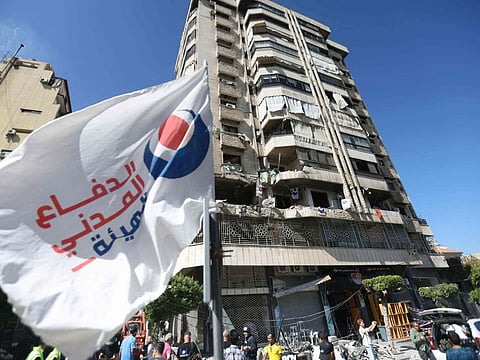
In Jerusalem, Israel’s military announced it had targeted Hezbollah’s intelligence headquarters in Beirut, escalating military operations in Lebanon and conducting ground raids in southern regions controlled by Hezbollah.
As Israel focuses on securing its northern border amid ongoing hostilities in Gaza, the situation remains tense, with both sides bracing for further escalations.
On the Gaza front, the Israeli military reported that a strike three months ago killed three senior Hamas leaders, including Rahwi Mushtaha, the head of the militant group’s government in the territory.
3 airstrikes in southern suburbs
15 Hezbollah militants killed
Hezbollah claimed to have thwarted an Israeli advance at Fatima’s Gate on the border, engaging Israeli forces with explosive devices and ongoing rocket fire. An Israeli overnight strike in Bint Jbeil resulted in the deaths of 15 Hezbollah militants.
As tensions rise, Iran launched a second direct missile attack on Israel, prompting Netanyahu to warn of consequences.
US rules out support to hit Iran nuclear sites
Israeli Defence Minister Yoav Gallant warned that those who attack Israel will face severe repercussions, while Iranian officials promised a stronger response in light of recent attacks, including the killing of Hezbollah leaders in southern Beirut.
Iran’s Revolutionary Guards said its missiles were fired in retaliation for Nasrallah’s killing alongside that of a general in the Guards’ Quds force, as well as for the killing in July of Hamas leader Ismail Haniyeh in Tehran.
A day after its military said it was launching ground operations in south Lebanon, Israel on Wednesday reported the first death of a soldier in the Israel-Hezbollah war, a toll that later rose to eight dead.
The Israeli military said it had deployed a second division to support the fighting.
Lebanon’s health ministry said 46 people were killed and 85 others injured by Israeli strikes over the previous 24 hours.
‘Sickening cycle’
The impact of the war was also felt in Syria, where the Syrian Observatory for Human Right monitor said an Israeli strike in Damascus killed four people, including Hassan Jaafar al-Qasir, Nasrallah’s son-in-law.
Iranian media said a Revolutionary Guards military “adviser” in Syria, Majid Divani, succumbed Thursday to wounds sustained in an Israeli strike on Damascus earlier this week.
In Israel’s commercial hub Tel Aviv, Liron Yori, 22, said he was worried about “where the war’s going and I don’t feel comfortable with it”.
The fighting comes with many Israelis celebrating Rosh Hashanah, the Jewish new year, on Thursday.
UN chief Antonio Guterres called for an end to the “sickening cycle of escalation” in the Middle East and the G7 group of wealthy nations said a diplomatic solution was “still possible”.
Months of similar calls and mediation efforts have so far failed to bring a Gaza truce.
Hezbollah began strikes on Israeli troops a day after Hamas staged its October 7 attack on Israel, which resulted in the deaths of 1,205 people in Israel, mostly civilians, according to an AFP tally based on Israeli official figures that include hostages killed in captivity.
Israel’s retaliatory offensive in Gaza has killed at least 41,788 people, the majority of them civilians, according to figures provided by the Hamas-run territory’s health ministry. The UN has described the figures as reliable.


