US Secretary of State Marco Rubio speaks to the press
LIVE
US-Iran war: Trump cancels Iran attack after deal agreed
Trump says Mideast allies agree on deal framework to end Iran war, pauses strikes
Last updated:
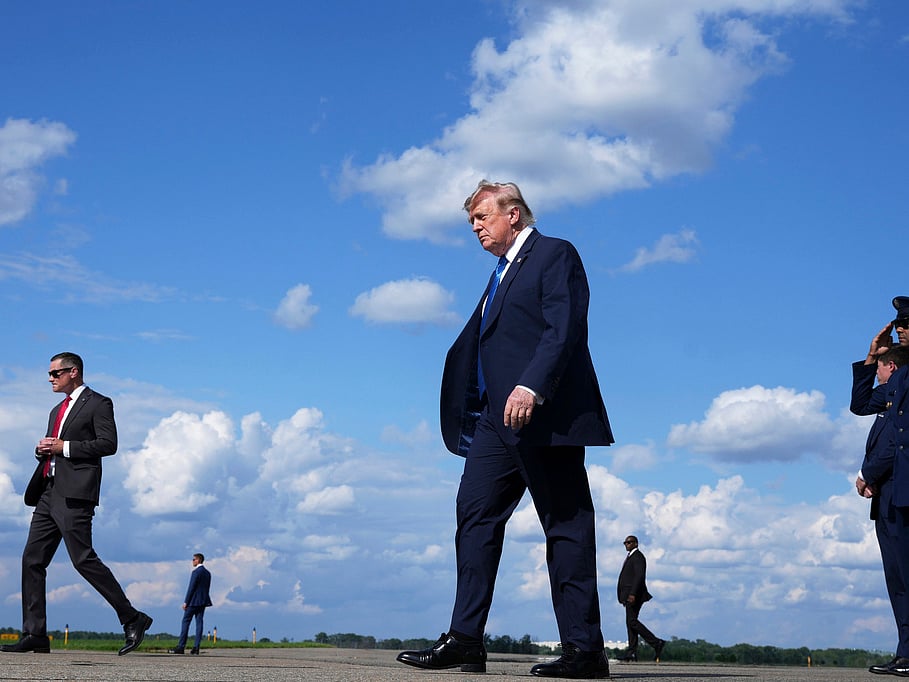
US holds fire on Iran after talks on Strait of Hormuz and nuclear curbs
President Donald Trump said the US and Israel had agreed to pause planned strikes on Iran at Tehran’s request, provided a deal is reached quickly. The US issued a travel warning urging Americans in the Middle East to consider leaving amid rising tensions, while Iran warned of a “decisive and proportionate response” to any US or Israeli aggression. Kuwait reported Iranian drone attacks, while Israeli strikes hit a hospital in Gaza, adding uncertainty to ceasefire efforts. The developments come as regional tensions continue to escalate, with concerns growing over possible disruptions to shipping, air travel and security across the Middle East. Follow live updates for the latest developments. Follow our live coverage for the latest updates.
Rubio praises Trump’s Iran strategy, says Tehran shifted
US Secretary of State Marco Rubio praised President Donald Trump's decisive strategy against Tehran, stating that the Iranian regime has never encountered an American leader who acts with such directness.
Speaking in an interview with Fox News, Rubio reflected on Washington's approach to the Islamic Republic and highlighted a sharp shift from past precedent, asserting that Tehran can no longer rely on usual tactics to evade consequences.
I don't think the Iranian regime has ever faced a President like Trump, which is somebody that actually takes action," Rubio said. "They got used to, for 20-30 years -- not just the US, but the broader world -- allowing them to get away with things like lying, breaking deals.Marco Rubio
Detailing the impact of recent military actions, Rubio stated that US strikes have "severely degraded" Iran's defensive capabilities, claiming that the regime has lost the conventional shield it once relied on for protection.
"They still have missiles and they still have drones, and they can still do damage," Rubio acknowledged. He emphasised, however, that Iran no longer possesses the "conventional shield that they were going to hide behind."
He asserted this as the reason why Iran now appears eager to negotiate deals regarding denuclearisation and the Strait of Hormuz, emphasising that Washington is dealing from a position of absolute strength.
Key moments before Trump’s strike pause
July 8: The US resumed strikes on Iran after Tehran attacked ships it said had used an unauthorised route through the Strait of Hormuz. Trump later declared the ceasefire was over.
After the strikes: Iran launched retaliatory attacks targeting what it described as US-linked assets in Bahrain, Kuwait, Oman, Jordan and Qatar, as well as vessels in the Strait of Hormuz. Four US soldiers were killed in Jordan and Iraq.
July 20: Houthis announced a naval blockade of Saudi Arabia in the Red Sea, widening the conflict’s regional impact.
July 25: The US paused its bombing campaign after 13 consecutive nights of strikes, with Trump saying Washington and Tehran were engaged in “good talks”.
July 28: Trump met Israeli Prime Minister Benjamin Netanyahu at the White House as diplomatic efforts continued.
July 31: Trump warned that the US would continue hitting Iran “very hard” until Tehran could no longer withstand the pressure, fuelling fears of renewed attacks.
August 1: Iranian Foreign Minister Abbas Araghchi held talks with officials from Pakistan, Turkiye and Saudi Arabia, warning that any US or Israeli “aggression” would face a “decisive and proportionate response”.
August 2: Trump said the US and Israel would pause planned strikes after Iran and other regional countries requested a delay, claiming the “parameters” of a possible deal had been agreed. Iran has not officially confirmed accepting the proposal.
Rubio says US strikes pushed Iran towards negotiations
US Secretary of State Marco Rubio said Iran is now more willing to negotiate on its nuclear programme and the Strait of Hormuz following US military strikes.
In an interview with Fox News, Rubio claimed the attacks had damaged Iran’s navy, air force, missile defences, launch systems and weapons-production facilities, weakening its ability to respond.
“It's changed the whole dynamic,” Rubio said, arguing that Iran was now more open to talks because the US was negotiating “from a position of strength”.
However, he acknowledged that Iran still has missiles and drones capable of causing damage, despite what he described as a major reduction in its defensive capabilities.
Trump’s statement on cancelling the attack
“The U.S.A. is locked and loaded and ready to go against the Islamic Republic of Iran, at levels of Military Terror, Strength, and Power not seen since World War II.
“Despite this, we have just been asked by Iran, and other Middle Eastern countries, to hold off any attack because the perimeters of a deal have been agreed to.
“This would include the immediate, complete and total opening of the Strait of Hormuz, and an end to Iran’s nuclear threat.
“Based on this request, I have agreed, for the future benefit of the world and, likewise, the survival of a successful and prosperous Iran, to cancel the attack, subject to being able to rapidly make a deal.
“The country of Israel joins me in this commitment. Get to work, everybody, and get it done.
“Thank you for your attention to this matter!
President Donald J. Trump”
Trump says deal would include opening Strait of Hormuz
In a statement shared on his Truth Social account, Trump said the US military had been prepared to launch an operation against Iran with “strength and power not seen since World War II”.
However, he said Iran and other regional countries had asked Washington to hold back from an attack because the framework of a deal had been agreed.
Trump said the proposed agreement would include the “immediate, complete and total opening” of the Strait of Hormuz and an end to Iran’s nuclear threat.
Trump cancels planned Iran attack
US President Donald Trump said he has cancelled a threatened attack on Iran, saying the decision was made after Iran and other Middle Eastern countries requested a pause as the “perimeters of a deal” had been agreed.
Trump said the cancellation was conditional on the possibility of reaching an agreement quickly.
He added that Israel had joined the commitment to pursue the deal.
Get updated faster and for FREE: Download the Gulf News app now - simply click here.
Iranian foreign minister warns against US ‘aggression’
Iranian Foreign Minister Abbas Araghchi has warned that Tehran would respond firmly to any further US “aggression” following separate calls with regional officials on Saturday.
According to posts on his Telegram channel, Araghchi told Turkish Foreign Minister Hakan Fidan and Pakistan’s Field Marshal Asim Munir that Iran would deliver a “decisive” response to any “adventurous action” by Washington.
Fidan also confirmed the conversation on social media, saying the two officials discussed the latest developments in the ongoing negotiation process.
Fire reported after drone attack in Iraq
Alarge fire broke out in Iraq’s Sulaimaniyah city following a drone attack, according to Iraqi media reports.
The attack targeted the Peshmerga’s 70th Brigade headquarters, but air defences intercepted the drones, Shafaq News reported.
The outlet said debris from an intercepted drone fell near the headquarters and caught fire.
Videos shared online by Rudaw showed flames and smoke rising from the site.
No group has claimed responsibility for the drone attack.
However, Lebanese outlet Al Mayadeen reported that Iran-backed groups in Iraq were behind the strike, while Iran’s semi-official Fars News Agency described the targeted site as a base linked to “anti-Iran terrorists”.
Iran has carried out several strikes against Kurdish opposition groups in Iraq since the US and Israel launched their war on Iran on February 28.
Get updated faster and for FREE: Download the Gulf News app now - simply click here.
US‑Israel war on Iran: Recent developments
Sign up for the Daily Briefing
Get the latest news and updates straight to your inbox
Network Links
GN StoreAbout Gulf NewsTerms & ConditionsReach by GNSitemapContact usPrivacy PolicyGN FocusHave your sayWork with usAdvertise with usGulf News epaperPrinting Services
Download our app
© Al Nisr Publishing LLC 2026. All rights reserved.