Trump pauses Iran strikes, travel and flight updates: What UAE residents need to know today
Diplomatic efforts continue as Gulf countries monitor security and flight changes
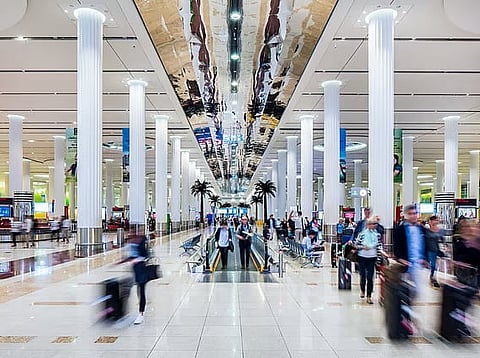
US-Iran tensions continue to keep the region on alert, with US President Donald Trump saying he has paused planned strikes on Iran after claiming a deal framework had been reached with Middle Eastern allies.
For UAE residents, the developments come amid security concerns, travel advisories and airline updates as authorities and carriers monitor the situation.
Get updated faster and for FREE: Download the Gulf News app now - simply click here.
Trump pauses planned Iran strikes
Trump said he had agreed to hold off on planned strikes against Iran after claiming Middle Eastern countries had reached the outlines of a deal to end the conflict.
The announcement came amid rising tensions, with Iran warning of retaliation, Kuwait reporting drone activity and airlines reviewing operations due to security concerns.
Trump said the proposed agreement would include the “immediate, complete and total opening” of the Strait of Hormuz and an end to Iran’s nuclear threat.
US-Iran war live: Follow the latest developments, regional security updates and travel alerts as the conflict continues to impact Gulf countries.
In a statement on Truth Social, Trump said the US military was “locked and loaded” but agreed to cancel the attack following requests from Iran and other regional countries, provided a deal could be reached quickly. He added that Israel had agreed to join the commitment.
Earlier, Trump had warned that the US would hit Iran “very hard” after Washington accused Tehran of attacks against US interests.
Iran warns against further escalation
Iranian Foreign Minister Abbas Araghchi warned that any further US or Israeli “aggression” would be met with a “decisive and proportionate response”. Iran also warned Gulf countries hosting US military bases against supporting American operations.
US issues Middle East travel warning
The US State Department issued a security alert covering several countries, including the UAE, warning citizens to prepare for:
Possible flight cancellations
Temporary airspace closures
Travel disruptions
The advisory urged Americans in the region to “consider departing, or be prepared to depart should there be escalation”.
Gulf security concerns
Security concerns increased across the Gulf after drone activity was reported in Kuwait and maritime incidents were recorded near Oman.
Kuwait drone interceptions
Kuwait’s armed forces said they intercepted and destroyed hostile drones entering the country’s airspace.
Falling debris caused damage at some locations.
No casualties were reported.
The incident followed warnings from Iran to countries hosting US military bases.
Maritime incidents near Oman
The UK Maritime Trade Operations (UKMTO) reported that:
A tanker was hit by an unidentified projectile near the entrance of the Strait of Hormuz off Oman.
Another vessel reported a large splash and explosion near Khasab, Oman.
No casualties were reported in either incident.
Strait of Hormuz remains a key concern
The developments have renewed concerns over security in the Strait of Hormuz, a vital shipping route for global energy supplies.
Any disruption in the waterway could affect shipping, fuel markets and regional trade.
Gaza strikes add to uncertainty
The wider regional conflict has also affected Gaza, where Israeli forces killed at least eight Palestinians, according to reports, after Trump announced a roadmap involving Hamas disarmament and an Israeli military withdrawal.
Israeli strikes also destroyed a medical warehouse in central Gaza, leaving a crater about 20 metres wide and 10 metres deep, adding further uncertainty to ceasefire efforts.
What UAE residents need to know
There have been no announcements affecting normal daily life in the UAE, but authorities and airlines continue to monitor developments.
Residents should:
Follow updates from UAE authorities and official sources.
Check airline websites and apps before travelling.
Prepare for possible flight schedule changes.
Avoid relying on unverified information online.
UAE flight updates: Airlines monitor schedules
Airlines operating from the UAE are monitoring regional developments and advising passengers to check the latest updates before travelling.
Flight status alert: Always check official airline websites for real-time updates, as flight schedules and conditions can change rapidly.
Etihad cancels Bahrain and Kuwait flights
Etihad Airways cancelled flights between Abu Dhabi Zayed International Airport and Bahrain International Airport, as well as flights EY653 and EY654 between Abu Dhabi and Kuwait, citing operational reasons.
Affected passengers have been advised to update their contact details with the airline to receive the latest travel information.
Emirates advises passengers to check flight status
Emirates has urged passengers to check flight status before departure.
Some flight information, including services between Dubai and Bahrain, Kuwait and Dubai, and Bahrain and Dubai, may only be available closer to departure.
Air Arabia cancellations
Air Arabia has also cancelled some flights between the UAE and Bahrain.
Passengers affected should contact the airline for rebooking options and further updates.
UAE airport travel advice
With the summer travel peak underway, passengers flying from UAE airports are advised to plan ahead and allow extra time for airport procedures.
Travellers should:
Arrive at least three hours before departure.
Reach the boarding gate at least 60 minutes before the flight.
Allow extra time for traffic, security checks and immigration.
Check flight status with their airline before leaving for the airport.
Use online check-in, digital services and baggage drop facilities where available.
Passengers flying from Dubai International Airport (DXB) can use the Dubai Metro to reach Emirates Terminal 3.
Dubai Metro timings:
Monday to Thursday and Saturday: 5am to midnight
Friday: 5am to 1am
Sunday: 8am to midnight
Travellers are advised to monitor airline alerts and airport websites for the latest updates on schedules and operational changes.
What UAE travellers should do now
Check flight status before heading to the airport.
Monitor airline alerts and official travel updates.
Arrive early to allow extra time for airport procedures.
Keep travel documents and emergency contacts ready.
Follow instructions from UAE authorities and airlines.


