US-Iran war reignites: What UAE residents need to know this morning (July 9, 2026)
90 American strikes rock Iran as Hormuz crisis deepens and Gulf braces for wider conflict
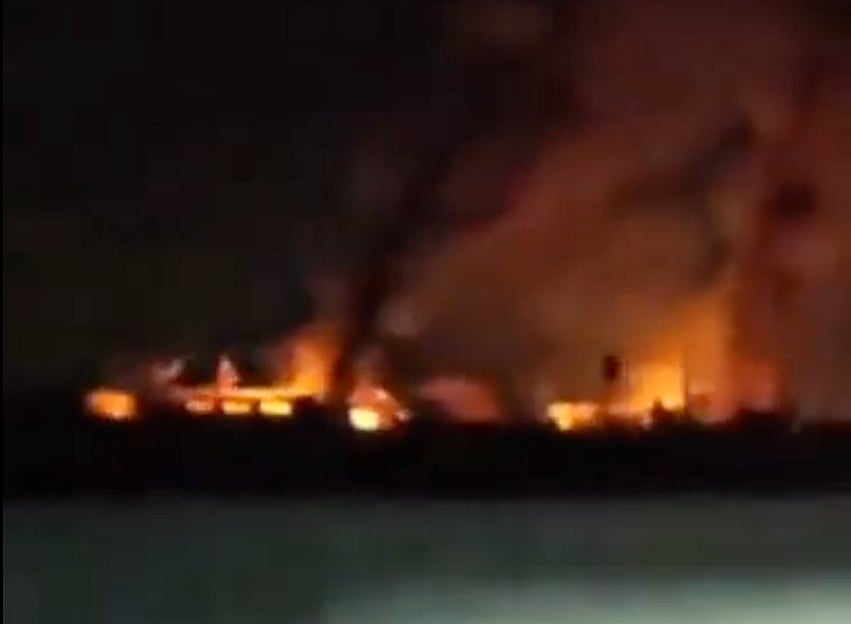
A fragile ceasefire between the United States and Iran appeared to collapse Thursday after Washington launched its largest military operation since the truce, striking about 90 military and strategic targets across Iran while Tehran retaliated with missile and drone attacks targeting US interests in the Gulf.
This has raised fresh fears of a broader regional war and renewed disruption to global energy supplies.
Get updated faster and for FREE: Download the Gulf News app now - simply click here
The renewed flareup followed attacks on at least three commercial vessels transitting Hormuz which the US and its Gulf allies blamed on Iran.
Iran strikes, US counterstrikes
The latest wave of US strikes targeted facilities linked to Iran's Islamic Revolutionary Guard Corps (IRGC), including an aerospace site in Bushehr, port infrastructure in Chabahar, transportation links in Golestan province and facilities near Iranshahr Airport in southeastern Iran, according to US officials and regional reports.
It followed attacks on three commercial vessels — the Marshall Islands-flagged M/T Al Rekayyat, Saudi Arabia-flagged M/T Wedyan and Liberia-flagged M/T Cyprus Prosperity — while transiting the Strait of Hormuz.
Iranian media reported that a firefighter was killed after Iranshahr Airport's operations building and meteorological station were damaged.
Iran responded by launching missiles and drones toward US military facilities in Kuwait and Bahrain, prompting air raid sirens, interceptions by Gulf air defenses and heightened security across the region.
Bahrain and Kuwait acknowledged hostile aerial threats, while Qatar also briefly activated precautionary measures amid fears the conflict could spread further.
What we know so far
• The biggest US strike since the ceasefire
The US Central Command said the operation hit approximately 90 targets, including missile launchers, drone infrastructure, command centers, coastal surveillance systems, anti-ship capabilities and logistics hubs that Washington says Iran has used to threaten commercial shipping through the Strait of Hormuz. President Donald Trump warned Tehran that additional attacks on shipping or U.S. forces would trigger even stronger military action.
• Iran refuses unconditional reopening of Hormuz
Iran's chief negotiator said the Strait of Hormuz would reopen only under "Iranian arrangements," signaling Tehran intends to maintain leverage over one of the world's most strategically important energy chokepoints despite international pressure to restore unrestricted navigation.
• Oil markets react immediately
Energy markets responded with fresh gains as traders priced in the risk of prolonged disruption to Gulf shipping. Analysts warned that any sustained restrictions through Hormuz — which carries roughly one-fifth of globally traded oil—could tighten supplies and increase inflationary pressures worldwide. Gulf stock markets also weakened amid renewed uncertainty.
• Chabahar struck for the first time since the ceasefire
Among the most notable developments was the US strike on Chabahar, Iran's only ocean-facing commercial port and a strategically important logistics hub outside the Persian Gulf. The attack marked the first strike there since the ceasefire took effect, underscoring Washington's shift toward targeting infrastructure that could support Iran's maritime operations.
• Bushehr IRGC facility reportedly ablaze
Regional reports said an IRGC Aerospace Force installation in Bushehr caught fire following US strikes. Bushehr sits along Iran's southern coast overlooking the Persian Gulf and hosts military assets viewed by Washington as critical to Iran's missile and drone operations.
• Shipping remains at the center of the conflict
The renewed fighting follows attacks on commercial vessels transiting the Strait of Hormuz that Washington blamed on Iran. The United States says its latest operation is intended to reduce Tehran's ability to threaten international shipping, while Iran argues it is defending its sovereignty and maritime rights.
Why it matters
The renewed exchange threatens to undo weeks of diplomatic efforts aimed at stabilising the Gulf after a US-brokered pause in hostilities. It also increases the risk that neighboring Gulf states — already forced to intercept Iranian missiles and drones — could become more deeply drawn into the conflict.
With oil prices climbing, commercial shipping facing renewed danger and military activity expanding across southern Iran and the Gulf, diplomats warned that the coming days could determine whether the confrontation remains limited or evolves into a broader regional war.
Also In This Package
Iran FM warns of retaliation for US attacks in Hormuz
US releases footage after striking over 80 Iran targets
Bahrain, Kuwait respond to 'hostile' attacks
Tehran vows retaliation as US launches new Iran strikes
Iran reports explosions on sites around Hormuz Strait
US reimposes oil trade sanctions on Iran: What it means
Network Links
GN StoreDownload our app
© Al Nisr Publishing LLC 2026. All rights reserved.