Price shock: Crude oil jumps as US expands Iran strikes, raising fears of wider supply disruptions
Markets brace for retaliation risk and potential hits to key shipping lanes
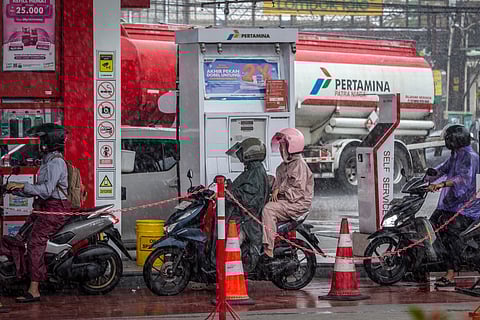
Oil prices jumped sharply in early Asian trading Thursday after the United States launched military strikes on Iran's strategic port of Chabahar, escalating tensions days after the collapse of an April ceasefire and renewing concerns over disruptions to global energy supplies.
As of 7:49 a.m. Tokyo time on Thursday, Brent crude, the international benchmark, climbed 5.20% to $78.02 a barrel, while West Texas Intermediate (WTI) rose 1.41% to $74.56.
Get updated faster and for FREE: Download the Gulf News app now - simply click here
Murban crude, Abu Dhabi's flagship export grade widely used by Asian refiners, surged 6.67% to $73.57, outpacing gains in other benchmarks. US natural gas edged 0.25% higher to $3.220.
The rally followed overnight US strikes on military-linked targets in Chabahar, Iran's only oceanic port on the Gulf of Oman.
The attack marked the first US military operation in the area since the April ceasefire and expanded the conflict beyond the Strait of Hormuz, a vital chokepoint through which roughly one-fifth of the world's oil supply passes.
Markets reacted to the possibility that Iran could retaliate by targeting regional energy infrastructure or commercial shipping routes, even though Chabahar itself lies outside the Strait of Hormuz.
Analysts said the broader concern is that any widening of hostilities could spill over into shipping lanes connecting the Persian Gulf with the Indian Ocean.
The stronger gains in Murban crude reflected heightened concern among Asian buyers, as the benchmark is heavily traded by refiners in Japan, South Korea, China and other Asian economies.
Sharp rise for Murban
Murban's sharp rise suggested traders were pricing in greater regional supply risks.
Despite the rally, prices remained well below the triple-digit levels reached during previous phases of the conflict, indicating that traders have not yet priced in a prolonged disruption to exports.
Analysts said markets are closely watching whether Iran responds directly against US forces or attempts to interfere with maritime traffic.
Energy markets have been highly sensitive to developments in the Middle East since the conflict intensified earlier this year.
The breakdown of the April ceasefire has revived fears that renewed military exchanges could tighten global crude supplies, increase freight and insurance costs, and add upward pressure to inflation worldwide.
Investors are now awaiting further statements from Washington and Tehran, as well as any signs of disruptions to tanker traffic or oil production that could determine whether Thursday's rally develops into a broader energy price shock.


