Oil slips as traders weigh Iran blockade risks, Brent holds above $84
US naval action heightens Gulf risks, yet oil prices reflect muted disruption fears
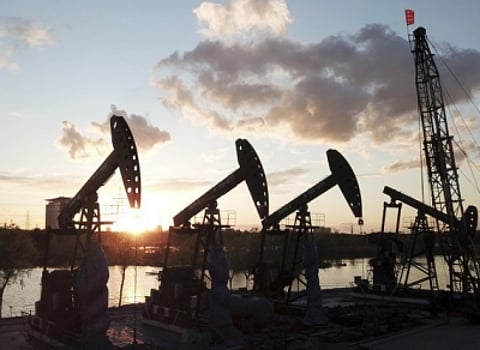
Oil prices edged lower in Asian trading on Friday as investors weighed the impact of the United States' naval blockade of Iran against expectations that global crude supplies remain sufficient to prevent an immediate price spike.
Get updated faster and for FREE: Download the Gulf News app now - simply click here
As of 12:55 pm in Tokyo (Japan Standard Time), Brent crude fell 26 cents, or 0.31%, to $84.69 a barrel, while US West Texas Intermediate (WTI) declined 11 cents, or 0.14%, to $79.49.
Abu Dhabi's benchmark Murban crude recorded the sharpest decline, dropping $3.38, or 4.13%, to $78.55, while U.S. natural gas slipped 0.62% to $2.906.
The modest pullback came despite heightened geopolitical tensions after the United States resumed its naval blockade of Iran earlier this week and announced its first enforcement action against a commercial tanker.
On Thursday, U.S. Central Command (CENTCOM) said it had disabled the Curacao-flagged tanker M/T Belma after the vessel allegedly ignored repeated warnings while attempting to sail toward Iran's Kharg Island, the country's main crude export terminal.
Centcom said three other commercial vessels complied with orders to divert during the first 24 hours of renewed blockade enforcement.
The operation marked the first publicly disclosed use of force against a merchant vessel since Washington reinstated the blockade at 12.01 am (GST) on July 15.
Markets avoid panic
Despite the escalation, oil markets remained relatively calm.
Analysts said traders appear to believe that the current disruption has not significantly affected global crude supply, with no confirmed interruption to exports through the Strait of Hormuz, the world's most important oil transit chokepoint.
The strait normally carries around 20% of global petroleum consumption and roughly one-third of the world's seaborne crude trade.
Market participants are also watching whether Gulf producers, including Saudi Arabia and the United Arab Emirates, continue exporting oil without major disruptions.
Focus shifts to shipping
Attention has increasingly shifted from oil production to maritime security.
The U.S. blockade targets commercial vessels travelling to or from Iranian ports, while Iran has vowed to continue defending what it describes as its sovereign maritime interests.
Shipping companies have responded by reassessing voyage routes, insurance costs and operational risks in the Gulf, although no widespread suspension of commercial traffic has been reported.
What traders are watching
Investors will be monitoring several key developments in the coming days:
Whether additional Iran-linked commercial vessels attempt to challenge the US blockade.
Any Iranian military or diplomatic response to the interdictions.
Potential impacts on exports from Kharg Island, Iran's principal oil terminal.
Signs of tighter global crude supply or higher tanker insurance premiums.
For now, industry analysts say the decline in prices suggests the market is treating the confrontation as a manageable geopolitical risk rather than a full-scale disruption to global energy supplies.
However, sentiment could change quickly if military activity intensifies, shipping through the Gulf is significantly interrupted, or with any sign of cessation of hostilities.


