Oil jumps above $79 as fresh US-Iran strikes rattle markets, renew inflation fears
Import-dependent economies like the Philippines brace for higher fuel costs
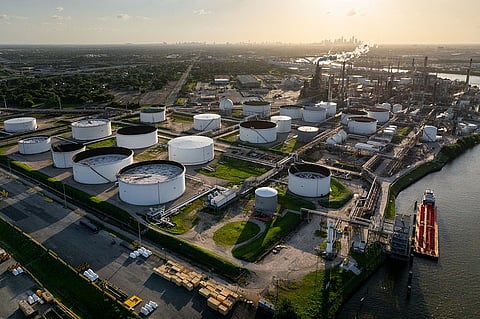
Global oil prices surged more than 4% Monday after the United States launched a fresh wave of strikes against Iranian military targets, renewing fears that escalating tensions in the Arabian Gulf could disrupt crude shipments through the Strait of Hormuz, one of the world's most important energy chokepoints.
Get updated faster and for FREE: Download the Gulf News app now - simply click here
As of 11.13am Tokyo on Monday (July 13, 2026), Brent crude climbed to $79.10 a barrel, up $3.09, or 4.07%, while West Texas Intermediate (WTI) rose to $74.39, gaining $2.98, or 4.17%, according to market data.
The UAE's Murban crude also advanced more than 5% to $74.64, while US natural gas slipped 1.1% to $2.907.
The gains pushed Brent back toward the psychologically important $80-a-barrel mark after prices had eased in recent weeks.
The rally followed overnight US airstrikes ordered by President Donald Trump against Iranian military assets that Washington said were involved in attacks threatening commercial shipping through the Strait of Hormuz.
Fresh attacks
Iran responded with fresh attacks across the Gulf region, deepening concerns that the conflict could once again jeopardise one of the world's busiest oil transit routes.
About one-fifth of the world's oil consumption passes through the Strait of Hormuz, making any threat to navigation there an immediate concern for energy markets.
Although US officials insist the waterway remains open to lawful shipping, Iran has claimed it has closed the strategic passage, adding uncertainty for traders and shipping companies.
The latest surge reverses part of the decline seen after OPEC+ agreed earlier this month to raise oil production beginning in August, a move intended to reassure markets about supply following months of volatility linked to the Iran conflict.
Financial markets react
Financial markets reacted cautiously.
Asian stocks slipped while the US dollar strengthened as investors weighed the possibility that higher energy prices could rekindle inflation just as central banks remain cautious about cutting interest rates.
Investors are now watching upcoming US inflation data and testimony by Federal Reserve Chair Kevin Warsh for clues on the interest-rate outlook.
For energy-importing countries such as the Philippines, sustained increases in crude prices could translate into higher domestic fuel costs in the coming weeks if the rally persists.
The Philippines imports nearly all of its crude oil requirements, leaving pump prices highly sensitive to movements in global benchmarks such as Brent and Dubai crude.
Despite Monday's jump, oil prices remain well below the peaks reached during the height of the Iran conflict earlier this year, when Brent briefly climbed above $110 per barrel amid fears of a prolonged disruption to Gulf exports.
Analysts say the next direction for prices will largely depend on whether the latest military escalation remains limited or expands into a broader regional conflict that significantly interrupts oil flows.


