FILE - A meteor streaks over an Orthodox church during the annual Geminid meteor shower near the village of Zagorie, some 110 kms. (69 miles) west of Minsk, Belarus, Dec. 13, 2017. (AP Photo/Sergei Grits, File)
December meteor showers in the UAE: When to see the Geminids, Ursids and Cold Supermoon
Find out the peak viewing dates, best stargazing spots and organised desert events
Last updated:
3 MIN READ
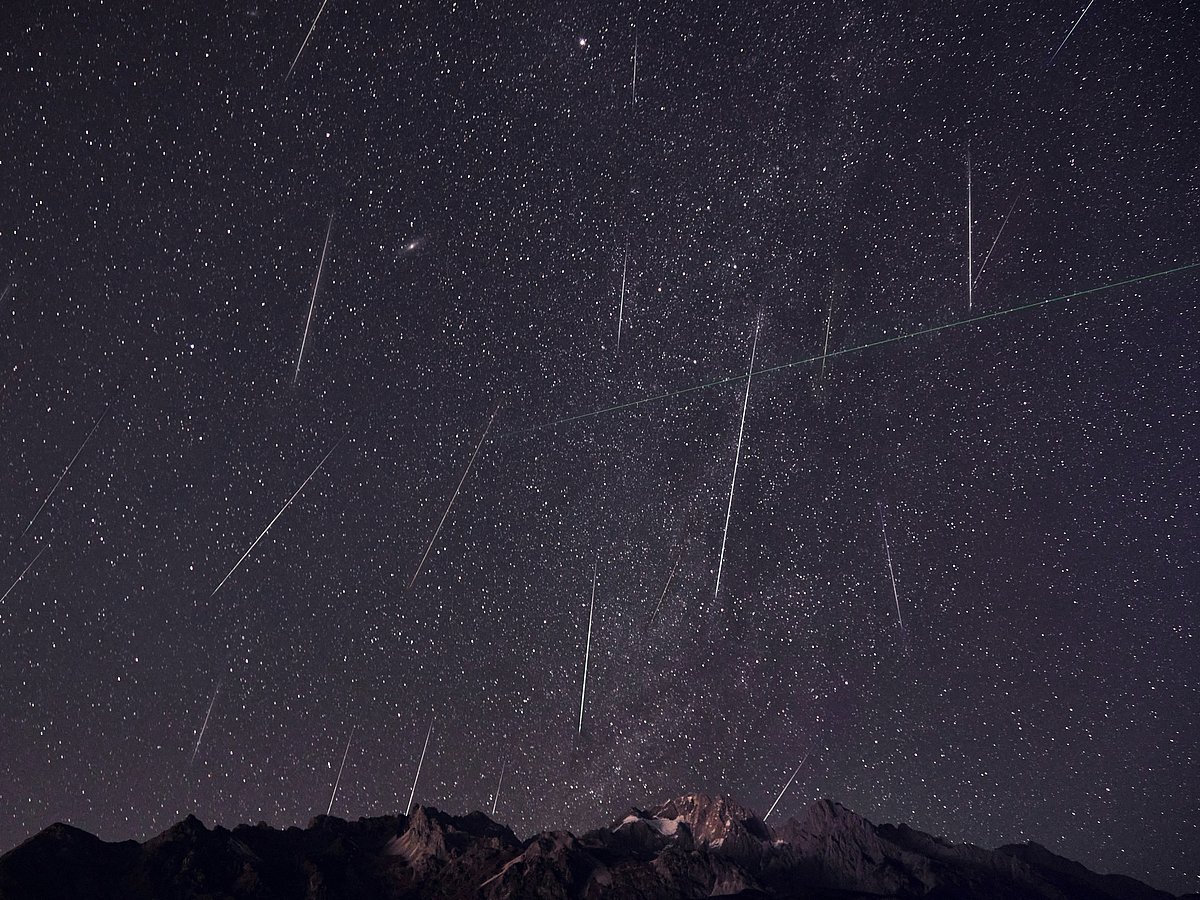
From one of the year's strongest meteor showers to the final supermoon of 2026, here are the celestial events to watch this December.
Unsplash
Dubai: UAE residents have three reasons to look up at the night sky this December, with two meteor showers and the final supermoon of 2026 set to round off the year's astronomical calendar.
The Geminids meteor shower, capable of producing up to 120 meteors per hour under ideal conditions, will peak in mid-December, followed by the lesser-known Ursids meteor shower and the Cold Supermoon.
1. Geminids meteor shower – December 13 to 14
Considered one of the strongest and most reliable annual meteor showers, the Geminids will peak overnight on December 13 and 14, with minimal moonlight interference expected to provide favourable viewing conditions.
According to NASA, the Geminids first appeared in the mid-1800s, producing just 10 to 20 meteors per hour. Over time, the shower has developed into one of the year's major astronomical events, producing up to 120 meteors per hour under perfect conditions.
The Geminids are known for their bright, fast-moving meteors, which tend to be yellow in colour, as well as occasional fireballs.
The shower will be active from approximately December 4 to 20, with the best viewing opportunities from late evening through to the early hours before sunrise around its peak.
Geminids meteor shower viewing events in the UAE
Dubai Astronomy Group is organising two nights of stargazing in Abu Dhabi's Al Khatim Desert. Alongside meteor watching, participants can explore deep-sky objects through telescopes, try astrophotography and learn about sky mapping.
Dates: December 12 to 13 and December 13 to 14
Time: 10pm to 2am
Location: Al Khatim Desert, Abu Dhabi
Tickets: Dh180 to Dh200
2. Ursids meteor shower – December 22 to 23
Just over a week after the Geminids, the Ursids meteor shower will offer another opportunity to spot shooting stars.
Active from approximately December 17 to 26, the shower occurs annually when Earth passes through dust and debris left behind by Comet 8P/Tuttle.
In the UAE, peak activity is expected at around 1am on December 23.
Unlike the Geminids, the Ursids is a relatively modest meteor shower, typically producing five to 10 meteors per hour at its peak.
Bright moonlight ahead of the December full moon may also make spotting fainter meteors more challenging. Stargazers should head away from city lights and aim to watch during the early hours before sunrise.
3. Cold Supermoon – December 24
The year will conclude with its final supermoon on December 24, when the Moon will be approximately 356,740km from Earth.
According to Dubai Astronomy Group, a Cold Supermoon occurs when December's full moon, traditionally known as the Cold Moon, coincides with the Moon being near perigee – the closest point to Earth in its orbit. This makes it appear slightly larger and brighter than a typical full moon.
Unlike meteor showers, the supermoon can easily be observed from urban areas. For a particularly striking view, look towards the eastern horizon around moonrise.
Cold Supermoon viewing event in Dubai
Dubai Astronomy Group will host a dedicated event featuring lunar science sessions, a planetarium experience and observations through professional telescopes.
Date: Thursday, December 24
Time: 7pm to 9pm
Location: SEE Institute, The Sustainable City, Dubai
Tickets: Dh80 to Dh100
The last supermoon of the year, also called the "Cold Moon", is seen over Bondi Beach in Sydney on December 5, 2025.
Where to watch meteor showers in the UAE
For the best chance of spotting meteors, head to areas with minimal light pollution. Popular stargazing locations across the UAE include:
Al Qudra and Al Marmoom, Dubai
Al Khatim and Al Quaa, Abu Dhabi
Jebel Jais, Ras Al Khaimah
Network Links
GN StoreAbout Gulf NewsTerms & ConditionsReach by GNSitemapContact usPrivacy PolicyGN FocusHave your sayWork with usAdvertise with usGulf News epaperPrinting Services
Download our app
© Al Nisr Publishing LLC 2026. All rights reserved.