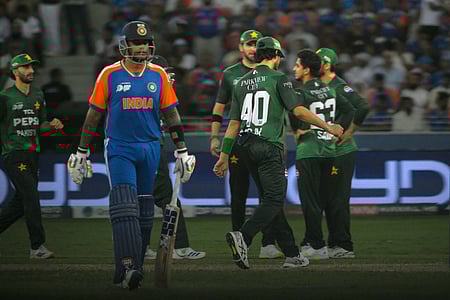
Dubai: Following Pakistan’s decision to boycott its match against India at the 2026 T20 World Cup, the International Cricket Council (ICC) has asked one of its senior officials to intervene and persuade the Pakistan Cricket Board (PCB) to play the fixture scheduled for February 15 in Colombo.
Imran Khwaja, the ICC’s Deputy Chairman and a representative of the Singapore Cricket Association, has been identified as a neutral figure capable of engaging with all stakeholders. A senior lawyer and respected cricket administrator, Khwaja has served as ICC Deputy Chairman since 2017 and was reappointed for a fresh term in December 2024 alongside Jay Shah’s tenure as ICC Chairman. He also made history in 2020 by becoming the ICC’s Interim Chairman following Shashank Manohar’s resignation, becoming the first individual from an Associate nation to lead world cricket.
The latest development comes after the Pakistan government granted approval for the national team to participate in the showpiece event but explicitly barred it from playing India.
“The Government of the Islamic Republic of Pakistan grants approval to the Pakistan Cricket Team to participate in the ICC World T20 2026; however, the Pakistan Cricket Team shall not take the field in the match scheduled on 15th February against India,” the government posted on Twitter.
The situation traces back to a broader regional fallout. The controversy was triggered when the Board of Control for Cricket in India (BCCI) asked Kolkata Knight Riders to release Bangladesh pacer Mustafizur Rahman. Three days later, Bangladesh banned IPL broadcasts and raised security concerns about touring India. On January 12, the Bangladesh Cricket Board formally requested the ICC to move its World Cup matches to Sri Lanka under a hybrid model.
Bangladesh subsequently refused to travel to India, prompting the ICC to replace it with Scotland on January 24. During this period, Pakistan’s position remained unclear, fuelling speculation that it could withdraw from the tournament entirely.
On February 1, the Pakistan government approved participation in the World Cup but maintained its refusal to allow a match against India. Two days later, on February 3, the ICC warned Pakistan of serious sanctions if the issue remained unresolved.
The cancellation of the India—Pakistan clash is expected to have major commercial implications. The ICC is estimated to face financial losses of around $500 million if the marquee fixture does not go ahead.
Network Links
GN StoreDownload our app
© Al Nisr Publishing LLC 2026. All rights reserved.