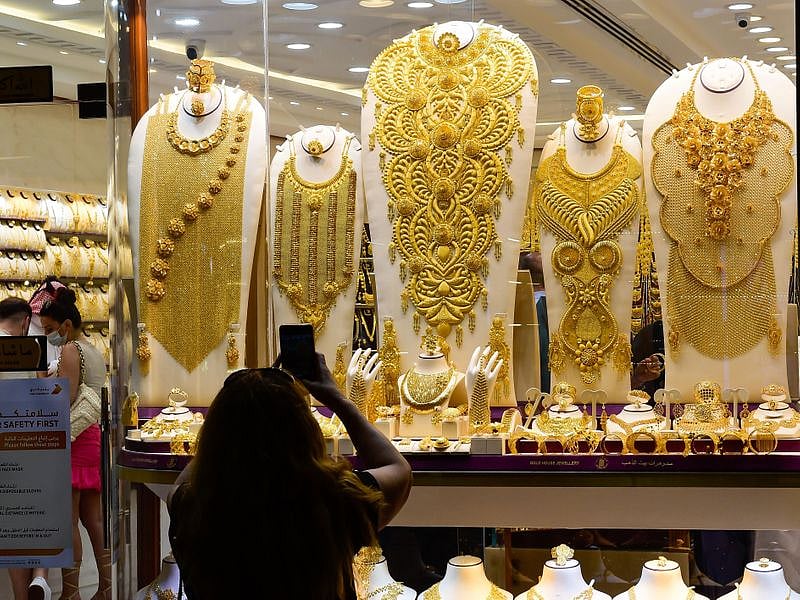
The 24-karat variety was priced at Dh496.25 per gram at 10.35 am, down from Dh506 on Monday, while the more popular 22-karat stood at Dh459.50, compared with Dh468.50 a day earlier.
Get updated faster and for FREE: Download the Gulf News app now - simply click here.
The latest drop takes 24-karat gold below the Dh500 mark for the first time since June 10, when it was priced at Dh492.50. Rates had started the month at Dh539.75 on June 1 and climbed to Dh542.50 on June 2, before falling to Dh538.50 on June 4 and Dh522.50 on June 5. Prices stayed above Dh520 for much of the first week, then slipped to Dh514.25 on June 9 and Dh492.50 on June 10, marking one of the month’s steepest pullbacks.
Gold recovered to Dh508.50 between June 12 and June 14, rose again to Dh521.25 on June 15 and Dh522.25 on June 16, before easing to Dh508.25 on June 17 and Dh509.25 on June 18. The metal slipped to Dh500 on June 19, held near Dh500.75 over the weekend, moved up to Dh506 on Monday, and fell again on Tuesday.
At Tuesday’s rate, 24-karat gold is Dh46.25 per gram lower than its June 2 level, while 22-karat is down Dh42.75 from the June 2 price of Dh502.25.
Also Read
Dubai gold drops below Dh500 after volatile trading, prices fall nearly Dh48 this monthDubai gold stays above Dh520 after wild June swing from Dh542 to Dh492Dubai gold prices rebound above Dh500 after steep midweek fallDubai gold rates drop below Dh500: 24K gold falls Dh12 per gram in one dayDubai gold prices jump Dh13 in one day as 24-karat returns above Dh520Fed worries weigh on gold
Gold declined as inflation concerns overshadowed early optimism around negotiations to resolve the Iran war. Bullion fell as much as 1.8% to near $4,115 an ounce, erasing a modest gain in the previous session.
Higher consumer prices, driven in part by nearly four months of conflict in the Middle East, have raised the possibility that central banks may keep borrowing costs higher for longer or move toward further tightening. That is negative for gold because the metal does not pay interest, making it less attractive when yields on cash and bonds remain elevated.
The hawkish tone adopted by new Fed Chair Kevin Warsh has also unsettled investors and offset the positive impact from an interim US-Iran peace deal signed last week. The dollar has gained more than 1% since the central bank’s last meeting, adding further pressure on bullion, which is priced in the US currency.
Gold is down more than a fifth since the war began at the end of February, while silver has fallen by about a third. Traders will now watch the US personal consumption expenditures price index due Thursday, with markets expecting the gauge to accelerate.
Linh Tran, Market Analyst at XS.com, said gold remains cautious and tilted to the downside in the short term because the market has not found enough momentum to build a clear recovery.
“The main pressure still comes from expectations around Fed policy, with interest rates likely to stay elevated for longer than previously anticipated,” Tran said. “This keeps the opportunity cost of holding gold high, limiting the appeal of the precious metal.”
Tran said the dollar remains relatively stable, with the DXY hovering around 100.6 to 100.8, while the 10-year US Treasury yield stays elevated near 4.5%.
“The combination of a resilient dollar and high real yields continues to create a significant headwind for gold, especially as short-term capital flows tend to favor yield-bearing assets over non-yielding ones,” Tran said.
Easing geopolitical risks have also reduced part of the demand for safe-haven assets. Gold had previously been supported by defensive positioning, but with tensions temporarily cooling, safe-haven buying has not been strong enough to sustain upside momentum.
Tran said gold ETFs recorded outflows in May, suggesting that financial investment demand has yet to recover in a sustained way.
- With inputs from Bloomberg.

Sign up for the Daily Briefing
Get the latest news and updates straight to your inbox
Network Links
GN StoreDownload our app
© Al Nisr Publishing LLC 2026. All rights reserved.