Dubai gold prices jump Dh13 in one day as 24-karat returns above Dh520
Gold shoppers face higher rates after Dubai prices rebound from last week’s lows
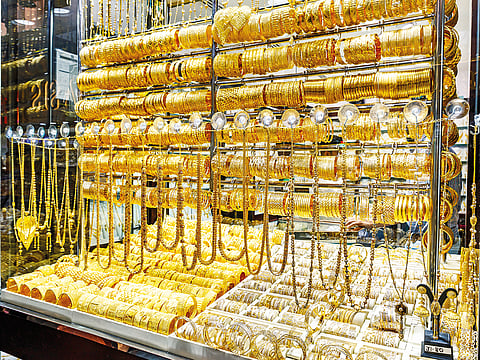
The 24-karat variety stood at Dh521.75 a gram at 1 pm on Monday, compared with Dh508.50 on Sunday. The 22-karat variety rose to Dh483 a gram from Dh470.75, adding more than Dh12 in a day.
Get updated faster and for FREE: Download the Gulf News app now - simply click here.
The move means buyers who delayed purchases over the weekend are now facing a higher bill, particularly on larger jewellery purchases and bullion buys.
How prices moved this month
Dubai gold rates began June at elevated levels, with 24-karat priced at Dh539.75 on June 1 and Dh542.50 on June 2. Prices remained high on June 3 and June 4, when 24-karat stood at Dh536 and Dh538.50 respectively.
The first major decline came after that, with 24-karat easing to Dh522.50 on June 5 and holding close to Dh521.75 over the next few days. Prices then slipped further on June 9 to Dh514.25 before falling to Dh492.50 on June 10, marking the lowest level so far this month.
The rebound began after that low point, with 24-karat moving back to Dh506.50 on June 11 and Dh508.50 over the following three days. Monday’s rise to Dh521.75 has now taken rates back to the level seen on June 7 and June 8.
The 22-karat rate followed a similar pattern. It started the month at Dh500 a gram, rose to Dh502.25 on June 2, then dropped to Dh456 on June 10 before recovering to Dh483 on Monday.
Why gold moved higher
Gold and silver rallied after the US and Iran announced an interim deal to end hostilities and reopen the Strait of Hormuz, easing global inflation concerns and changing expectations around interest rates.
Bullion rose as much as 3% to above $4,345 an ounce, while silver climbed as much as 4.1%. President Donald Trump said he was authorising the “toll free opening” of Hormuz and ending a blockade of Iran, with the strait expected to reopen when the deal is signed on Friday.
Iran’s deputy foreign minister confirmed that an agreement had been reached, while oil prices fell after the announcement.
What it means for UAE buyers
Gold has moved in an unusual pattern since the conflict began in late February, with bullion largely trading in the opposite direction to crude.
Higher oil prices had fed inflation concerns and raised the risk that central banks would keep rates elevated for longer. That reduced gold’s appeal because the metal does not pay interest.
The latest move in oil prices has helped ease some of those concerns, giving gold room to recover after recent losses. Bullion remains down around 18% since the conflict began and last week touched its lowest level since November.
Rate decisions in focus
The US-Iran pact comes as traders await a series of central bank decisions this week, including the Federal Reserve’s first meeting under new Chair Kevin Warsh.
Markets are still pricing in the possibility of a rate hike later this year, which means gold could remain sensitive to any signal on inflation, oil prices and the future path of interest rates.
- With inputs from Bloomberg.