UAE fuel prices out today: Petrol prices to rise in August?
Brent spikes as Red Sea attacks reignite fears, clouding hopes of another fuel price cut
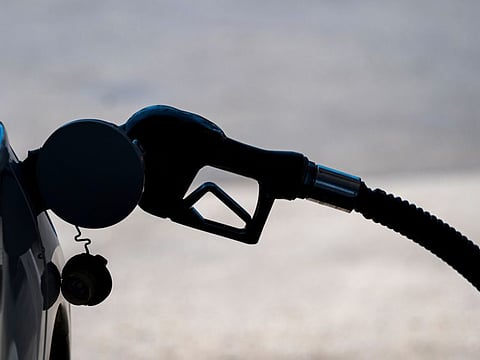
Dubai: UAE motorists could see fuel prices fluctuate again in August after global oil prices surged back above $100 a barrel this month, dimming the prospect of a second month of relief at the pump.
Get updated faster and for FREE: Download the Gulf News app now - simply click here.
Brent currently holds near $90 a barrel after rallying by almost 8% in the previous session, while West Texas Intermediate was above $84.
Oil has risen over several trading sessions this month, erasing much of the earlier decline that supported the UAE’s fuel price reductions for July. The cuts brought Super 98 down to Dh3.40 a litre, Special 95 to Dh3.29, E-Plus 91 to Dh3.21 and diesel to Dh3.60, reflecting lower global oil prices earlier in the month.
Under the UAE's monthly fuel pricing mechanism, retail prices are reviewed based on average international crude and refined fuel prices, meaning any sustained rise in oil markets would be reflected in future revisions.
Why this matters for you
The UAE reviews petrol and diesel prices every month using average international oil prices from the previous month.
That means August prices will depend not on a single day's rally but on where oil trades for the rest of July.
If Brent remains close to $95-$100 through month-end, the higher monthly average could feed into August fuel prices.
If the latest spike proves temporary and crude falls back towards the $80-$85 range, the impact on motorists is likely to be more limited.
What's driving oil higher?
The latest rally reflects renewed concerns over Middle East energy supplies. The reported attacks on Saudi tankers have revived fears that shipping routes linking the Gulf to global markets could face fresh disruption.
Markets are also reassessing geopolitical risks after several weeks during which investors had become increasingly confident that regional tensions were easing.
Earlier this month, Brent had fallen to around $73 a barrel as expectations grew that the US-Iran ceasefire framework and improving shipping conditions would restore oil flows. That optimism has now been challenged by the latest escalation.
July's outlook to reverse?
Only weeks ago, most major forecasters expected oil prices to continue easing through the second half of 2026.
The US Energy Information Administration (EIA) projected Brent would fall below $80 during the third quarter and move towards $70 by year-end.
Goldman Sachs forecast Brent at $80 in the fourth quarter, while Morgan Stanley projected $90 in the third quarter and $80 in the fourth. Citi remained among the most bearish, expecting $75 in the third quarter and $70 in the fourth.
Those forecasts assumed improving Gulf oil exports, lower geopolitical risks and continued OPEC+ production increases.
The latest attacks do not necessarily invalidate those forecasts, but they do make the near-term outlook more uncertain and could prompt analysts to revisit their assumptions if higher oil prices persist.
What could happen in August?
The outlook now depends largely on how long the latest rally lasts.
Most likely scenario
Brent settles back below $95 after the initial market reaction.
August UAE fuel prices remain broadly stable or record only a modest increase.
Higher-price scenario
Oil stays close to $100 or moves higher.
Supply concerns intensify.
August fuel prices rise after July's reductions.
Lower-price scenario
Tensions ease quickly.
Shipping disruptions prove limited.
Brent retreats towards the low $80s.
UAE fuel prices remain close to July levels.
What motorists should watch
Three developments are likely to determine August fuel prices:
Whether Brent crude remains above $95-$100 through the rest of July.
The impact of attacks on oil tanker traffic in the Red Sea and Strait of Hormuz.
Whether OPEC+ maintains planned production increases despite renewed geopolitical tensions.
Bottom line?
July's fuel price cut reflected an oil market that had largely recovered from the supply disruptions seen earlier this year.
The latest spike above $100 shows how quickly geopolitical events can reverse that trend.
For UAE motorists, it is still too early to conclude that August fuel prices will rise. The UAE's pricing mechanism is based on the monthly average rather than daily swings.
But if oil remains near current levels for the rest of July, the probability of higher petrol and diesel prices next month has increased significantly compared with just a week ago.