How Dubai’s three exclusive areas became the new 'golden triangle' for global wealth
Palm Jumeirah, Emirates Hills and MBR City anchor a record surge in villa sales
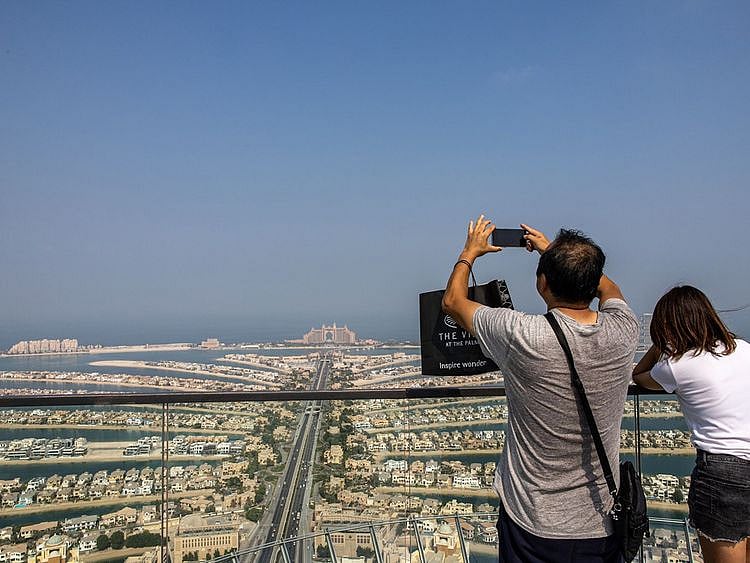
Dubai: Dubai’s ultra-luxury villa market has entered a new phase of maturity, moving beyond the post-pandemic boom to establish itself as a steady global asset class. At the centre of this shift is a sharp rise in Dh40 million-pls home sales, an expanding pool of global high-net-worth buyers, and a newly defined “golden triangle” of wealth anchored by Palm Jumeirah, Emirates Hills and MBR City.
The latest report from fäm Properties shows sustained appetite for trophy homes in the Dh70 million to Dh100 million bracket, record resale activity and a pipeline of new ultra-prime districts set to reshape Dubai’s residential map over the next three years.
Trophy homes fuel a new phase of stability
The data points to a surge that now looks structural rather than cyclical. “Dubai’s Dh40 million-plus villa market is now a sustained global wealth segment, not a post-Covid anomaly, with strong resale demand and a limited supply of trophy homes driving prices higher,” said Firas Al Msaddi, CEO of fäm Properties.
Transactions in this category have grown more than ninefold in five years, climbing from 27 in 2020 to 242 in 2024, with 199 projected for 2025. The value of these deals rose from Dh0.89 billion in 2020 to Dh15.98 billion in 2024, a 1,700% increase that helped create Dubai’s ultra-prime villa segment.
The rise reflects sustained migration of global UHNW buyers and limited supply in districts such as Palm Jumeirah, Jumeirah Bay and MBR City. The trend has prompted fäm Properties to launch fäm Luxe, a new division dedicated to ultra-super-prime buyers.
Resales take the lead
Resales overtook new sales from 2022 onward and accounted for 58% of all Dh40 million-plus transactions in 2024. Resale value jumped from Dh2.0 billion in 2021 to Dh10.8 billion in 2024, surpassing developer sales of Dh5.96 billion in the same year.
“This confirms a mature investor cycle, where delivered ultra-prime stock mainly on Palm Jumeirah, Jumeirah Bay and Emirates Hills now trades at liquidity levels once limited to off-plan,” Al Msaddi said.
The emergence of a golden triangle
The analysis identifies Palm Jumeirah, Emirates Hills and MBR City as Dubai’s “Golden Triangle of Wealth,” together accounting for 56% of all Dh40 million-plus villa transactions recorded since 2015.
Palm Jumeirah has generated Dh19.38 billion in total sales, equivalent to 31% of the market. Emirates Hills accounts for Dh9.04 billion, or 15%, while MBR City stands at Dh6.40 billion, representing 10%.
Alongside this concentration of premium activity is a notable rise in Dh70 million to Dh100 million deals, which have increased from negligible levels between 2015 and 2019 to more than 170 villas between 2023 and 2025.
The Dh100 million to Dh200 million category saw 83 transactions over the same period, while Dh200 million-plus deals reached 25, demonstrating that Dubai is now consistently recording trophy sales once rare or non-existent before 2021.
The next ultra-prime frontiers
New districts are also emerging as the next wave of Dh100 million-plus villa markets. DXBinteract data identifies Palm Jebel Ali, Tilal Al Ghaf and The Oasis as future ultra-luxury destinations as projects move toward handover between 2026 and 2028.
Palm Jebel Ali has already seen Dh2.23 billion in Dh40 million-plus sales, most of which took place in 2024 and 2025. Tilal Al Ghaf has recorded Dh3.6 billion in deals since 2023, driven largely by strong resale momentum. The Oasis has generated Dh0.99 billion since its launch cycle last year.
The sector’s evolution suggests a long-term rebalancing of Dubai’s luxury landscape, with deeper liquidity, broader geographic spread and increasingly sophisticated investor behaviour. As UHNW migration remains strong, Dubai’s golden triangle and its emerging ultra-prime districts are expected to anchor the next decade of high-value residential investment.

Sign up for the Daily Briefing
Get the latest news and updates straight to your inbox
Network Links
GN StoreDownload our app
© Al Nisr Publishing LLC 2026. All rights reserved.