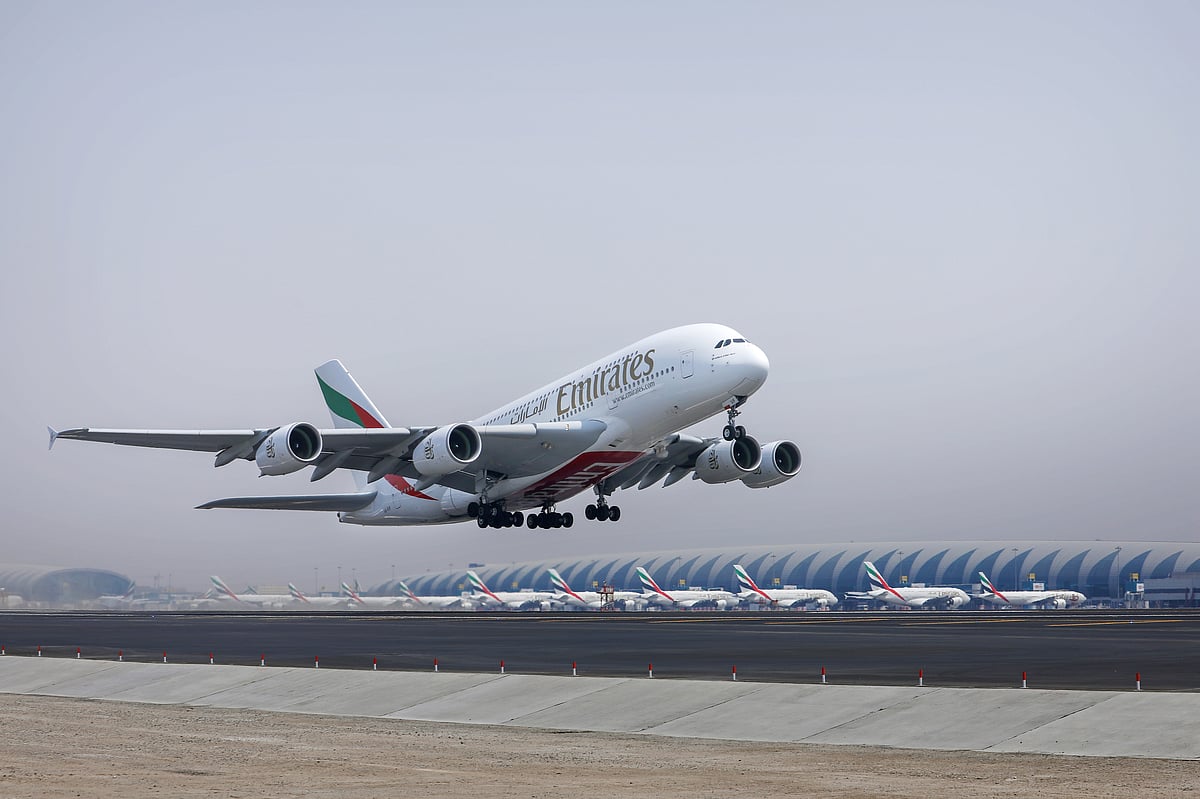
Dubai: Following the lifting of all precautionary restrictions on UAE airspace, Dubai International Airport has entered the next phase of recovery.
Dubai Airports announced early Monday that it plans to ramp up daily flight movements and enable airlines to progressively restore their schedules.
Capacity at the hub is now largely tied to the availability of regional flight paths outside the UAE — a situation in aviation, where an airport’s operations depend not only on its own infrastructure but also on neighbouring countries’ airspace. Flights to and from the UAE have continued operating through safe air corridors since March 1.
Authorities are continuing to coordinate closely to optimise traffic flows across the wider region, Dubai Airports – the operator of DXB and Dubai World Central (DWC) explained.
The ramp-up has been supported by coordination across the ‘oneDXB’ network, including airlines such as Emirates and flydubai, as well as service partners and air traffic control. This helped keep passengers and cargo moving during the disruption, while allowing flights to increase quickly as conditions improved, it said.
Get updated faster and for FREE: Download the Gulf News app now - simply click here.
Unprecedented times
Dubai Airports, which unveiled its first-quarter passenger traffic numbers on May 4, said it supported the movement of six million passengers, over 32,000 aircraft movements, and 213,000 tonnes of essential cargo since the US-Israel-Iran conflict broke out on February 28 until April 30.
The war and the ensuing jet fuel shortage on account of the closure of the Strait of Hormuz, Middle East aviation has suffered a significant setback after enjoying a tremendous post-pandemic growth period from 2023-2025. Dubai welcomed 95.2 million passengers in 2025, its highest ever.
Paul Griffiths, CEO of Dubai Airports, described the past few weeks as “unprecedented” for a global hub like DXB.
“International transfer traffic through the Middle East accounts for a major share of global air travel, with 22.4 million annual passenger journeys flowing through DXB,” he said. “Maintaining smooth operations here is critical to keep global journeys moving.”
He added that rapid decision-making across the aviation ecosystem helped sustain safe and consistent operations.
“Our collective response has sharpened our ability to adapt at pace. That readiness will enable us to accommodate returning demand as capacity is restored, even as some regional routing constraints remain.”
Traffic hit by airspace disruption
The impact of the regional crisis was clearly visible in first-quarter traffic figures. DXB handled 18.6 million passengers in Q1 2026, down 20.6 per cent year-on-year, as disruptions intensified through March.
Passenger traffic in March alone fell sharply by 65.7 per cent to 2.5 million — an unusually steep decline for one of the world’s busiest international hubs, highlighting the severity of the airspace restrictions.
India remained DXB’s largest market with 2.5 million passengers, followed by Saudi Arabia (1.3 million), the UK (1.2 million), and Pakistan (918,000). London was the busiest city destination, ahead of Mumbai and Jeddah.
Cargo volumes also declined, dropping 22.7 per cent to 399,600 tonnes in Q1, while aircraft movements fell 20.8 per cent to 88,000.
Network Links
GN StoreDownload our app
© Al Nisr Publishing LLC 2026. All rights reserved.