Trusted and fact-based reporting never mattered more in times of coronavirus
COVID-19 has heightened the challenges facing journalists and media brands


Abu Dhabi: Trusted, fact-based reporting has never mattered more and if ever there was a time that proved the importance of quality journalism, this is it, say UAE media experts.
The global disruption and uncertainty sparked by COVID-19 has resulted in more and more people turning to trusted news outlets for reliable information and guidance, they add.
UAE writers say COVID-19 has only heightened the challenges facing journalists and media brands, but has also brought trust and accuracy more to the fore, with millions of people relying on journalists to bring them trusted and accurate information.
They say with the World Health Organisation calling the crisis an ‘infodemic’, in which over-abundance of information makes it hard for people to get the reliable guidance they need, quality journalism around the world emerged as another frontline hero, with reporters working remotely and in the field, documenting everything from overwhelmed frontline medical workers and mass graves to empty cityscapes and sheltering-at-home families.
Emirati writers say modern journalists may find themselves competing with the social media content flow while juggling their other interests, such as reporting on the facts and the truth of a story, as well as seeking to increase readership and engagement with their work, often via social media channels.
They say the juxtaposition between social and traditional media is still a constant battle. However, they say, they think that this sense of “either/or” is wrong and that we need to look at the two together, from both a measurement and programming perspective.
Maryam Bin Fahd, a young Emirati media leader, says content is the foundation for existence and success on digital platforms.

She added the modern media platforms have provided diverse and abundant content. “The platforms focus on the content industry and the most important characteristic of this content is the speed of access to it, the abundance, and the ability of the follower to control consumption hours.
“Traditional and social media are linked by an integral relationship. Traditional media broadcasts via modern platforms and was unable to continue through the traditional form, especially newspapers. Without digital platforms and social media, they would have disappeared at the beginning of the crisis,” she said.
Bin Fahd says the media have professional standards in broadcasting and publishing news, as reliable sources consider everything that is published. “So professional media are a reliable source of news. However, some influencers on social media platforms specialise in media work. This category has had a major role in spreading awareness and re-broadcasting government messages from its reliable sources and a role in creating educational content that supports government messages and also there are real influencers whose efforts cannot be denied,” she adds.
Bin Fahd says the category that cannot be relied upon in crises is the celebrities whose content is limited to ads and content related to restaurants or entertainment. “We cannot blame this category for its failure. They were given an opportunity more than they deserve, because their influence in a specific field does not mean that they are able to engage in serious issues.
“If we want the professional media to regain its strength, we must keep pace with development, to become faster in disseminating information, to work on investigative stories and to strive to communicate with the public via modern means that fit their expectations,” Bin Fahd says.
She added with the current crisis, radical changes are expected to happen. I think that the institutions should work on a modern strategy to look at the opportunities available to continue. Especially the print media, which may continue to suspend printing for a longer period. I also expect that the press will end in its printed form and will expand to modern platforms. The scene will be dominated by those who follow the interests of the audience, and who work to broadcast news and content quickly.
“However, the problem with digital media is Facebook and Google’s control of the advertising market,” she says.
Yousuf pointed out that the “original” media, or the traditional media as called by the advocates of social media, is actually the professional media, and is the one which triumphed. So those who work on social media will not be an alternative media, because they lack the skills and fundamentals of this profession, including trusted and fact-based reporting.
Yousuf says readers flock towards fact-based media, rather than the influencers, who are mostly associated with rumours and fake news.
He appealed to authorities to support professional media outlets. “There is a critical need for government support for vulnerable media brands in the UAE, or they will disappear and we will be left with the alternative or rumour incubator media,” he said.
“These influencers, even, believed they are above the law, and that their fame is a shield and protection from every condemnation. They were once certain that every action or picture or word published by them, regardless of the degree of its degradation, is a special thing that everyone should accept, whether the community wants it or not, because they believed, no one can hold them accountable,” Al Reyami said.
Al Reyami added, “No one is above the law, this is a fact and not a slogan in UAE, and whoever transgresses or dares to violate the values and ethics of society that we hold dearly, will be brought to justice.”
“But the responsibility also falls on all members of society, for they contributed to making them celebrities and influencers of social media, so the message that must be passes on to everyone is ‘stop making the idiots celebrities’.
Emirati writer Nasser Al Dhaheri says, “When the talk of the hour is about vital issues, the social media should refrain from taking these issues up.
He pointed out that social media celebrities are only seeking self-branding and selling themselves as lifestyle celebrities, but they broadcast news just to keep in touch with the audience.
Emirati novelist and journalist Ali Abu Al Rish said, “The crisis has increased people’s awareness, and revealed to them the information is only taken from the correct source - media outlets. “Now the awareness of people is expanding, and they are aware that every person can talk on social media platforms without any professional background, but the right source of information and news is the professional media,” he says.


She adds social media platforms make the sharing of information ubiquitous and nonstop, but journalists are the source of information in the first place. “Professional media will survive, but it will have to change, evolve and merge with digital platforms to adapt to trends of content consumption.
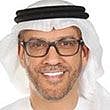
Ibrahim Al Dhahli, Emirati journalist, former editor-in-chief of “Asfaar” travel magazine and social media activist, says it is no secret that the social media have become predominant across the world and have become the tool of the time to transmit information to all groups of ages. “This is not surprising, because like other things in life, media must keep pace with development.”
“As we are witnessing the communications revolution, the internet and the social media in all its forms, many persons became independent media channels broadcasting day and night. Unfortunately, a group of fools and ignorant people or so-called “influencers” have become at the forefront of the scene at times,” he said.
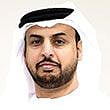
He adds some of them were quick to make desperate attempts to keep in touch with their audience, but they were a failure.
“Today, traditional, professional media has become up-to-date, and has high-tech digital platforms, with social media accounts, and audio and video clips that are published the moment the news is released, which has made them stand out more and more deeply.