US promises to protect Gulf interests in Iran talks, Rubio rejects Strait of Hormuz tolls
Global oil prices have dropped to their lowest levels since the Iran war began this year
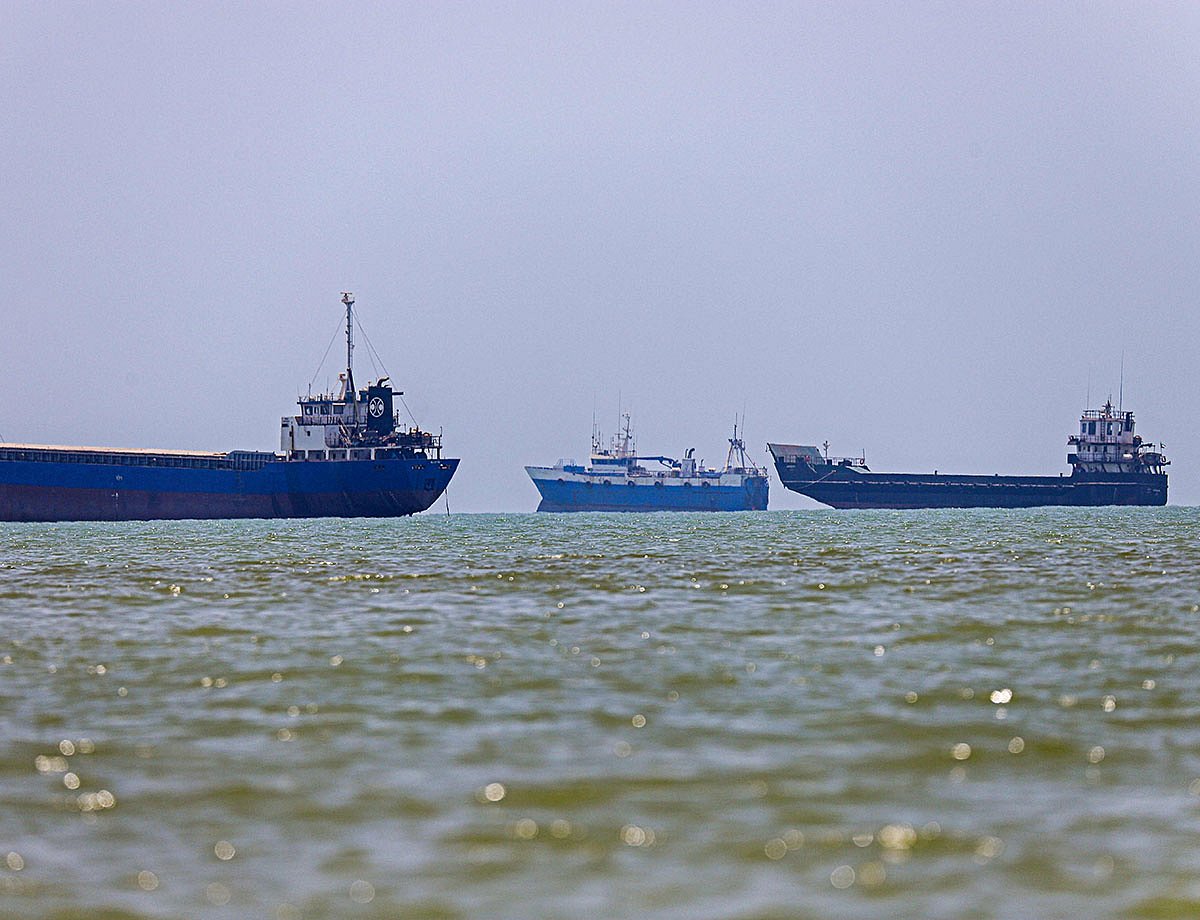
US Secretary of State Marco Rubio vowed to protect Gulf allies' interests as Washington presses ahead with Iran talks, while President Donald Trump said negotiations were 'doing great'. Iran's Revolutionary Guard warned ships against using an unapproved route through the Strait of Hormuz, saying vessels outside Tehran-approved corridors could face enforcement action. Brent crude slipped more than 1 per cent as markets bet on diplomatic progress and uninterrupted oil flows. Follow our live updates:
The impact of lower oil and shipping costs could begin to appear within a few weeks, but it may take several months for these savings to fully pass through to retail prices and consumer goods, depending on supply chains and existing contracts, industry experts said.
The reopening and stabilisation of shipping through the Strait of Hormuz is expected to ease pressure on energy and freight costs, giving UAE residents the prospect of more stable fuel prices and gradual relief on some imported goods.
Read more here.
South Korean-operated vessels continue to exit the Strait of Hormuz following last week’s ceasefire between the United States and Iran, with five more ships departing the region, according to the Ministry of Oceans and Fisheries on Thursday.
The ministry said the latest departures bring the total number of vessels that have left the area to 11, adding that 13 South Korean-linked vessels remain inside the strategic strait.
Iran's Revolutionary Guard Navy has dismissed a newly established shipping route through the Strait of Hormuz, cautioning that vessels using the corridor could be exposed to significant risks.
According to remarks reported by Press TV on Thursday, the IRGC Navy said the route had been introduced by 'certain authorities' without prior consultation or coordination with Tehran.
IRGC stressed that only maritime corridors approved by Iran are recognised and that ships navigating the area must remain in contact with the IRGC Navy. It warned that vessels operating outside designated routes could be subject to intervention and enforcement measures.
Get updated faster and for FREE: Download the Gulf News app now - simply click here.
Brent crude fell more than one percent Thursday, slipping below its closing level on the eve of the Middle East war, as investors grow optimistic about US-Iran peace talks and tankers continue through the Strait of Hormuz.
The contract for August hit a low of $72.44 a barrel, compared with the February 27 close of $72.48. Brent soared as high as $119 in the weeks after the United States and Israel began their strikes on Iran on February 28.
US State Secretary Marco Rubio has reited a firm stance that no tolls will be allowed on the Strait of Hormuz, even as US-Iran tensions simmer over waterway fees. In a post on X (formerly Twitter) Wednesday, the official White House rapid response account amplified comments from Rubio underscoring the Trump administration's position that the Strait of Hormuz must remain free and open to international shipping without any charges. Rubio stated: "The whole world will be against any mechanism that charges money to use an international waterway. It's that simple. The President has already said it — that's not going to happen. When we mean open the Straits, we mean open the Straits free."
The Trump administration said "technical negotiations" with Iran will continue in the coming days, but acknowledged that the future of Tehran's nuclear programme remains the biggest hurdle to securing a lasting ceasefire after months of conflict.
Secretary of State Marco Rubio said discussions with Iranian officials would move forward, with negotiators expected to tackle complex technical issues surrounding Iran's nuclear activities, which US officials have repeatedly said must never lead to the development of a nuclear weapon.
Speaking during a diplomatic tour of the Arabian Gulf, Rubio said he visited Kuwait, the United Arab Emirates and Bahrain to thank the three US partners for what he described as their "incredible support" during the recent conflict and subsequent ceasefire efforts.
Rubio stressed that Washington would not sideline its regional partners while pursuing a diplomatic agreement with Tehran. He assured that the US would "never undermine" Gulf allies, adding his meetings as "very frank, honest, important."
The comments underscore the administration's effort to reassure Gulf states, many of which have long viewed Iran's expanding military capabilities and regional influence as a direct security threat. Officials have said any long-term agreement must address concerns shared by US allies while preventing Iran from rebuilding its nuclear program.
NATO Secretary General Mark Rutte on Wednesday declined to say whether he agreed with US President Donald Trump's recent remarks suggesting Iran could retain some conventional ballistic missiles, instead reiterating the military alliance's longstanding position that Tehran must never acquire nuclear weapons.
Speaking outside the White House after meeting with Trump, Rutte avoided weighing in on the U.S. president's comments when questioned by CNN's Kaitlan Collins.
"I can't comment on everything," Rutte said. "What is important here is for NATO — that we always had a consistent position as an alliance with the United States, all the 32 nations — that Iran should never get its hands on the nuclear capability."
Rutte's remarks came days after Trump said he would support Iran possessing "some" conventional ballistic missiles, arguing that such weapons "aren't the problem." The comments marked a notable shift in tone after Trump had previously called for eliminating the threat posed by Iran's ballistic missile program as part of broader efforts to curb Tehran's military capabilities.
Global oil prices have fallen to their lowest levels since the outbreak of the Iran war earlier this year, as traders increasingly bet that a US-Iran agreement will keep the strategically vital Strait of Hormuz open and allow energy exports to return to normal.
Brent crude, the international benchmark, fell below $74 per barrel, while US West Texas Intermediate crude fell below $70, and Murban crude dropped 4.57% to $66.45 (down $3.18) as of 7.48am in Tokyo, erasing most of the "war premium" that had built up during months of conflict.
US President Donald Trump came under sharp criticism from fellow Republicans during a closed-door meeting on Capitol Hill, exposing deepening divisions within his own party over the months-long Iran war, just hours before the White House formally asked Congress to approve $87.6 billion in emergency funding to cover military operations and other priorities.
The tense meeting reportedly featured a heated exchange between Trump and Republican Sen. Bill Cassidy, one of several GOP lawmakers who have questioned the administration's handling of the conflict and the framework agreement reached to end hostilities with Iran. Republican concerns have centered on the war's objectives, mounting costs, and whether the administration has secured meaningful strategic gains.
The clash came a day after the Senate delivered a symbolic rebuke by approving a bipartisan war powers resolution seeking to curb Trump's authority to launch future military action against Iran without congressional approval, reflecting growing unease in both parties over the conflict and its constitutional implications.
Despite the political backlash, the Trump administration has asked Congress to approve $87.6 billion in supplemental spending. Of that amount, about $67 billion would replenish Pentagon weapons stockpiles, strengthen the U.S. defense industrial base, and fund military operations linked to the Iran conflict. The package also includes aid for American farmers affected by trade disruptions, funding to combat the Ebola outbreak in Africa, and other domestic priorities aimed at broadening congressional support.
US Secretary of State Marco Rubio said on Wednesday that he believed all countries were against Iran imposing fees for transiting the crucial Strait of Hormuz.
"I know of no country on the planet that supports tolling or fees for the use of the strait," Rubio said during a tour of the Gulf to reassure close US allies who were hit hard by Iran during the Middle East war.
Sign up for the Daily Briefing
Get the latest news and updates straight to your inbox
Network Links
GN StoreDownload our app
© Al Nisr Publishing LLC 2026. All rights reserved.