US-Iran war: Houthi attacks spark fire at Saudi Aramco building, wound 4 in Riyadh; Trump weighs joining strikes
US military denies Iran's control over Strait of Hormuz amid oil shipment claims
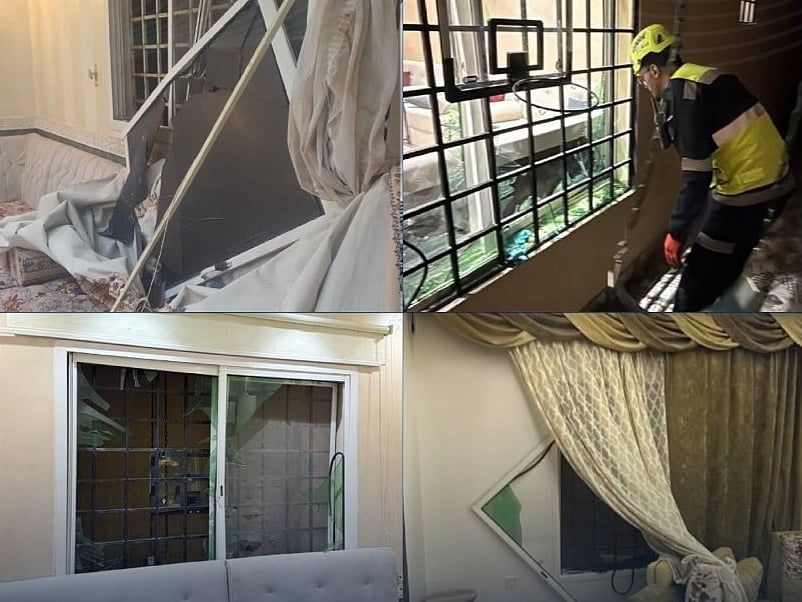
Saudi Arabia says Houthi attacks sparked a limited fire at a Saudi Aramco administrative building in Dhahran in the Eastern Province on Tuesday evening, with the Ministry of Energy reporting no injuries. In Riyadh, four people were wounded and 15 homes damaged by debris from two intercepted Houthi cruise missiles, according to the civil defence agency, as residents received phone alerts warning of a hostile aerial threat. US President Donald Trump said the Houthis were behaving “very badly”, likely at Iran’s behest, and that he was considering joining Saudi strikes against the group. The Houthis have warned they will target American interests if Washington intervenes. Meanwhile, US Central Command has rejected Iran’s claim to control the Strait of Hormuz. Follow our live coverage for the latest.
Oil prices rose in early Asian trading on Wednesday, with Brent crude futures rising 89 cents, or 0.8 percent, to US$106.58 per barrel.
US West Texas Intermediate (WTI) crude futures gained 80 cents, or 0.9 percent, to US$94.94 per barrel.
Brent crude fell 0.9 percent on Tuesday, while US crude rose 0.4 percent.
The head of the International Monetary Fund said on Wednesday that recent attacks on Saudi Arabia could impact people "everywhere", as energy costs rise globally and multiple conflicts rage in the crude-rich region.
"The Saudi economy is important for the region and the world, and in that sense, these developments have potentially negative spillovers for everybody, everywhere," Managing Director Kristalina Georgieva said at a news conference during the Annual Meetings of the IMF and the World Bank in Bangkok.
Saudi Arabia's civil defence agency said on Wednesday that four people — two women, a man and a child — were wounded by debris from two intercepted Houthi cruise missiles in the capital and that 15 homes were damaged. A powerful explosion then rang out in the Saudi capital, with a phone alert sent to residents saying "the city of Riyadh is facing a hostile aerial threat".
US President Donald Trump has told US media that a decision will be made on Iran "very soon". However, the Pentagon, on orders from the White House, has also drafted plans for a multi-day air campaign targeting Iranian missile, drone and energy facilities, The New York Times reported.
Senior national security officials, led by Vice President JD Vance, reviewed the options on Oct. 9 at Camp David, the paper reported. Trump has earlier ruled out launching strikes before the Nov. 3 midterm elections.
Get updated faster and for FREE: Download the Gulf News app now - simply click here.
The Trump administration invoked the Defence Production Act to partner with Delek US Holdings on expanding their Tyler, Texas refinery, to produce "millions" more gallons of commercial and military-grade fuel, according to US Vice President JD Vance, who made the announcement. The project is significant: no new US refinery has been built since the 1970s. The project is expected to create hundreds of jobs in Smith County, lower transportation costs, and strengthen national defence by boosting domestic refining capacity. Texas Railroad Commissioner Wayne Christian said the move will enhance energy security, local economy, and fuel affordability amid national gas prices around $4.34 per gallon.
The Houthis warned the United States against intervention, with political bureau member Mohammed Al Bukhaiti telling AFP they would target American interests in the region.
Bukhaiti said the purpose of the campaign against Saudi targets was to send a message to the crown prince "that he can no longer wage aggression against Yemen from a safe position".
The Riyadh airport attack had prompted US President Donald Trump to say he was considering joining Saudi strikes against the Houthis.
He wrote on his Truth Social platform on Tuesday that "the Houthis are behaving very badly", accusing them of acting "probably at the behest of Iran". The White House's @RapidResponse47 account reposted it on X early on Wednesday.
"I'll be there after the elections, and I will never forget!" he wrote, referring to next month's midterms.
The US military has rejected an Iranian Revolutionary Guard naval commander’s claim that Tehran controls the Strait of Hormuz, escalating the war of words over one of the world’s most important routes for oil shipments.
In a post on X on Tuesday, US Central Command (CentCom) disputed the claim that the Strait of Hormuz was under the control of Iran’s Islamic Revolutionary Guard Corps (IRGC) and that approaching US Navy warships would be sunk.
“American forces and regional partners clearly control the Strait of Hormuz,” CentCom said, adding that US forces had helped Gulf partners ship more than 19 million barrels of crude oil through the strait on Monday.
The post was a direct rebuttal to Iranian naval threats as Washington and Tehran continue to contest maritime security and military influence across the Gulf.
The Saudi-led coalition announced that its air defence systems had intercepted and destroyed a cruise missile in the Riyadh region following an attempt to target Saudi territory. The coalition reported no casualties or damage and reaffirmed its commitment to protecting Saudi airspace.
Iran’s seaborne crude exports remained at zero in October after collapsing in the second week of September, according to energy intelligence platform Vortexa.
Exports fell from a 14-day average of 230,000 barrels per day at the start of September to zero and remained there as of Oct. 5.
Vortexa said Iranian crude held in tankers on the water had fallen to 83 million barrels, including 43 million barrels trapped west of the Strait of Hormuz because of the US blockade.
Iran’s liquefied petroleum gas exports also fell 48% from the previous month to their lowest level since at least January 2023.
Sign up for the Daily Briefing
Get the latest news and updates straight to your inbox
Network Links
GN StoreDownload our app
© Al Nisr Publishing LLC 2026. All rights reserved.