The US-Iran confrontation has entered another uncertain phase.
US President Donald Trump demanded that Iran compensate families of people killed in conflicts and attacks fomented by Tehran in the last 50 years, while Washington and Tehran remain locked in a standoff over the Strait of Hormuz.
Iran, for its part, is demanding $300 billion in “compensation”, citing the Islamabad Memorandum of Understanding (MOU) signed on June 17, 2026.
For UAE residents, the immediate concerns remain security, flights, fuel prices, shipping and the possibility of further regional escalation.
Get it: Fast, verified news for FREE ... download the Gulf News app — simply click here
The latest developments come as Iran reshuffles its security leadership, with a hard-line former Revolutionary Guards commander returning to a top national-security post.
The US, meanwhile, assets that it has established overwhelming control around the strategic waterway.
Here are the key developments to watch today.
Trump demands compensation from Iran: Trump has demanded that Iran pay compensation to families of people he says were killed or wounded by Iran over decades, including U.S. service members, victims of attacks and Iranian protesters.
Iran puts hard-liner in top security post: Iran has appointed Mohsen Rezaei, a former commander of the Islamic Revolutionary Guard Corps, as secretary of the Supreme National Security Council. The move is significant because the council is at the heart of Iran's decisions on war, diplomacy and national security.
US says it has control of Hormuz: Trump has said the US military has “100% control” of the Strait of Hormuz, an assertion that underscores Washington's determination to keep the strategic waterway open.
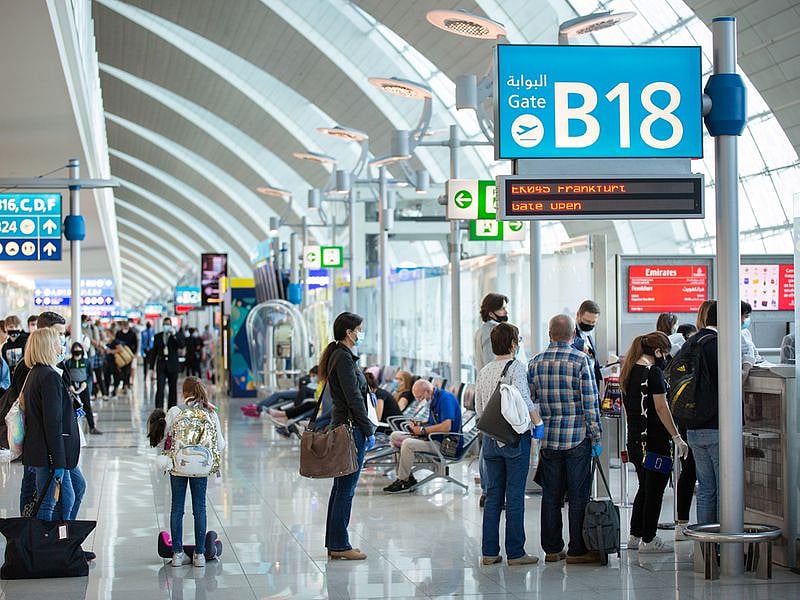
Air travel remains mixed: Many flights are operating, but cancellations, longer routings and schedule changes continue on some Gulf routes.
UAE airlines affected: Emirates, Etihad Airways and Air Arabia have cancelled some flights to Bahrain, Kuwait and Doha, while some regional carriers have begun restoring services.
International airlines remain cautious: Several major global carriers have extended flight suspensions to the UAE and other Middle East destinations.
Hormuz remains a major flashpoint: Iran says it will not reopen the Strait of Hormuz without significant changes in U.S. policy.
Houthi attacks in Saudi Arabia: Iran-aligned Houthi forces reportedly targeted the Jazan refinery with drones, triggering a fire that was later extinguished with no reported casualties.
Regional aviation: The regional aviation system is functioning but fragile. The biggest risks remain the Strait of Hormuz, further attacks around key shipping lanes and any expansion of the conflict.
Hopes for a deal to ease crisis fades
While regional airlines are gradually restoring services to some destinations, air travel remains one of the most immediate effects of the current standoff.
Hopes for a deal to ease the crisis around the Strait of Hormuz faded as Iran declared it will hold no more talks with Trump till the end of his term, even as the Tehran regime continued to demand major concessions from Washington.
For passengers flying from Dubai, Abu Dhabi or Sharjah, the practical advice remains:
Check your airline's flight status before leaving for the airport.
Allow additional time for possible rerouting or delays.
Do not assume that a previously confirmed flight will operate normally.
Check both departure and transit-airspace restrictions.
Contact the airline directly before travelling if your route passes through affected areas.
The disruption is particularly important for passengers connecting through Bahrain, Kuwait, Qatar, Iraq or other regional hubs.
The key question: Is diplomacy still alive?
Yes — but the path remains uncertain. The central issue is whether Washington and Tehran can agree on terms that allow commercial shipping to resume without either side appearing to surrender its core demands.
That is why the situation remains particularly difficult to read.
A ceasefire, a shipping arrangement or a diplomatic announcement does not automatically mean normal traffic will immediately return.
Shipping companies, insurers and energy traders will need evidence that the waterway is genuinely safe before fully restoring operations.
What UAE residents should know today
1. No reason for panic: Residents should continue following official UAE guidance and avoid spreading unverified reports.
2. Flights can change quickly: Check airline and airport updates immediately before travelling.
3. Hormuz remains the key risk: Any deterioration around the waterway could affect oil, shipping and regional trade.
4. Fuel prices could remain volatile: A sustained disruption would likely keep a geopolitical premium in energy markets.
5. Watch the diplomatic track: A credible agreement between Washington and Tehran would be the strongest signal that regional economic disruption could begin easing.
6. Iran's security reshuffle matters: Rezaei's return to the top security establishment suggests Tehran is placing an experienced revolutionary-era figure at the center of decision-making at a highly sensitive moment.
For UAE residents, it is about whether the Gulf's most important shipping artery can return to predictable commercial traffic, whether flights can operate normally and whether Washington and Tehran can find a diplomatic off-ramp.
For now, the answer to all three remains uncertain.
The biggest signal to watch today is Hormuz: if ships begin moving normally, markets and travel could start to stabilise.
If tensions rise again, the economic consequences could spread well beyond the battlefield.
Network Links
GN StoreDownload our app
© Al Nisr Publishing LLC 2026. All rights reserved.