US President Donald Trump and China's President Xi Jinping attend the Asia-Pacific Economic Cooperation (APEC) Summit in Shenzhen, in China's southern Guangdong Province, on November 19, 2026.
Iran war at crossroads: Trump demands 'lasting' deal, warns conflict will end 'one way or the other'
Trump pushes for enduring Iran deal, warns conflict will end decisively
Last updated:
4 MIN READ
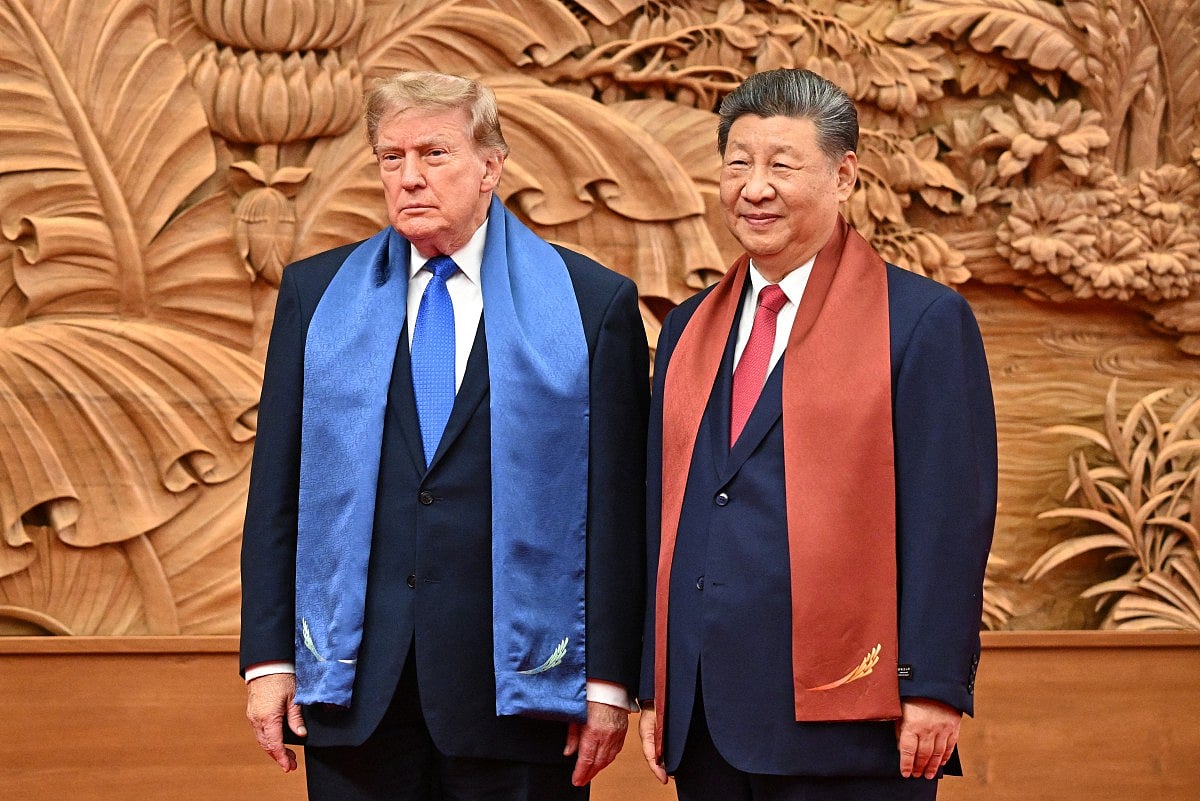
In this pool photograph distributed by the Russian state agency Sputnik, China's President Xi Jinping (R) and US President Donald Trump (L) pose for a photo before leaders take a group photo during the Asia-Pacific Economic Cooperation (APEC) Summit in Shenzhen, in China's southern Guangdong Province, on November 19, 2026.
AFP-SERGEY BOBYLEV
Trump vows to ‘finish off’ Iran war soon, demands nuclear deal that outlasts future US presidents
US president signals diplomatic and military pressure will continue, saying any agreement with Tehran must survive changes in American leadership
I want a deal that can be lasting: Trump
US President Donald Trump has renewed his warning that he intends to end the conflict with Iran "soon", insisting that any agreement with Tehran must be durable enough to survive future changes in American leadership.
In an interview with Fox News, an excerpt of which was circulated by the White House-affiliated Rapid Response 47 account (@RapidResponse47) on X, Trump said he wanted a long-term agreement rather than a temporary arrangement that could be reversed by a successor.
"I want a deal that can be lasting. If we have a bad President, a weak President, I want a deal that will supersede the President," Trump said.
Get it: Fast, verified news for FREE ... download the Gulf News app — simply click here
Trump seeks end to confrontation
He also reiterated his determination to bring the confrontation to an end.
"I'm going to finish it off — soon. One way or the other, we'll finish it off," he added.
The remarks highlight Trump's twin-track approach to Iran: keeping diplomatic channels open while maintaining military and economic pressure on Tehran.
In the wider Fox News interview, Trump confirmed that Washington remained in contact with Iranian representatives and claimed Tehran wanted an agreement.
He nevertheless insisted that any settlement must prevent Iran from rebuilding its military and nuclear capabilities.
"Yeah, we talked to them. We talked to them. They want to make a deal, but I want a deal that can be lasting," he said.
Trump did not provide a proposed agreement, negotiating timetable or specific mechanism that would guarantee a future US administration could not reverse the arrangement.
Why does Trump want a deal that outlasts future presidents?
Trump's reference to a future "bad" or "weak" president points to a longstanding problem in US-Iran diplomacy: agreements reached by one administration can be abandoned by another.
The clearest example is the 2015 Joint Comprehensive Plan of Action (JCPOA), negotiated under former US president Barack Obama.
The agreement involved Iran, the United States, Britain, France, Germany, Russia and China.
It restricted Iran's nuclear programme and introduced international monitoring in exchange for sanctions relief.
However, in May 2018, Trump withdrew the United States from the agreement and restored sanctions against Iran, arguing that the deal was inadequate and failed to address other Iranian activities.
The Biden administration subsequently attempted to revive the agreement, but negotiations broke down in 2022.
Trump's latest demand reflects his desire for an arrangement that would be more difficult for a future US administration to abandon.
However, there is an important legal distinction: a presidential executive agreement can generally be reversed by a successor, while a formal treaty requires Senate approval.
Trump has not explained what legal structure he wants for a new Iran agreement.
War has not reached a lasting settlement
The current confrontation began on February 28, 2026, when US and Israeli forces launched military strikes against Iran.
The conflict subsequently expanded across the Middle East, involving Iranian retaliatory attacks, US military operations, regional security threats and disruptions to shipping through the Strait of Hormuz.
A ceasefire was reached in April, followed by a June memorandum of understanding (MoU) intended to end the conflict and negotiate a broader settlement. That arrangement subsequently collapsed amid renewed fighting.
The latest diplomatic and military developments underline the difficulty of reaching a permanent settlement:
November 14: Trump had told advisers he might refrain from further attacks unless Iran or Iran-backed Houthi forces provoked Washington, per Reuters.
November 17: Fresh US-Iran exchanges of fire, despite diplomatic contacts involving Qatar and Oman.
November 18–19: Trump travelled to China for the APEC summit, where his discussions with Chinese President Xi Jinping and Russian President Vladimir Putin could provide an additional diplomatic dimension to the conflict.
What does 'finish it off' mean?
Trump's statement leaves two possibilities open.
A negotiated settlement
Washington and Tehran could agree on restrictions covering Iran's nuclear programme, sanctions, military capabilities and regional security. Such an agreement would need monitoring and enforcement arrangements.
Renewed military action
If negotiations fail, Trump could authorise further strikes against Iranian military or nuclear infrastructure. Reuters reported that the US military remained prepared for escalation, although intelligence assessments questioned whether renewed attacks would fundamentally change Tehran's negotiating position.
Trump has not specified which route he intends to pursue.
Why it matters
For oil markets: Any renewed escalation could threaten shipping through the Strait of Hormuz, a critical route for global oil and gas supplies.
For the Gulf: Countries in the region face potential security and economic consequences from prolonged confrontation.
For Washington: A lasting agreement could become a defining foreign-policy achievement for Trump. Failure could leave the next US administration confronting the same nuclear and security disputes.
For Iran: The central issues remain sanctions relief, national sovereignty, nuclear restrictions and the future of its military capabilities.
The big picture
Trump is no longer simply talking about ending the Iran conflict. He is demanding an agreement that cannot easily be undone by his successor.
But his promise to finish the confrontation "one way or the other" leaves open the possibility that diplomacy and military pressure will continue side by side.
What happens next?
Watch for developments on three fronts:
Whether Qatar and Oman can bring Washington and Tehran into substantive negotiations.
Whether Trump maintains the naval blockade and economic pressure or orders further military action.
Whether China and Russia become involved in diplomatic efforts to secure a settlement.
Network Links
GN StoreAbout Gulf NewsTerms & ConditionsReach by GNSitemapContact usPrivacy PolicyGN FocusHave your sayWork with usAdvertise with usGulf News epaperPrinting Services
Download our app
© Al Nisr Publishing LLC 2026. All rights reserved.