Relationship with Iran ‘more professional, productive’ — Trump
'They must understand, however, that they cannot develop or procure a nuclear weapon'
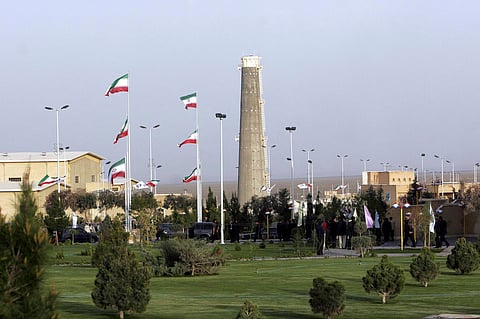
US President Donald J. Trump late on Sunday defended ongoing negotiations with Iran, sharply contrasting them with the 2015 Iran nuclear deal negotiated under former President Barack Obama.
He also insisted the current talks are proceeding deliberately with the US maintaining leverage through a naval blockade.
In a lengthy statement posted to social media and amplified by the White House's Rapid Response 47 account, Trump described the Obama-era Joint Comprehensive Plan of Action (JCPOA) as “one of the worst deals ever made by our Country,” claiming it put Iran on a “direct path” to a nuclear weapon.


'Opposite of JCPOA'
“Not so with the transaction currently being negotiated with Iran by the Trump Administration — THE EXACT OPPOSITE, in fact!” Trump wrote. He said negotiations were “proceeding in an orderly and constructive manner” and that he had instructed U.S. representatives “not to rush into a deal” because “time is on our side.”
Trump added that the US blockade — understood to refer to actions affecting the Strait of Hormuz, a critical chokepoint for global oil shipments — would “remain in full force and effect until an agreement is reached, certified, and signed.”
'Iran cannot develop or procure a nuclear weapon or bomb'
He stressed there could be “no mistakes” and that Iran “cannot develop or procure a Nuclear Weapon or Bomb.”
The statement comes a day after Trump said a broader agreement to help end months of conflict had been “largely negotiated,” including steps to reopen the Strait of Hormuz.
The comments tempered expectations of an imminent breakthrough while highlighting ongoing diplomacy amid a conflict that began earlier in 2026.
The US and Iran have been engaged in negotiations over Tehran’s nuclear programme and the ongoing war, which escalated after Trump’s return to office.
Military, diplomatic strategy
The administration has pursued a military and diplomatic strategy aimed at preventing Iran from acquiring a nuclear weapon, destroying missile and naval capabilities, and curbing support for proxy groups.
Talks have involved mediators and regional allies, with Trump previously signaling openness to either a deal or stronger action.
The 2015 JCPOA, from which Trump withdrew the US during his first term, had imposed limits on Iran’s nuclear activities in exchange for sanctions relief.
Critics, including Trump, argued it was insufficiently restrictive and temporary. Supporters said it was working to constrain the programme before the US exit.
Iran advances nuclear capabilities
Iran has since advanced its nuclear capabilities, enriching uranium to higher levels.
Rapid Response 47, an official White House account launched in early 2025 to support Trump’s “America First” agenda and counter media coverage, shared Trump’s full statement alongside criticism of the prior administration.
No immediate details on the potential new agreement’s terms were released by the White House, and Iranian officials have offered mixed signals on the pace and substance of talks.
Trump thanked Middle Eastern countries for their support and referenced the Abraham Accords, suggesting potential broader regional integration.
The developments unfold as the US navigates economic pressures from the conflict, including disruptions to energy markets, while maintaining that stopping Iran’s nuclear ambitions remains the overriding priority.


