Trump hints at renewed action against Iran 'fairly soon', Iran warns of wider retaliation
Iran warns of retaliation as Trump vows to prevent nuclear weapon development
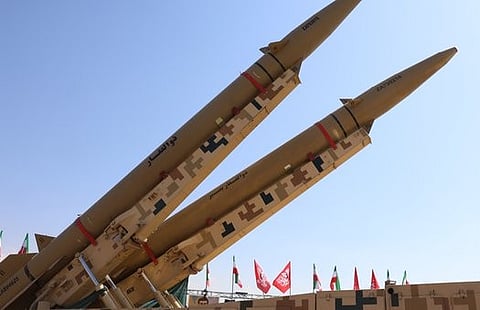
US President Donald Trump has hinted going "a little bit further" in a potential re-escalation of the US-Israeli conflict with Iran, with a single stated aim — preventing the regime from obtaining a nuclear weapon.
Iran's response: a vow of overwhelming retaliation involving the wider region.
Speaking to reporters at the White House before departing for Iowa on Thursday, Trump said: “This should have been done a long time ago by other presidents. The Iran war — and we’ve knocked the hell out of them, and we may do it a little bit further.”
The US leader doubled down on the current impasse, stating the US was not negotiating with Iran and suggested action could come: “No, I think we’re not negotiating with – we are going to have something one way or the other. It’ll happen fairly soon.”
He stressed: “We can’t let Iran have a nuclear weapon.” Trump did not specify a target, timetable, or the scale of any additional operation.
Iran’s response
Iran’s Islamic Revolutionary Guard Corps (IRGC), warned that continued US naval escorts through what it called “mined waterways” could trigger direct action against American bases in the Middle East.
On Thursday, the Guards claimed three additional vessels had struck mines west of the Strait of Hormuz.
Guards spokesperson Hossein Mohebi told state media that they have activated their "decentralised mosaic defence" doctrine: no longer would they respond only proportionately if Washington restarted the war, but would “take the initiative to launch attacks.”
He added that the force had adopted an “offensive and asymmetrical” defence strategy.
He also threatened to invade any country that attacked Iran.
Iranian officials also signalled that US bases and critical Gulf infrastructure could become targets if neighbouring states assisted another US or Israeli operation.
What Maj. Gen. Rezaei said
Reopening Hormuz is still possible, Tehran Times quoted Major General Rezaei, Secretary of the Supreme National Security Council, as saying.
“We will not return to the previous approach to diplomacy, but neither will we abandon diplomacy. We have presented seven new conditions through mediators. Until these conditions are implemented, Iran will neither reopen the Strait of Hormuz nor return to negotiations," Rezaei said.
"The difference this time is that we are embedding guarantees into the very structure of the agreement. First, the commitments must be fulfilled; then Iran will decide whether to reopen the strait, followed by the resumption of shipping under new arrangements agreed upon with Oman."
We are no longer interested in an agreement whose only guarantee is the other side’s political goodwill.Major General Rezaei, Secretary of the Supreme National Security Council of Iran
"We are no longer interested in an agreement whose only guarantee is the other side’s political goodwill," Rezaei added.
"If Washington fulfills its commitments, there will be a path toward reopening the Strait of Hormuz and continuing diplomacy. However, Iran will not relinquish the leverage that brought the other side to the negotiating table and then wait to see whether the promises are fulfilled.”
Tehran 'open' to diplomacy: Araghchi
Foreign Minister Abbas Araghchi said Tehran was open to diplomacy only if Washington showed a sincere desire to build trust, but warned that choosing war would produce “an even greater strategic failure.”
Iran has sought to disrupt shipping and the US has imposed a counterblockade on Iranian ports and vessels.
Iranian state media reported explosions in Hormozgan province near the strait on October 22, while oil prices rose and regional flight schedules were disrupted.
Trump’s remarks followed reports that Israel flew dozens of fighter aircraft near Iran’s western border in a large-scale show of force, and after Iran’s Revolutionary Guard shifted to what it called an “offensive and asymmetrical” defence posture.
The exchange has raised concerns that a limited naval and air conflict could widen into strikes on Gulf energy infrastructure and US bases.
Risks
The statements harden both sides’ positions: Trump is signalling possible additional strikes, while Iran is broadening its deterrent threats to US bases, allied infrastructure, and regional partners.
That raises risks for shipping, energy prices, aviation, and Gulf residents — especially because the Strait of Hormuz remains central to global oil flows.
While diplomacy remains possible, both sides currently describe the other as unwilling to negotiate in "good faith".
And while Trump says there are no talks amid mediation efforts by both Qatar and Pakistan, Araghchi says Iran will give diplomacy another chance only with credible US commitment to a just solution.


