Middle East war: Trump weighs restraint as Israel warns of alleged Iranian plot
Strait of Hormuz tensions persist, and violence continues in Gaza
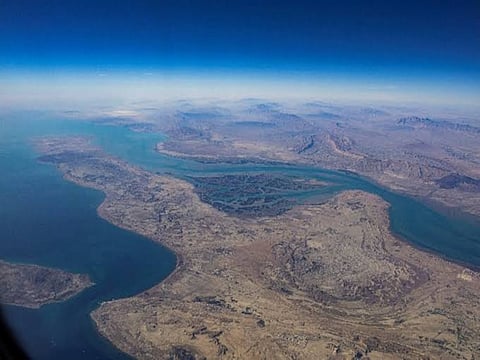
Highlights
Iraq PM sacks officials over oil smuggling in pro-Iran group bastion
Iraqi Prime Minister Ali al-Zaidi dismissed nine officials on Saturday, following an investigation into allegations of oil smuggling in the Jurf al-Sakher area, a stronghold of the Iran-backed Kataeb Hezbollah group.
"In light of the investigation's findings," Zaidi "ordered that all individuals accused of involvement in oil smuggling operations be referred to the judiciary," his military spokesman Sabah al-Numan said, without identifying the suspects. The premier "also ordered the dismissal" of nine officials including from the security and oil sectors.
Eisenkot says Netanyahu knows he lost, denounces unity talk as 'trick'
Israeli prime ministerial hopeful Gadi Eisenkot on Saturday said caretaker premier Benjamin Netanyahu "knows he lost the election", accusing him of playing "tricks" by appealing for a unity government.
"Netanyahu is calling for negotiations while they are already underway; he claims to want unity but... sows division and stokes tensions as if there were no tomorrow," the former army chief said, adding that "these tricks don't work on me".
Israel warns US of alleged Iranian drone plot targeting Trump: Report
Israel has shared intelligence with the United States about an alleged Iranian plan to launch a drone attack targeting President Donald Trump and senior members of his administration, according to Israeli newspaper Israel Hayom.
The report said Israel's Mossad intelligence agency had passed details of the alleged threat to the CIA.
Following the warning, several senior US officials were reportedly relocated to military bases, while Trump reduced his public appearances and cancelled his scheduled golf outing on Saturday.
Netanyahu says only unity government can guarantee Israel's security
Israel's caretaker prime minister Benjamin Netanyahu on Saturday reiterated his calls for a national unity government with his opponent Gadi Eisenkot, as well as his vow to eliminate the threat from Iran.
A meeting with Eisenkot on Thursday "only strengthened the conviction that it is essential to form a national unity government" to guarantee Israel's security, Netanyahu said in a video statement, adding that such a government could "eliminate the Iranian threat once and for all".
He said this government would be made up of parties that recognise Israel "as a state for the Jewish people".
It would address security challenges, he added, most notably Iran which he claimed would "not hesitate to use nuclear weapons against us".
US warns of Houthi attacks, airport disruptions in Saudi Arabia
The US Mission to Saudi Arabia has urged American citizens to exercise heightened vigilance amid threats of attacks by Iran-backed Houthis and alleged Iranian efforts to target US government officials in the region.
In a security alert dated November 13 and published on November 14, the mission warned of possible attacks on airports, airspace closures, flight cancellations and other travel disruptions.
It said Riyadh's King Khalid International Airport was operating a limited number of flights, while airports in Jeddah and Dammam remained operational with some delays and cancellations.
The mission also said land border crossings, including the King Fahd Causeway to Bahrain, remained operational. Airports in neighbouring countries, including the UAE, were also operating, although passengers were advised to confirm flight status directly with airlines and airports.
The alert reiterated that non-emergency US government employees and their families had been ordered to leave Saudi Arabia on October 23. Emergency consular services remain available.
Saudi coalition says intercepted two Houthi drones
The Saudi-led coalition fighting Yemen's Houthis said Saturday it had intercepted two drones in the Riyadh region and the country's south that were launched by the Iran-backed group.
The coalition, which backs neighbouring Yemen's internationally recognised government in its war with the Houthis, has battled a surge in attacks since hostilities reignited in July.
Turki al-Malki, a spokesperson for the military coalition, said in a post on X that "two drones launched by the Houthi terrorist militia were intercepted and destroyed in the Riyadh and southern regions".
Israel prepares three scenarios for renewed war with Iran: Report
Israel's military is preparing three scenarios for renewed fighting with Iran, including joint operations with the United States or an independent Israeli attack, Channel 13 reported.
The scenarios include responding to an Iranian attack on Israel or US bases, joining a new American-led offensive, or launching strikes independently, potentially with Washington's approval.
The Israeli broadcaster said military preparations were continuing despite the army chief's assessment that there was no immediate need to attack Iran.
The report comes as US President Donald Trump weighs whether to hold off on further strikes against Tehran. No decision to launch a new Israeli operation has been announced.
UN official urges Iran, US to let fertilisers through Hormuz Strait
Iran and the United States should "immediately" allow fertiliser shipments through the Strait of Hormuz to ease the crisis in some of the most vulnerable countries, a senior UN official said Saturday.
Jorge Moreira da Silva, head of the UN Office for Project Services, told the COP31 climate talks in the Turkish resort city of Antalya that the lack of fertilisers could push millions into poverty.
While Iran and the United States are still trying to negotiate an end to the conflict, Moreira da Silva said he had the same message for both countries.
"They should continue their negotiations about the comprehensive deal - but that deal should not avoid an immediate, exceptional, limited, and time-bound solution for the fertilisers," he said.
"Basically what we need is five vessels a day with fertilisers," he added.
Sudan's finance minister recently told him that the price of food there had doubled in six months, he added. In Nepal, they had told him that farmers could no longer afford to buy fertilisers.
"So it's very important that we are aware that countries such as Mozambique, Kenya, Sudan, Somalia, Nepal, Bangladesh, Sri Lanka are facing very significant impact."
The effects of this shortage could be catastrophic, he warned.
"If we continue missing the planting seasons in different parts of the world we may have 45 million people facing severe and acute food insecurity," he said.
"We may have 30 million people being forced into poverty."
Trump weighs holding off on Iran strikes unless provoked, sources say
US President Donald Trump has told senior advisers he may refrain from further strikes against Iran unless Tehran or Yemen's Houthis launch new provocations, Reuters reported on Saturday, citing three people familiar with the discussions.
Saudi Crown Prince Mohammed bin Salman and Turkish President Recep Tayyip Erdogan have urged restraint, while Israeli officials continue pressing Washington for renewed military action, according to the report.
Trump has not made a final decision. The US military remains prepared for further operations, with a third aircraft carrier heading to the region.
Iran’s navy warns tankers against entering restricted Hormuz zone
Iran's Navy on Saturday warned tankers against entering a restricted maritime zone east of the Strait of Hormuz after an oil tanker reportedly caught fire and was immobilised after striking a naval mine while navigating the prohibited area despite previous warnings.
According to Iran's state news agency ISNA, the Navy said the vessel had disabled its tracking and identification systems while sailing through what it described as an unsafe and restricted maritime zone.
In a statement on Saturday, the Navy warned that any tanker entering the prohibited area would face a similar fate, accusing vessel owners of risking their assets by relying on assurances from US President Donald Trump.
Trump leaves Mideast in limbo about path ahead
US President Donald Trump has had a lot to say about his thinking on the way ahead in the Iran war since Republicans were trounced in last week's midterm elections.
In exchanges with reporters, broadcast interviews and social media posts since Election Day, he's somehow managed to back away from carrying out additional strikes while also backing away from the prospect of additional talks with the Islamic Republic's negotiators on ending the 8-month-old conflict.
The president acknowledged on the day after the midterms that the war and the global economic tumult it's caused were partly to blame for Republicans' electoral losses, while maintaining it was the right thing to do.
Then, at the start of this week, he huddled with Qatar's prime minister at the White House and afterward told reporters that he believed it was highly unlikely he'd need to order new major strikes on Iran, declaring that the war “militarily is effectively over.”
But by Thursday, he was again raising questions about whether he needed to rush to find an endgame. He declared that the US no longer needs a deal with Tehran and brusquely directed Vice President JD Vance — who served as his chief negotiator in earlier peace talks with Iran — to shift his attention to the administration's domestic anti-fraud campaign.
All the while, Trump warned Iran that the US military is “locked and loaded” and keeping an eye on Pickaxe Mountain, a facility linked to Iran’s nuclear programme, for signs of activity.
Rubio takes swipe at international law, attacks ICC
US Secretary of State Marco Rubio took aim on Friday at what he deemed the "weaponisation of international law," calling it a tool of the elite, and issued a stark warning to the International Criminal Court.
Rubio cautioned the ICC against "quoting laws to men with swords," as he accused the Hague-based tribunal of trying to enforce rules that Washington does not recognise.
His remarks to the Federalist Society National Lawyers Convention came around a month after the United States announced new sanctions on the ICC, vowing to cripple its operations.
The court prosecutes individuals accused of the gravest atrocities and acts as a last resort when countries do not have adequate legal systems to ensure accountability.
The US signed the Rome Statute establishing the ICC but never ratified the treaty. Israel, Russia and China are also not ICC members.
Iran's IRGC says two tankers hit sea mines in Hormuz
Iran's Revolutionary Guards said on Saturday that explosions rang out on two oil tankers after they struck mines in the Strait of Hormuz, where Tehran has restricted navigation.
Since war erupted with the United States in February, Tehran has insisted that vessels obtain its authorisation to cross the strait and has attacked ships that do not comply.
"A short while ago, two oil tankers that had switched off their radar and positioning systems and were secretly attempting to transit the Strait of Hormuz through an unauthorised route exploded and caught fire after striking a naval mine," the Guards' navy said in a statement carried by the Iranian state broadcaster early on Saturday.
The statement did not provide the names or origins of the vessels but said one was a supertanker.
Trump to discuss Iran, but not Ukraine, with Xi and Putin: US official
US President Donald Trump will discuss the Iran war with his Chinese and Russian counterparts in trilateral talks in China next week, but is not expected to talk about Russia's war on Ukraine, a senior US official said Friday.
"I think the president does intend to talk about Iran in the trilateral meeting with Xi Jinping and Vladimir Putin," the US official, speaking on condition of anonymity, told reporters on a call ahead of Thursday's meeting in Shenzhen.
But Washington has a "whole other track" of negotiations with Kyiv and Moscow, the official added. "China is not really a part of that track, so it doesn't seem appropriate to have the Ukraine discussion there."
US‑Israel war on Iran: Recent developments
Day 258: Turkey, Qatar sign defence pact
Day 257: Trump says US does not 'need a deal with Iran'
Day 256: Iran warns US as Gaza crisis deepens
Day 255: ADNOC vessel sustained damage following attack
Day 254: Trump: Military action on Iran ‘doesn’t seem necessary’
Day 253: UAE rescues 22 crew in Gulf of Oman
Day 252: Iran's Revolutionary Guard lifts its missile-range limit
Day 251: Trump warns Iran of ‘heavy hit’ as Tehran steps up Gulf diplomacy
Day 250: Oman and Iran call for end to war and fresh dialogue
Day 249: US VP Vance says Iran war is 'the reason we lost' midterms


