We don’t need a deal with Iran, says Trump. Is the Middle East stuck in ‘no war, no peace’?
Tanker attacks in Hormuz threaten oil supplies and fuel fears of prolonged instability
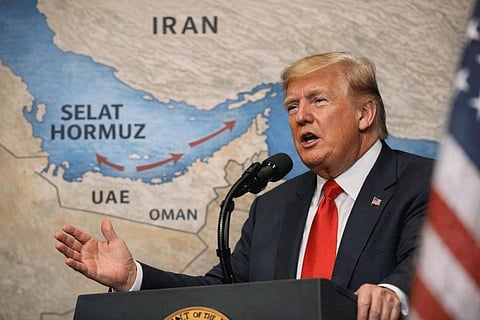
Dubai: US President Donald Trump's declaration that Washington no longer needs a deal with Iran has revived fears that the Middle East could become trapped in a dangerous “no war, no peace” situation — with diplomacy faltering, military tensions simmering and repeated tanker attacks threatening global oil supplies.
The latest comments mark a sharp shift from Trump's earlier signals that he was reluctant to resume major military operations against Tehran and preferred to give negotiations a chance.
“We don't need a deal with Iran. Those days have long since passed,” Trump wrote on Truth Social on Thursday, claiming Washington controlled Iran's money and the Strait of Hormuz.
He also directed Vice-President JD Vance to focus on domestic anti-fraud efforts, effectively halting his latest diplomatic initiative involving Tehran.
The move leaves a critical question unanswered: If Trump does not want another major war but no longer considers a diplomatic agreement necessary, how does he intend to end the confrontation that began with US-Israeli strikes on Iran?
Diplomacy loses momentum
Trump's announcement came after reports that Vance had explored direct discussions with Iranian officials over reopening the Strait of Hormuz and limiting Tehran's nuclear programme.
The White House has maintained economic and military pressure on Iran, including a naval blockade, while Tehran continues to insist on its conditions for a settlement.
The two sides remain divided over nuclear restrictions, sanctions and control of shipping through the strategic waterway.
Trump's latest comments do not necessarily mean all diplomatic channels have closed, but they have deepened uncertainty over Washington's willingness to negotiate.
Hormuz attacks keep oil markets on edge
The consequences of a prolonged stalemate are already visible in the Strait of Hormuz, where commercial vessels continue to face attacks involving suspected naval mines and unidentified projectiles.
According to figures cited by Reuters, at least 10 ships were hit during the first 10 days of November, following 37 attacks in October — the highest monthly total since the conflict began.
On Thursday, Iran's Revolutionary Guards said two supertankers had been disabled by major explosions after using what Tehran described as an unauthorised route through the strait.
Iranian state media attributed the explosions to naval mines, although the circumstances could not be independently verified.
Oil prices edged higher following Trump's remarks, with Brent crude trading around $93.40 a barrel on Thursday afternoon.
Even without renewed full-scale fighting, persistent attacks could keep shipping insurance premiums elevated, disrupt energy exports and sustain a geopolitical risk premium in global crude prices.
For Gulf producers, the uncertainty means higher operating costs and risks to shipping. For oil-importing nations, prolonged disruption could translate into increased fuel costs and inflationary pressure.
Environmental damage is another concern, with oil spills from damaged vessels threatening coastlines in Oman and the UAE.
Netanyahu presses for fresh strikes
Complicating Washington's calculations is continued pressure from Israeli Prime Minister Benjamin Netanyahu for renewed military action against Iran.
The Financial Times has reported that Netanyahu has been contacting Trump almost daily to press for strikes, while regional leaders have urged restraint.
Israeli news website Ynet also reported that a weekend telephone conversation between the two leaders became a heated confrontation over Iran, described by a source as a “shouting match from hell”.
Netanyahu's office strongly denied the account, calling it “fake news, complete nonsense”. Another Israeli official confirmed the conversation but rejected claims of a confrontation.
Trump, meanwhile, indicated earlier this week that he was highly unlikely to order fresh attacks while diplomatic efforts were progressing.
His latest rejection of a deal, however, introduces fresh uncertainty into that calculation.
The danger of neither war nor peace
The emerging situation presents a difficult dilemma for the region.
A renewed major offensive could trigger widespread retaliation and further disruption to energy supplies. But prolonged confrontation without a settlement carries its own economic and security costs.
Military pressure, maritime attacks and uncertainty over Hormuz could continue even if Washington and Tehran avoid another large-scale confrontation.
A Reuters commentary this week described how Gulf energy producers were already adapting to a “no-war, no-peace” reality that was making operations more expensive and risky.
Even a diplomatic breakthrough would not necessarily restore normal shipping immediately, with mine clearance, insurance costs and shipowners' confidence remaining major obstacles.
For the Middle East, the danger may no longer be simply whether another major war erupts, but how long the region can endure a confrontation that neither side appears ready to end.


