Watch: Holy Kaaba receives new Kiswa as Islamic New Year begins
Kiswa incorporates 825 kilograms of natural silk, alongside silver and gold-plated threads
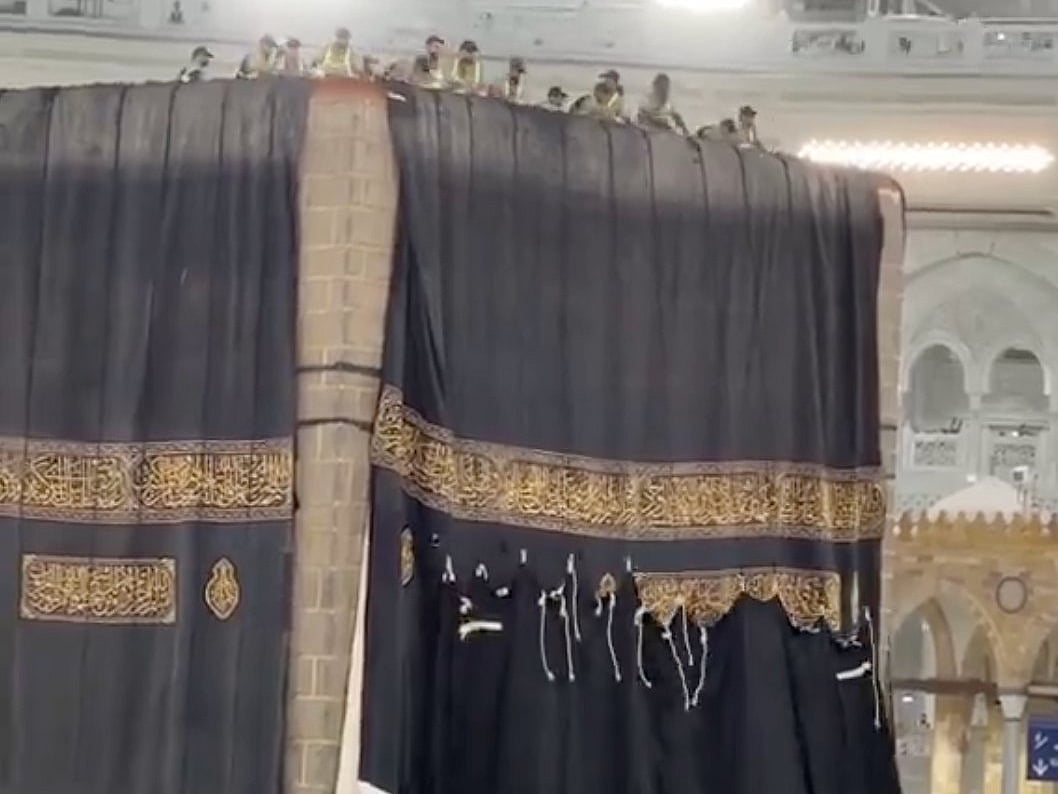
Dubai: The Holy Kaaba was draped in a new Kiswa on Tuesday as Saudi Arabia marked the beginning of the Islamic New Year, continuing a centuries-old tradition that combines religious significance with one of the most intricate forms of Islamic craftsmanship.
The replacement of the black silk covering, carried out on the first day of Muharram 1448 AH, took place at the Grand Mosque in Mecca under the supervision of the authorities responsible for the affairs of the Two Holy Mosques.
Get updated faster and for FREE: Download the Gulf News app now - simply click here.
The new Kiswa was produced over nearly a year by a team of 150 Saudi artisans and specialists at the King Abdulaziz Complex for the Holy Kaaba Kiswa. The work involved weaving, dyeing, embroidery and assembly processes that culminated in the creation of 47 silk panels adorned with Qur’anic verses embroidered in silver thread coated with 24-carat gold.
Weighing approximately 1,410 kilograms, the Kiswa incorporates 825 kilograms of natural silk, alongside silver and gold-plated threads used to create its distinctive calligraphic inscriptions and decorative motifs.
Preparations for the annual replacement began on Monday evening with the removal of the existing covering and its embroidered elements, including the curtain of the Kaaba’s door. The new Kiswa was then installed in a carefully coordinated operation involving specialised technical teams.
The production process passed through several stages, including silk preparation, weaving, printing, embroidery, assembly and final inspection, before the completed covering was transported to the Grand Mosque.
Beyond its religious importance, the Kiswa is regarded as one of the most prominent examples of Islamic artistic heritage. Its design features verses from the Holy Qur’an rendered in elaborate Arabic calligraphy, reflecting a tradition that has long been associated with the adornment of Islam’s holiest site.
Network Links
GN StoreDownload our app
© Al Nisr Publishing LLC 2026. All rights reserved.