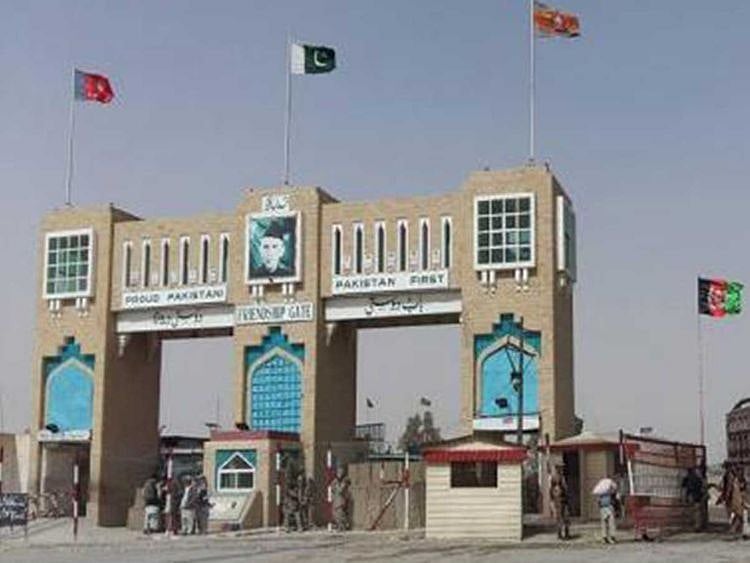
Dubai: Pakistan recorded a notable decline in cross-border terrorist attacks and violence-linked fatalities after it shut its border with Afghanistan on October 11, according to a security report cited by Dawn on Thursday.
Terrorist attacks fell by nearly 17 per cent in December, following a 9 per cent decline in November, the report said. Fatalities linked to terrorist violence among civilians and security personnel also dropped in the final quarter of 2025, decreasing by almost 4 per cent in November and 19 per cent in December, according to data compiled by the Centre for Research and Security Studies (CRSS) as part of its annual Security Report 2025.
Highlights of the report
Border closure: Pakistan shut its border with Afghanistan on October 11, 2025
Late-year impact:
Terror attacks fell 9% in November and 17% in December
Violence-linked fatalities among civilians and security personnel declined in the last quarter
Overall toll (2025):
3,417 fatalities, up from 2,555 in 2024
34% year-on-year rise, making 2025 the deadliest year in a decade
Worst-hit regions:
Khyber Pakhtunkhwa: 2,331 deaths (68% of total)
Balochistan: 956 deaths (28% of total)
Regional concentration:
KP and Balochistan accounted for over 96% of fatalities and 93% of incidents
Relatively lower impact:
Punjab: 40 deaths from 25 incidents
Sindh: 56 deaths from 51 incidents
Least affected:
Gilgit-Baltistan: fatalities rose from 1 to 4
Despite the late-year decline, 2025 emerged as Pakistan’s most violent year in a decade, recording an almost 34 per cent surge in overall violence, the report said. The country has witnessed a sustained escalation in violence for five consecutive years since 2021, coinciding with the Taliban’s return to power in Afghanistan. Violence rose by nearly 38 per cent in 2021, over 15 per cent in 2022, 56 per cent in 2023, almost 67 per cent in 2024, and 34 per cent in 2025.
A comparison of data from 2024 and 2025 shows a sharp escalation in terrorism and counter-terrorism-related violence nationwide. Fatalities increased from 2,555 in 2024 to 3,417 in 2025, marking a rise of 862 deaths, or roughly a 34 per cent year-on-year increase.
Sharpest increase
The steepest surge was recorded in Khyber Pakhtunkhwa (KP), where fatalities rose from 1,620 in 2024 to 2,331 in 2025—an increase of 711 deaths. This accounted for over 82 per cent of the net national rise and represented nearly a 44 per cent year-on-year increase in violence in the province.
Balochistan also witnessed an upward trend, with fatalities increasing from 787 to 956, an additional 169 deaths, or nearly 22 per cent higher than the previous year.
Violence remained heavily concentrated in KP and Balochistan, which together accounted for over 96 per cent of all fatalities and nearly 93 per cent of violent incidents recorded in 2025.
KP was the worst-hit region, accounting for over 68 per cent (2,331) of total violence-linked fatalities and around 63 per cent (795) of violent incidents. Balochistan followed, contributing 28 per cent (956) of fatalities and over 30 per cent (386) of violent incidents.
In contrast, Punjab and Sindh experienced comparatively lower levels of violence. Punjab recorded 25 incidents, resulting in 40 fatalities and 24 injuries, representing just 1.15 per cent of total casualties. Sindh reported 51 incidents, causing 56 fatalities and 40 injuries, accounting for 1.73 per cent of the total.
Gilgit-Baltistan remained the least affected region. Although the numbers were small in absolute terms, fatalities rose four-fold, from one in 2024 to four in 2025, the report said.

Sign up for the Daily Briefing
Get the latest news and updates straight to your inbox
Network Links
GN StoreDownload our app
© Al Nisr Publishing LLC 2026. All rights reserved.