Trump 'not satisfied' with Iran’s latest proposal to reopen Strait Hormuz, end the war
Rubio says US maritime actions target Iranian shipping, not global commerce, in Hormuz
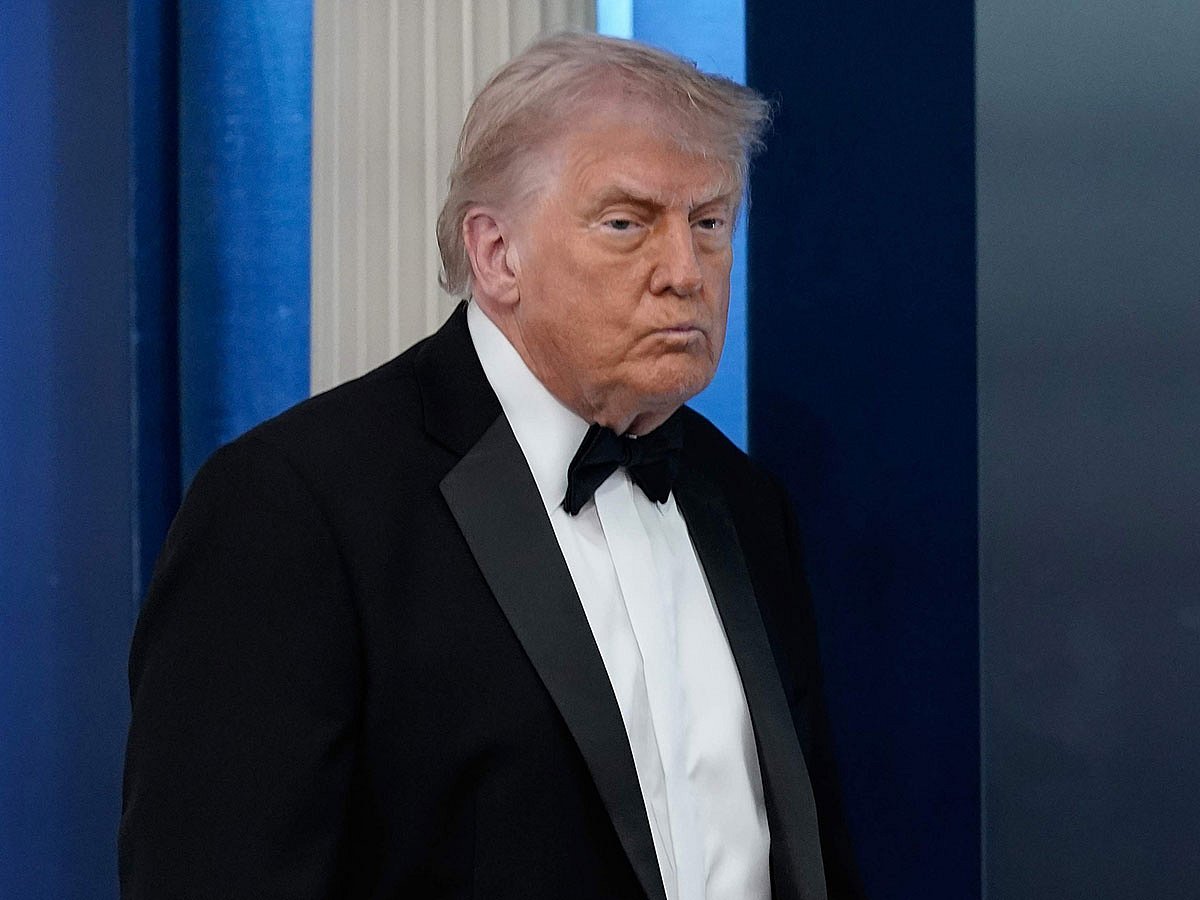
US President Donald Trump says he is “not satisfied” with Iran’s latest proposal to reopen the Strait of Hormuz and end the war, sources tell US media. US Secretary of State defend targeted maritime measures against Iranian shipping, while Iran signals closer ties with Russia. Meanwhile, several ASEAN countries are increasingly turning to Russian oil amid regional energy pressures. Follow our live blog for the latest updates.
Australian Foreign Minister Penny Wong said Tuesday the war in the Middle East has had a "disproportionate impact" on the Asia-Pacific region, as she vowed to work closely with Japan to "navigate global disruption".
Wong spoke during a visit to Tokyo, which comes just days before Prime Minister Sanae Takaichi is due to travel to Australia and Vietnam.
Takaichi's trip from May 1-5 is part of efforts to boost economic security and ensure the stable supply of energy as well as critical minerals, top government spokesman Minoru Kihara said Tuesday.
In Tokyo, Wong met with counterpart Toshimitsu Motegi and hailed their "closely linked" supply chains which have seen Australia receive fuel imports from Japan.
The economic relationship "is increasingly important as we navigate global disruption", she said. "I look forward to continuing to coordinate with you our response following the effective closure of the Strait of Hormuz and the disproportionate impact on our region."
Roughly one-fifth of the world's oil normally flows through the vital waterway and its closure has threatened supplies to Asian nations lacking their own energy resources.
Shares retreated in Asia and oil prices gained on Tuesday as diplomatic efforts to end the Iran war once again appeared to stall.
Despite a tenuous ceasefire, the Strait of Hormuz remains effectively closed. Much of Asia, including resource-poor Japan, relies on that route for its oil shipments.
Japan's benchmark Nikkei 225 fell 1.1% to 59,884.12 after the central bank opted to keep its key interest rate unchanged at 0.75%.
Elsewhere in Asia, South Korea's Kospi edged up 1% to 6,683.10.
Hong Kong's Hang Seng dipped 0.7% to 25,751.04, while the Shanghai Composite shed 0.2% to 4,078.77.
Australia's S&P/ASX 200 lost 0.6% to 8,717.80.
The price for a barrel of Brent crude to be delivered in June climbed $1.11 to $109.34. Brent to be delivered in July, which is where more of the trading is happening in the oil market, rose $1.08 to $102.77 per barrel.
Brent prices were at about $70 per barrel before the war and have briefly shot to nearly $120. Benchmark U.S. crude added 96 cents to $97.33 a barrel.
The White House said that it was examining Iran's latest proposal to unblock the Strait of Hormuz, two months after a US and Israeli offensive sent shockwaves through the global economy.
Peace talks between the United States and Iran to end the Middle East war and fully reopen the vital strait have so far proven inconclusive since a ceasefire came into force.
Trump met with top security advisors on Monday to discuss an Iranian proposal after Tehran passed "written messages" to Washington via Pakistan, spelling out its red lines in negotiations, including on nuclear issues and the Strait of Hormuz, the Fars news agency reported.
The proposal was "being discussed," spokeswoman Karoline Leavitt told a White House briefing.
Japan's central bank on Tuesday kept its main interest rate unchanged but hiked its inflation forecasts after the Iran war sent oil prices soaring.
The Bank of Japan (BoJ) said its policy rate would remain at 0.75 percent, while hiking its inflation forecast for the current fiscal year to 2.8 percent from a previous projection of 1.9 percent.
Oil prices edged up and stocks wavered Tuesday as Donald Trump weighed an Iranian proposal that would reportedly re-open the Strait of Hormuz and end the eight-week-old war.
Investors were also gearing up for key central bank meetings and earnings reports from Wall Street giants this week.
Tehran was reported to have passed "written messages" to Washington via Pakistan spelling out its red lines in peace talks, including on its nuclear programme and the future of the crucial waterway.
The White House said the US president and his met Monday to discuss the offer but spokeswoman Karoline Leavitt refused to say if Trump would accept the proposal.
Iran's proposed interim deal is said to see it reopen the Strait of Hormuz - through which a fifth of oil and LNG usually flows - in exchange for Washington ending its blockade of Iranian ports.
The plan also postpones more complex negotiations over its nuclear programme, a major sticking point for Trump.
Iranian Foreign Minister Seyed Abbas Araghchi says he was pleased to engage with Russia at the “highest level as the region is in major flux.” He added that “recent events have evidenced the depth and strength of our strategic partnership” and welcomed Russia’s support for diplomacy.
Get updated faster and for FREE: Download the Gulf News app now - simply click here.
Iran shared on Tuesday a breakdown of the death toll from a deadly strike on an Iranian school on the first day of the Middle East war, state media reported.
Seventy-three boys and 47 girls were killed in the February 28 strike on an Iranian elementary school in Minab, state broadcaster IRIB and local media reported.
The attack happened on the day the United States and Israel launched attacks across Iran. In retaliation, Tehran struck targets in Israel and Gulf nations.
Twenty-six teachers, seven parents, a school bus driver, and a pharmacy technician at the clinic next to the school were also killed, IRIB said in a Telegram post.
This puts the death toll at 155 instead of more than 175 reported earlier.
Marco Rubio, US Secretary of State, defended maritime interdiction measures by saying the action is not aimed at global commerce but specifically at vessels linked to Iran, which he accused of exploiting its geographic position to control and profit from traffic through the Strait of Hormuz.
“The blockade is not a blockade against shipping,” the official said. “It’s a blockade against Iranian shipping — because they cannot be the sole beneficiaries of an illegal, unlawful, and unjustified system of tolling and control in the straits.”
He added that a regime change has to happen "from within Iran".
Several Association of Southeast Asian Nations (Asean) countries are increasingly turning to Russian oil and fuel supplies to mitigate shortages spiking from the "energy emergency" arising from the Middle East crisis.
The trend is reshaping regional energy dynamics and prompting concerns over long-term geopolitical influence by Moscow.
Following discussions in the White House Situation Room, it emerged that Trump told advisers he "is not satisfied" with Iran’s latest proposal to reopen the Strait of Hormuz and end the war, multiple people briefed on the event told US media.
At least 14 people were killed following Israeli strikes in south Lebanon. Despite a ceasefire, Israel and Hezbollah have been trading attacks almost daily. Artillery shelling, drone surveillance, sporadic rocket fire and retaliatory strikes have persisted across the southern frontier, keeping thousands of Lebanese civilians displaced and entire towns on edge. For many residents, the so-called cease-fire feels like a diplomatic term detached from daily reality.
The truce was meant to stabilise the border after months of near-daily skirmishes that erupted when Hezbollah opened a northern front in solidarity with Palestinians in Gaza following Israel’s war against Hamas. While both sides have avoided the kind of escalation that would trigger full-scale war, neither has fully stepped back. Hezbollah maintains it will keep its weapons and continue “calibrated resistance” as long as Israel’s operations in Gaza persist. Israel, for its part, says it will not tolerate militant activity along its northern border and has vowed to push Hezbollah fighters farther away from the frontier. The result: a tense stalemate. Officially, a cease-fire; in practice, a low-intensity conflict that ebbs and flares without warning.
Meanwhile, violence has continued on the war's Lebanese front, despite a recently extended ceasefire between Israel and Iran-backed Hezbollah, with Beirut's health ministry reporting Israel killed four people in the south.
Fifty-one others were wounded, including three children, the ministry added. Hezbollah drew Lebanon into the Middle East war by firing rockets at Israel, which responded with strikes and a ground invasion.
The group's leader Naim Qassem on Monday rejected planned direct negotiations between Lebanon and Israel as a "grave sin", vowing to "not back down".
Israeli Defence Minister Israel Katz warned that "Qassem is playing with fire". Lebanese President Joseph Aoun, responding to Qassem, said his "goal is to reach an end to the state of war with Israel".
But Israeli army chief of staff Eyal Zamir said 2026 was "likely to be another year of fighting" for Israel on all fronts.
Iran's top diplomat blamed Washington Monday for the failure of Middle East peace talks during a visit to Russia, where President Vladimir Putin promised him Moscow's support in ending the war.
Iranian Foreign Minister Abbas Araghchi was in Saint Petersburg on a whirlwind diplomatic tour, having sandwiched a trip to Oman in between two visits to Pakistan, the main mediator in the Mideast war.
Islamabad hosted a first, unsuccessful round of US-Iran talks, and Araghchi's visit raised hopes for more negotiations over the weekend - until US President Donald Trump scrapped a planned trip by his envoys Steve Witkoff and Jared Kushner.
"The US approaches caused the previous round of negotiations, despite progress, to fail to reach its goals because of the excessive demands," Araghchi said Monday.
Day 54: Trump extends US-Iran ceasefire
Sign up for the Daily Briefing
Get the latest news and updates straight to your inbox
Network Links
GN StoreDownload our app
© Al Nisr Publishing LLC 2026. All rights reserved.