Final touches are underway at Etihad Rail’s Al Yalayis station in Dubai, bringing the landmark project closer to completion. Photo: Virendra Saklani/Gulf News
Why did Etihad Rail choose Al Yalayis? Dubai's first station is built for the next decade
New station integrates rail, metro and taxis to cut car dependence across emirates
Last updated:
5 MIN READ
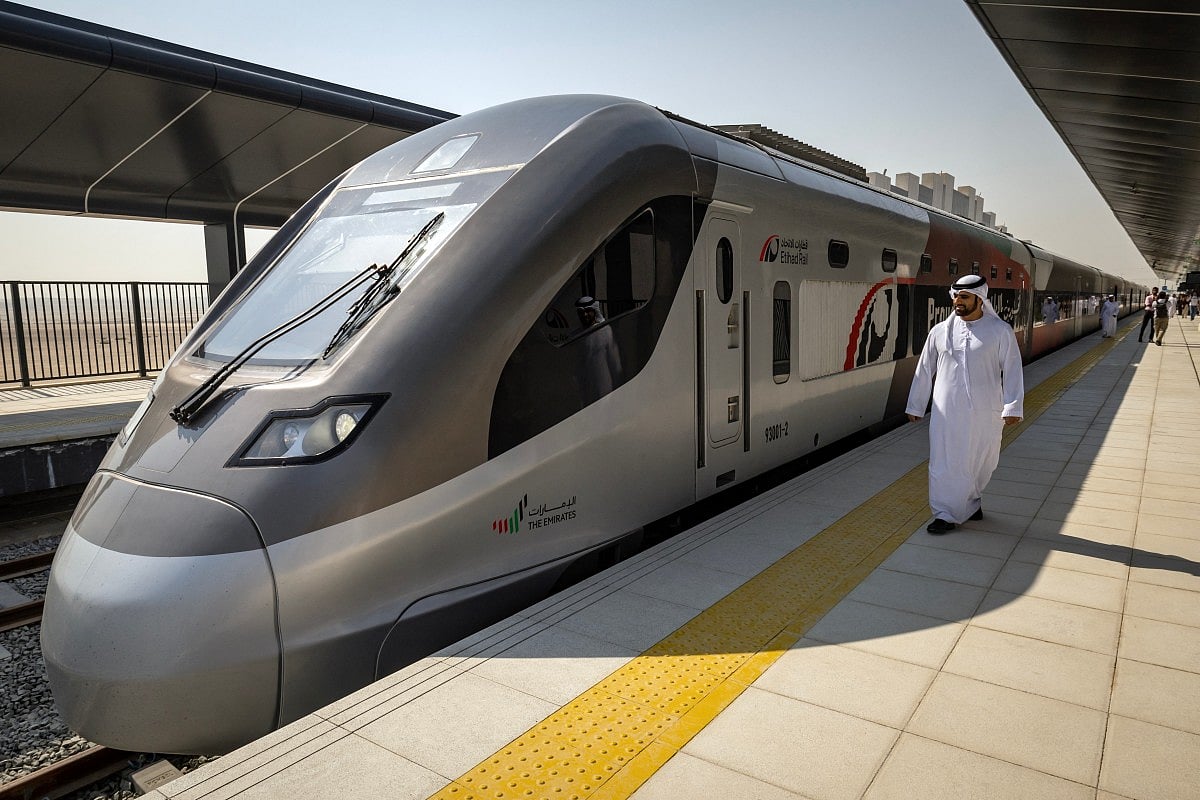
A man walks past an Etihad Rail train at Dubai's Yalayis station on September 29, 2026, during a media preview connecting from Abu Dhabi's Mohamed Bin Zayed City station to Dubai.
AFP-FADEL SENNA
Dubai: Why build a railway station in an area that is still developing? For Etihad Rail, the answer lies not in where Dubai is today, but where the city will be a decade from now.
As Etihad Rail prepares to launch passenger services from Dubai's Al Yalayis Station, the company has revealed how long-term urban development, growing residential communities and future transport demand influenced the location of its first Dubai passenger station.
In an interview with Gulf News, Adhraa Almansoori, Executive Director of Commercial at Etihad Rail Mobility, explained that the national railway network has been designed to support the UAE's future growth, rather than simply respond to existing travel patterns.
The milestone also comes ahead of schedule.
"Five years ago, this entire project was announced in December 2021. In less than five years, with the support of the leadership and the hard work of the team, we managed to actually open it ahead of schedule and complete our passenger network at least three months ahead of schedule," Almansoori told Gulf News.
Why was Al Yalayis chosen as Dubai's first Etihad Rail station?
Located near the Jumeirah Golf Estates Dubai Metro Station, Al Yalayis Station has been strategically positioned to serve Dubai's expanding southern communities, including the growing residential and commercial developments around Dubai South.
According to Almansoori, selecting a station location involves looking at how a city is expected to evolve over the next decade and beyond.
"We don't put a station to serve only today's guests, but we think about it strategically. How would the city evolve and how can we be part of the future infrastructure as well?" she explained.
The decision also reflects the broader urban development plans of individual emirates.
"That’s why certain stations are located in locations that people would question, like why would those stations be there? But in fact, it's strategically aligned with the strategic urban plans and master plans of that specific emirate to meet their economic aspiration, their tourism aspiration."
As Dubai South continues to develop, Al Yalayis could play an increasingly important role in connecting emerging residential communities, employment centres and public transport services.
The planned expansion of Al Maktoum International Airport in Dubai South adds another dimension to the area's long-term transport requirements.
We don't put a station to serve only today's guests, but we think about it strategically. How would the city evolve and how can we be part of the future infrastructure as well? That’s why certain stations are located in locations that people would question, like why would those stations be there? But in fact, it's strategically aligned with the strategic urban plans and master plans of that specific emirate to meet their economic aspiration, their tourism aspiration.
Adhraa Almansoori Executive Director of Commercial
Dubai Metro and Etihad Rail - One journey, two transport networks
One of Al Yalayis Station's key features is its direct connection to the Dubai Metro Red Line through a 400-metre pedestrian bridge linking it to Jumeirah Golf Estates Metro Station.
This allows passengers arriving in Dubai to continue their journeys on the city's public transport network without needing a car.
Etihad Rail has also introduced an integrated ticketing option, allowing passengers to add a nol One-Day Pass when booking their train journey.
"The great thing about this is that we actually integrated the two tickets together so once you buy a train ticket you can just add a nol card add-on to that ticket which will allow you to use the metro for the full day," Almansoori said.
She added that integration with other transport providers is central to the company's passenger experience. "we made sure to integrate with our partners, such as the taxis, the metro, the shuttles in order to provide end-to-end experience in terms of journey for our customers."
'We never want to use a car again': What passengers told Etihad Rail
Beyond building railway infrastructure, Etihad Rail wants to change how people travel between the emirates.
According to Almansoori, feedback from passengers using the network's initial services has highlighted the appeal of avoiding road traffic while enjoying a more comfortable journey.
"I think people in their simple nature, they want to travel in a much more relaxed, convenient, safe, and has value for money. And I think that's exactly what the Etihad Rail offer," she said.
She recalled a particularly striking response from passengers - "When we talked to our passengers they said we never want to use a car again."
The ability to work, eat or relax during the journey, without worrying about traffic, has been among the benefits highlighted by passengers, she explained.
The company has also observed returning passengers, which Almansoori described as an encouraging indication of how the service is being received. "We have actually a lot of returned customer, which is a testament of the excellence of the service."
Looking ahead, the ambition extends beyond individual railway journeys.
"What we envision in the future is that we want to enable an infrastructure that allows people to travel from one place to another without using a car. And that is the ultimate aspiration of our advanced infrastructure here in the UAE."
Etihad Rail's 11 stations: Will passengers be able to travel directly between emirates?
As the national passenger network expands, Etihad Rail intends to connect all 11 stations, with services designed around passenger demand.
Almansoori explained that the network will accommodate both direct journeys and services with multiple stops.
"The beauty of Etihad Rail network, it's connected to 11 stations all across. So there will be direct trips from one station to another. And there are some services that will have multiple stops, depending on the time of the day and the demand that we receive from people."
This means passengers could eventually travel across different parts of the network, including journeys involving multiple emirates.
"So there will be definitely an interconnection between all of those network. They all sit on the same network. So you will be able to travel from, for example, Dubai, stop at Abu Dhabi and then end up with different stations," she said.
Etihad Rail continues to study passenger data to understand travel patterns and develop services in response to demand.
Network Links
GN StoreAbout Gulf NewsTerms & ConditionsReach by GNSitemapContact usPrivacy PolicyGN FocusHave your sayWork with usAdvertise with usGulf News epaperPrinting Services
Download our app
© Al Nisr Publishing LLC 2026. All rights reserved.